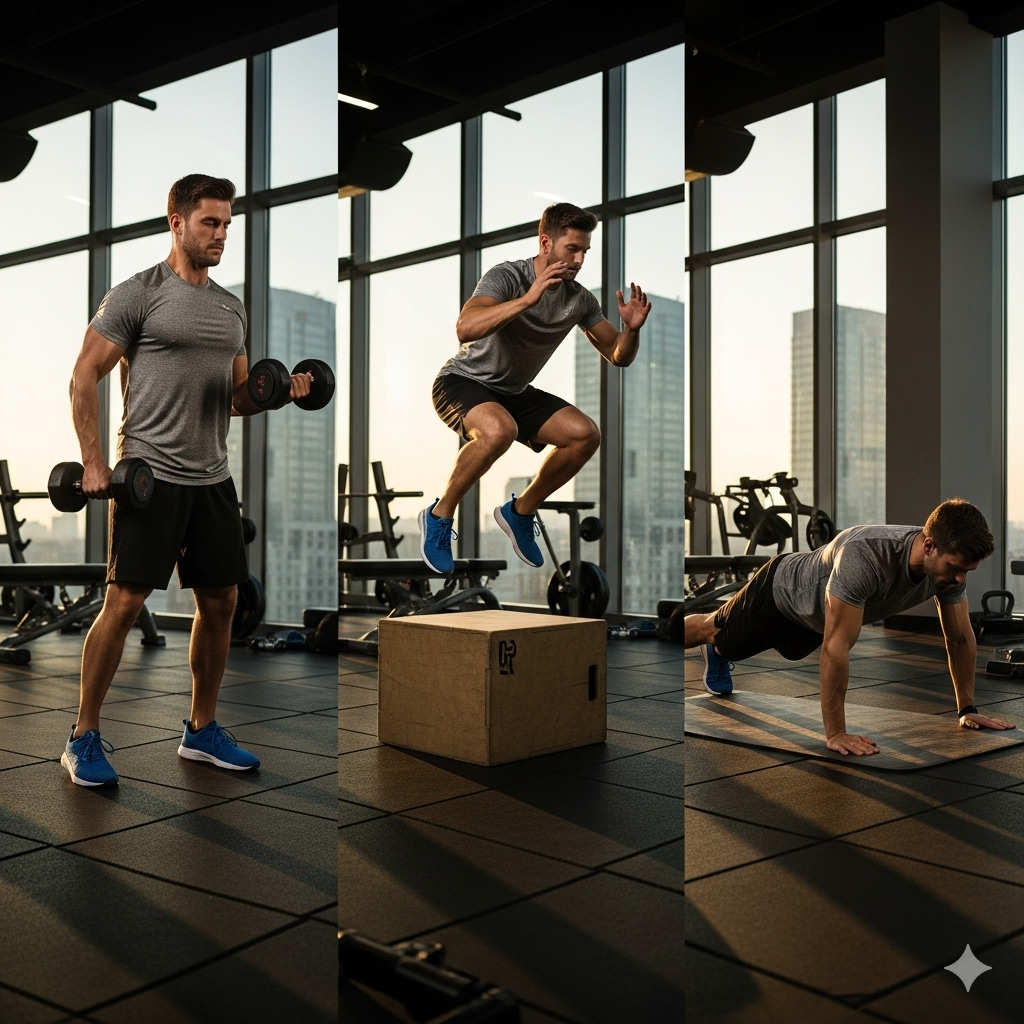

Building muscle uses three things working together: the right exercises, steady progression, and fuel that helps muscles repair. This guide gives clear choices, quick reasons to use each move, and simple steps you can follow at home or in a gym.
Why this guide matters
Choosing effective exercises saves time and reduces frustration. Focus on high-value movements and you gain strength, size, and confidence faster. This page helps you pick exercises, organize training, and avoid common traps that slow progress.
How to use this guide
- Pick 3 compound lifts for full-body progress.
- Add 2–4 isolation moves to fix weak spots.
- Follow the sample 4-week plan at the end.
- Track weight, reps, and rest for steady progress.
Core concepts, plain and simple
Compound exercises
These moves require multiple joints and large muscle groups. Use them to build raw size and strength quickly.
- Squat
- Deadlift
- Bench press
- Overhead press
- Pull-ups
Isolation exercises
Use these to shape a muscle, correct imbalances, and finish a workout without massive fatigue.
- Bicep curls
- Lateral raises
- Leg curls
- Calf raises
Top exercises and quick benefits
Upper body
- Bench Press — Chest, shoulders, triceps. Great for pushing power and mass.
- Overhead Press — Shoulder width and pressing strength.
- Pull-ups & Chin-ups — Back thickness and arm strength.
- Barbell Curls — Biceps shape and grip strength.
- Front / Lateral Raises — Shoulder cap and balanced delts.
Lower body
- Back Squat — Total leg development and hormonal response.
- Deadlift — Posterior chain strength and size.
- Barbell Lunge — Balance, single-leg strength, and symmetry.
- Leg Press — Low-back friendly quad overload.
- Calf Raises — Finishing touch for lower leg shape.
Core and stability
- Crunches & Sit-ups — Core tension and midline control.
- Planks — Build rock-solid bracing for heavy lifts.
- Dumbbell Pullover — Cross trains chest and lats for improved posture and breathing.
How to build a workout that works
- Start with 2–3 compound lifts per session.
- Add 2–4 isolation moves for weak points or shape.
- Choose rep ranges: 6–12 for muscle size, 3–6 for strength, 12–20 for endurance or pump.
- Rest 60–180 seconds between compound sets, 30–60 seconds for isolation.
Simple progression plan
Add a small amount of weight or one extra rep each week. This steady increase creates consistent muscle stimulus without burning out.
Nutrition essentials
- Aim for 1.6–2.2 grams of protein per kilogram of body weight each day.
- Eat a small calorie surplus to gain muscle without excessive fat.
- Carbohydrates provide fuel for heavy training sessions.
- Healthy fats support hormones and recovery.
- Hydrate well and sleep 7–9 hours per night.
Recovery and supporting habits
- Schedule at least one full rest day per week.
- Use active recovery like a short walk or light mobility work.
- Stretch or do mobility drills three times per week to protect joints.
Common mistakes that cost progress
- Neglecting legs while only training upper body.
- Adding weight before learning safe form.
- Counting workouts but ignoring nutrition or sleep.
- Chasing fancy exercises instead of mastering basics.
Sample 4-week beginner program
Three workouts each week. Start light and focus on form. Track one metric each session: weight, reps, or quality of movement.
Week A (Full-body)
- Squat — 3 sets x 6–8 reps
- Bench Press — 3 sets x 6–8 reps
- Barbell Row — 3 sets x 6–8 reps
- Plank — 3 x 45 seconds
Week B (Full-body)
- Deadlift — 2 sets x 4–6 reps
- Overhead Press — 3 sets x 6–8 reps
- Pull-ups — 3 sets x max reps
- Calf Raises — 3 sets x 12–15 reps
Repeat these sessions across four weeks, increasing small amounts each week. Swap isolation moves to target weak areas.
Muscle Gain Benefits: 15 Reasons to Build Strength
Muscle gain is more than just lifting weights or looking toned in the mirror. Stronger muscles bring real health advantages—helping you live longer, move easier, and feel better inside and out. Let’s explore the key benefits of building muscle and why it matters for every age group.
1. Boosts Metabolism and Supports Weight Management
Muscle tissue burns more calories than fat, even while resting. That means the more muscle you have, the easier it becomes to manage weight.
- Each pound of muscle burns 6–7 calories daily compared to just 1–2 for fat.
- Higher resting metabolism keeps your energy levels balanced.
- Strength training reduces fat storage and builds lean mass for a healthier body composition.
2. Strengthens Bones and Prevents Osteoporosis
Muscles and bones work together. Resistance training puts gentle stress on bones, signaling them to grow denser and stronger.
- Improves bone density and lowers fracture risk.
- Reduces chances of osteoporosis in aging adults.
- Supports healthier joints by taking pressure off them.
3. Improves Joint Health and Reduces Pain
Strong muscles act like shock absorbers for your joints. By supporting ligaments and tendons, they ease stress and reduce discomfort.
- Helps manage arthritis by reducing stiffness.
- Lowers risk of injuries from daily activities.
- Supports long-term mobility and flexibility.
4. Enhances Strength and Power in Daily Life
One of the most obvious muscle gain benefits is pure strength. But it’s not just about gym performance—it’s about real-life freedom.
- Carry groceries without strain.
- Lift your kids or move furniture with ease.
- Enjoy sports, hiking, or physical hobbies with more power.
5. Improves Balance and Stability
Stronger muscles make your body more stable, helping you move with confidence.
- Reduces risk of falls, especially as you age.
- Improves coordination during physical activities.
- Builds core strength for better body control.
6. Corrects Posture and Prevents Back Pain
Poor posture causes neck, shoulder, and back pain. Building muscles in your core, shoulders, and back helps align your spine.
- Keeps the spine upright and balanced.
- Prevents slouching caused by weak muscles.
- Reduces long-term spinal issues like herniated discs.
7. Improves Blood Sugar Control
Muscles play a big role in absorbing glucose from your blood, making them essential for diabetes prevention and management.
- Improves insulin sensitivity.
- Lowers blood sugar spikes after meals.
- Reduces the risk of type 2 diabetes.
8. Supports Heart and Cardiovascular Health
Strength training isn’t only about muscles—it’s also heart-friendly.
- Helps lower blood pressure naturally.
- Improves cholesterol levels.
- Enhances circulation and oxygen delivery.
9. Boosts Mood and Reduces Stress
Exercise releases endorphins and myokines—natural mood-boosting chemicals that fight stress, anxiety, and depression.
- Lowers anxiety and stress hormones.
- Improves overall happiness and mental resilience.
- Gives a natural “high” after workouts.
10. Enhances Brain Function and Focus
Research shows that strength training supports better cognitive function and lowers the risk of memory decline.
- Improves memory and learning ability.
- Boosts focus and productivity.
- Reduces risk of Alzheimer’s and dementia.
11. Builds Confidence and Self-Esteem
Nothing feels better than seeing your progress—lifting heavier, looking stronger, and feeling healthier. This sense of achievement boosts your self-worth.
- Increases confidence in daily life.
- Improves body image and self-acceptance.
- Teaches discipline and resilience.
12. Slows Down Aging
Muscle naturally declines as you age, but strength training fights that loss.
- Prevents frailty and muscle wasting.
- Supports independence in older age.
- Helps you stay active into your 70s, 80s, and beyond.
13. Strengthens the Immune System
Muscles release proteins that support immunity and store amino acids your body needs during illness or recovery.
- Helps fight infections more effectively.
- Speeds up recovery after illness.
- Supports overall resilience against disease.
14. Improves Sleep Quality
Better sleep is another underrated muscle gain benefit. Strength training helps you fall asleep faster and sleep deeper.
- Regulates sleep cycles.
- Reduces insomnia and restless nights.
- Supports recovery and muscle repair while you sleep.
15. Extends Life Expectancy
Studies link higher muscle mass with longer life spans. Strong muscles help you age healthier, prevent disease, and stay independent.
- Increases life expectancy.
- Protects against chronic illnesses.
- Improves overall quality of life in later years.
FAQs
How often should muscle groups be trained?
Two sessions per muscle group per week gives a strong balance between stimulus and recovery for most people.
Which rep range builds size fastest?
Six to twelve reps per set is the sweet zone for most muscle gain efforts.
Are supplements required?
Real food must come first. Use supplements like protein powder and creatine for convenience and reliable support.
How long until results show?
Noticeable strength and size changes often appear in six to twelve weeks with consistent training and proper nutrition.
Final takeaway
Applying basic, proven exercises while tracking progress delivers the best results. Start with compound lifts, support them with targeted isolation work, fuel recovery with good nutrition, and protect gains with sleep and mobility. This approach keeps training simple, effective, and repeatable.