
Introduction
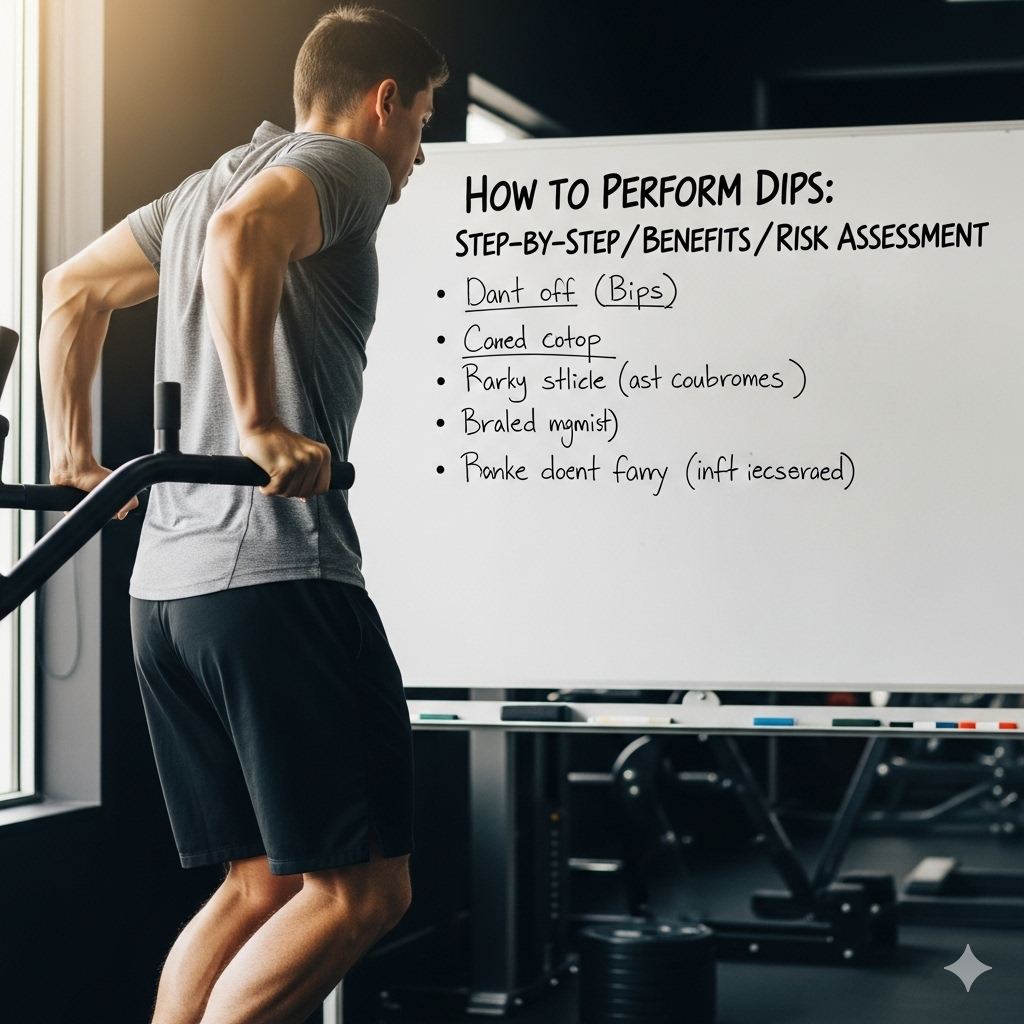
The dip exercise is a classic bodyweight movement that challenges your upper body strength, coordination, and stability. Known as a compound pushing exercise, dips engage multiple muscles simultaneously, making them a go-to move for athletes, bodybuilders, and functional fitness enthusiasts.
But while dips can build impressive strength in your chest, shoulders, and triceps, poor execution or lack of preparation may increase your risk of injury. Let’s break down what dips are, how to perform them safely, their benefits, variations, and risk factors you need to avoid
What Are Dips?
How to Perform Dips (Step-by-Step)
-
Standard Dips
-
Chest Dips (Chest-Focused)
-
Triceps Dips (Arm-Focused)
Key Form Tips
Benefits of Dips
Main Points Summary
Popular Dip Variations
Dips – Risk Assessment and Safety Controls
What to Avoid in Dips
Conclusion
What Are Dips?
Dips are a bodyweight pushing exercise typically performed on parallel bars, benches, or dip stations. They primarily target the chest, triceps, and shoulders, but also recruit stabilizer muscles in the back and core.
The movement involves lowering and raising your body by bending and extending your elbows, all while keeping your torso under control. Depending on your posture and lean, you can emphasize chest dips or triceps dips.
How to Perform Dips: Step-by-Step
Standard Dips
-
Grip the bars: Hold parallel bars slightly wider than shoulder-width.
-
Start at the top: Extend arms fully, supporting your bodyweight.
-
Lower yourself: Bend elbows and descend slowly until upper arms reach about 90 degrees.
-
Return to the start: Push through your palms to return to full extension.
Chest Dips (Emphasis on Chest)
-
Lean torso forward as you lower.
-
Bring legs slightly forward with feet together.
-
Stop when you feel a strong chest stretch, then press back up.
Triceps Dips (Emphasis on Arms)
-
Keep torso upright throughout.
-
Tuck elbows close to your body.
-
Focus on elbow extension to drive upward.
Key Form Tips
Warm up your shoulders before starting.
Engage your core for stability.
Control the descent (2–3 seconds lowering).
Avoid swinging or kipping for momentum.
Don’t go too deep to prevent shoulder strain.
Use assisted dip machines if you’re a beginner.
Benefits of Dips
Dips are more than just an arm workout—they’re a full upper-body strength builder.
Main Benefits:
-
Chest & Triceps Development → Builds pushing power and muscle mass.
-
Shoulder Strength → Engages anterior deltoids for stability.
-
Compound Efficiency → Works multiple muscles at once.
-
Core Engagement → Strengthens stabilizers and improves posture.
-
Scalability → Easily adjusted with resistance (weighted dips) or assistance (machines/bands).
Pros and Cons of Dips Exercise
Dips Exercise Characteristics
Main Points Summary
-
Dips are a compound upper-body exercise targeting chest, triceps, and shoulders.
-
Chest dips = torso lean, more pec activation.
-
Triceps dips = upright torso, more arm emphasis.
-
Benefits include muscle growth, strength, posture, and functional pushing power.
-
Avoid common mistakes like swinging, going too deep, or skipping warm-ups.
-
Risk assessment shows dips are safe if performed with proper form and gradual progression.
Popular Dip Variations
-
Bench Triceps Dips – Beginner-friendly, performed off a bench.
-
Assisted Dips (Machine/Band) – Supports part of your bodyweight.
-
Negative Dips – Focus on the lowering phase for strength building.
-
Weighted Dips – Use a dip belt for advanced progression.
-
Straight Bar Dips – Performed on a single bar, demanding more core control.
Dips – Risk Assessment: What to Avoid
Common Hazards in Dips
-
Shoulder Strain: From going too low or using poor form.
-
Elbow Pain: From locking out aggressively or excessive weight.
-
Muscular Imbalance: Overdoing dips without balancing pulling exercises.
-
Instability Injuries: Swinging or kipping for momentum.
Risk Assessment & Controls
-
Identify Hazards: Poor shoulder mobility, lack of strength, improper depth.
-
Assess Risks: Beginners face higher risks of form breakdown, advanced lifters risk overload.
-
Control Measures:
-
Use proper form with controlled descent.
-
Warm up shoulders and triceps.
-
Avoid excessive depth (stop at 90° elbow angle).
-
Progress gradually with added resistance.
-
Include pulling movements (rows, pull-ups) for balance.
-
What to Avoid in Dips
❌ Dropping too low past safe range.
❌ Flaring elbows wide.
❌ Swinging legs or using momentum.
❌ Skipping warm-up for shoulders.
❌ Adding too much weight too soon.