
Introduction
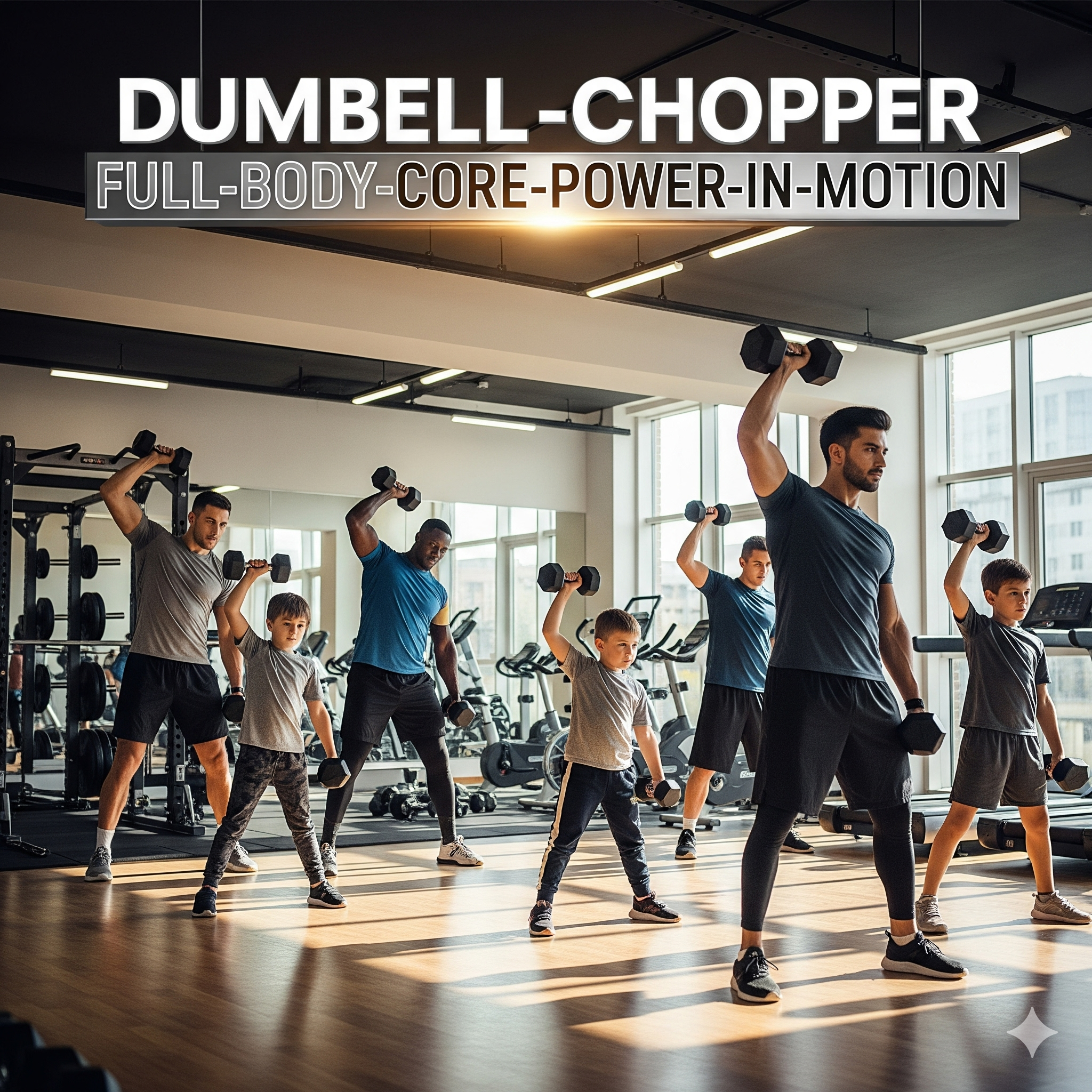
The dumbbell chopper, also called the dumbbell woodchop, is a functional movement designed to strengthen the core, shoulders, and hips through a twisting motion. It mimics chopping wood, improving rotational strength and coordination, which benefits athletes in sports like golf, tennis, and baseball.
How to Perform a Standing Dumbbell Chopper
Starting Position:
-
Stand with feet shoulder-width apart, knees slightly bent.
-
Hold a dumbbell with both hands at one hip, arms extended.
The Chop:
-
Twist your torso diagonally, lifting the dumbbell toward the opposite shoulder.
-
Pivot your back foot to allow natural hip rotation.
Return:
-
Slowly reverse the motion to return to the starting position.
Repetitions:
-
Complete all reps on one side before switching.
Muscles Worked
-
Core: Obliques, transverse abdominis, rectus abdominis
-
Upper Body: Deltoids, rotator cuff, lats, traps, arms
-
Lower Body: Glutes, quads, hamstrings, calves
Key Benefits of Dumbbell Chopper
The dumbbell chopper, often called the wood chop exercise, is a dynamic full-body movement that enhances core strength and rotational power. Inspired by the motion of swinging an axe, it engages multiple muscle groups, improving functional fitness and everyday movement efficiency.
Strengthens the Core: This exercise is excellent for targeting the obliques, which handle twisting motions, while also activating the transverse abdominis—the deep core muscle that stabilizes and protects the spine.
Builds Full-Body Strength: As a compound movement, the dumbbell chopper works not only the core but also the hips, shoulders, and legs. This makes it effective for daily activities like lifting, carrying, or bending.
Enhances Rotational Power: Ideal for athletes in sports such as golf, tennis, or baseball, this exercise develops the rotational strength needed for powerful swings and throws.
Improves Balance and Stability: The twisting, controlled motion challenges your coordination, helping to enhance overall stability and the connection between mind and muscles.
Supports Spinal Health: By reinforcing core muscles, the dumbbell chopper reduces strain on the lower back and helps prevent injuries related to twisting or bending movements.
Promotes Better Posture: Strengthening the back, shoulder, and core muscles contributes to improved posture, helping to correct muscular imbalances and stand taller.
Boosts Athletic Performance: Training the body to move as one unit and generating explosive rotational power enhances agility, speed, and overall athletic capability.
Tips to Maximize Benefits
Focus on Proper Technique: Ensure your hips and torso move together to generate the power of the chop from your core, not just your arms.
Choose the Appropriate Weight: Pick a dumbbell that challenges you but allows you to maintain good form. Overloading can cause injury and reduce effectiveness.
Engage Your Core Fully: Keep your abdominal muscles braced throughout the movement to stabilize the spine and maximize core activation.
Explore Variations: Adjust the exercise to your fitness level. For instance, performing it from a half-kneeling stance can isolate core stability while reducing hip involvement.
Popular Variations
-
Half-Kneeling: Focuses on core stability by narrowing the base.
-
Reverse Chop: Moves the weight from high to low.
-
Lunge Chop: Combines the chop with a lunge for lower-body engagement.
-
Seated Chop: Isolates torso rotation.
-
Resistance Band/Cable Chop: Adds adjustable resistance throughout the motion.
Common Mistakes to Avoid
Performing the dumbbell chopper incorrectly can strain your spine and increase the risk of injury. Maintaining proper form is crucial to fully engage your core, protect your lower back, and maximize the effectiveness of the exercise.
Frequent Errors:
-
Using Excessive Weight: Choosing a dumbbell that is too heavy often leads to uncontrolled movements and reliance on momentum. Opt for a lighter weight that allows smooth, deliberate motion while maintaining proper form.
-
Neglecting Core Engagement: The dumbbell chopper targets your core. If your abdominal muscles are not actively engaged, your back may take over the movement, increasing strain on your lower spine.
-
Relying on Momentum: The motion should be deliberate and controlled. Swinging the weight too quickly reduces the exercise’s benefit and can compromise your balance.
-
Overusing Your Arms: Bending your arms too much shifts the effort from your core and hips to your shoulders and arms. Keep your arms mostly straight, without locking them, to maintain proper form.
-
Ignoring Foot Pivoting: Your lower body plays a critical role. Failing to rotate your feet and hips during the movement places extra stress on your lower back. Ensure your hips follow your torso as you twist.
-
Rounding the Back: Maintain a neutral spine throughout the exercise. Avoid bending or rounding your back, especially during the downward motion. Hinge at your hips and bend your knees instead.
-
Bent Wrists: Your wrists should remain in line with your forearms and hands. Bending them can create unnecessary strain and increase the risk of injury.
How to Perform the Dumbbell Chopper Safely
Starting Position: Stand with your feet slightly wider than shoulder-width apart, toes angled outward. Hold a dumbbell with both hands, either gripping one end or holding it evenly across both sides.
Lift and Rotate: Engage your core and lift the dumbbell diagonally across your body. Rotate your torso and pivot on the ball of your back foot so the weight ends above the opposite shoulder.
Controlled Chop: Slowly reverse the motion, bringing the dumbbell down and across your body. Bend your knees and hinge at your hips while keeping your eyes on the dumbbell.
Repetition: Complete all reps on one side before switching. Focus on driving the movement with your core rather than your arms to fully activate the targeted muscles.
Sample Dumbbell Chopper Routine
Beginner – Standing Dumbbell Wood Chop:
-
10–15 reps per side, 3 sets
-
Focus on controlled movement and proper pivoting
Intermediate – Kneeling Dumbbell Wood Chop:
-
10–15 reps per side, 3 sets
-
Emphasizes obliques, minimal lower-body involvement
Advanced – Lunge Dumbbell Chop:
-
10–15 reps per side, 3 sets
-
Adds lower-body challenge and increases total-body calorie burn
Tips for All Variations:
-
Keep core engaged
-
Pivot feet naturally
-
Move deliberately, not rushed
-
Concentrate on mind-muscle connection
Conclusion
The dumbbell chopper is a versatile, full-body exercise that enhances core strength, athletic performance, and functional fitness. Incorporating variations and focusing on form ensures maximum benefits while minimizing injury risk. With just a dumbbell, you can achieve a dynamic workout targeting multiple muscle groups simultaneously.