
Introduction
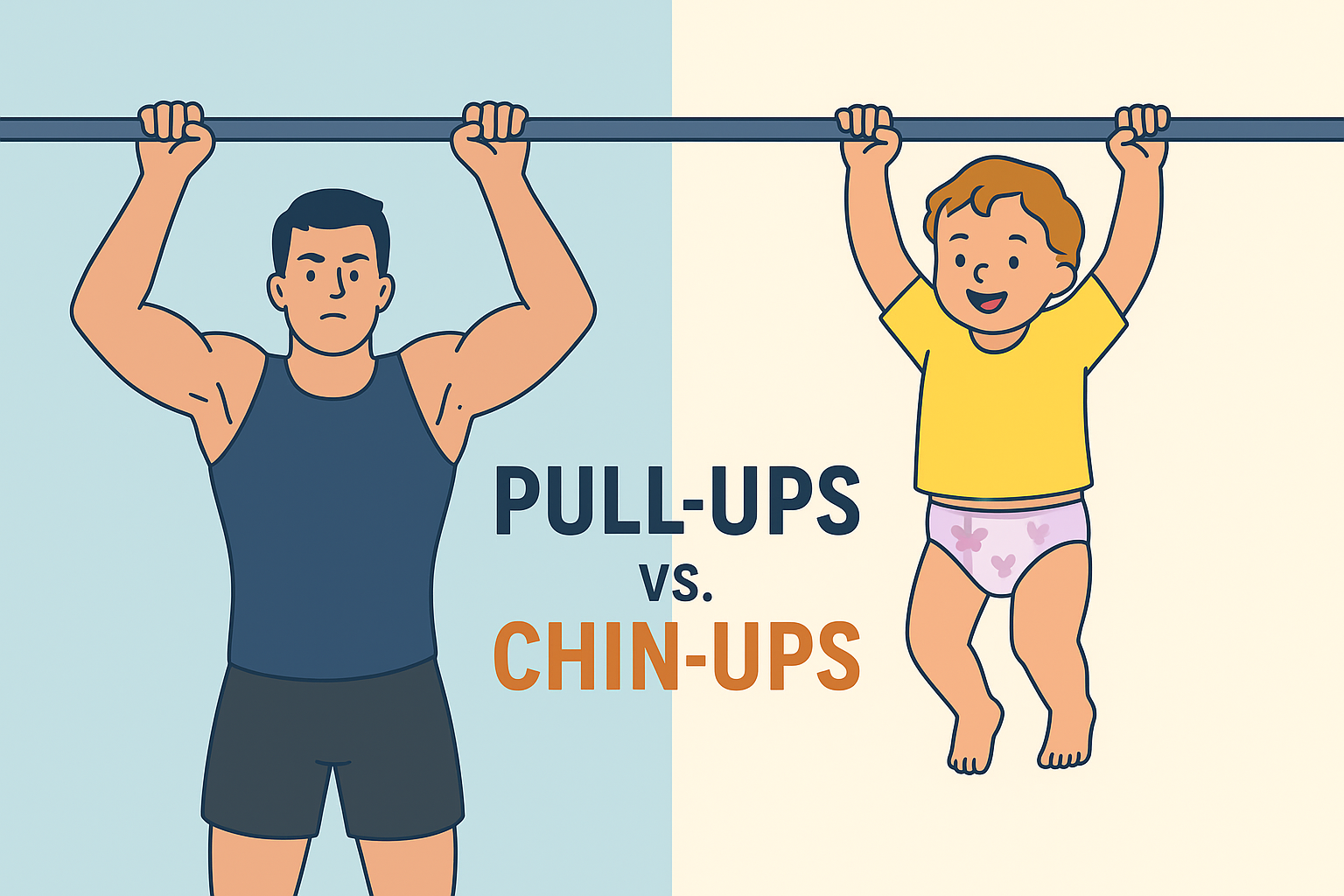
At first glance, pull-ups and chin-ups look nearly identical—you hang from a bar and pull your body upward. But here’s the catch: a small change in grip makes a big difference. That tiny tweak shifts which muscles do the heavy lifting, how difficult the exercise feels, and even how your body grows stronger over time.
So, should you go for pull-ups or chin-ups? Let’s break it down.
The Main Difference: Grip Position
-
Pull-Ups: Overhand grip (palms facing away), usually a bit wider than shoulder-width.
-
Chin-Ups: Underhand grip (palms facing you), typically shoulder-width.
This simple grip change completely alters the muscle focus and difficulty of each movement.
Quick Comparison: Pull-Ups vs. Chin-Ups
| Feature | Pull-Ups | Chin-Ups |
|---|---|---|
| Grip | Overhand (pronated), palms out | Underhand (supinated), palms in |
| Primary Muscles | Back muscles – lats, traps, posterior deltoids | Arms and chest – biceps, pecs |
| Secondary Muscles | Biceps assist but aren’t main movers | Back muscles assist but biceps dominate |
| Difficulty | Harder, because less bicep help | Easier, thanks to stronger bicep recruitment |
| Best For | Back width, posture, advanced pulling strength | Bigger arms, beginners, building pulling base |
Why This Difference Matters
Your grip doesn’t just change how the exercise feels—it changes the results you’ll see.
-
Pull-Ups: Max out your back development and improve shoulder stability.
-
Chin-Ups: Target your biceps and chest while still hitting the back.
If you’ve been stuck doing only one, you might be holding back your gains.
The Deeper Importance of Chin-Ups
Chin-ups often get labeled as the “easier cousin” of pull-ups, but that doesn’t mean they’re any less valuable. In fact, they’re one of the most versatile and practical bodyweight exercises for beginners and advanced athletes alike.
Here’s why chin-ups deserve a spotlight in your training routine:
1. Direct Bicep Targeting
Unlike pull-ups, where the biceps take a backseat, chin-ups put them front and center. The underhand (supinated) grip allows for maximum elbow flexion, which lights up the biceps with every rep.
-
If your goal is bigger arms, chin-ups should be a staple.
-
They work similarly to curls but with the added benefit of engaging multiple large muscle groups.
2. Back Engagement With Extra Support
Even though chin-ups focus on the arms, your back muscles—especially the lats—still do a ton of work. This makes chin-ups a compound powerhouse, training the biceps and the back simultaneously.
-
Beginners can experience fast pulling strength gains.
-
You still build that coveted V-shaped torso while training the arms.
3. Beginner-Friendly Progression
Pull-ups are tough, no doubt about it. For many beginners, they feel impossible. Chin-ups bridge the gap by offering a mechanical advantage:
-
The underhand grip reduces shoulder strain.
-
The biceps lend extra help, making it easier to lift your bodyweight.
-
This builds confidence and strength for eventually conquering pull-ups.
4. Chest and Forearm Activation
Chin-ups don’t stop at arms and back. They also activate your chest and forearms, making them a more well-rounded upper-body move than people realize.
-
The forearms get a grip-strength workout, which benefits everything from deadlifts to carrying groceries.
-
The chest muscles get slight assistance, adding balance to push-pull training.
5. Progression Potential
Think chin-ups are just for beginners? Think again. They scale beautifully:
-
Weighted Chin-Ups: Add plates with a dip belt for hypertrophy.
-
Slow Negatives: Lower yourself slowly to build eccentric strength.
-
Towel or Thick-Grip Chin-Ups: Boost grip endurance and forearm growth.
What starts as a stepping stone can evolve into a long-term strength tool.
Feature Highlight Recap – Chin-Ups
Underhand Grip = Built-In Advantage
The underhand (supinated) grip places your wrists and elbows in a mechanically stronger position. This gives you better leverage compared to pull-ups, making chin-ups easier to learn and a natural entry point for beginners.
Bicep Recruitment for Arm Growth
Chin-ups emphasize elbow flexion, which means the biceps are heavily engaged. This makes them one of the most effective compound movements for building arm size and strength—much more efficient than isolation curls alone.
Compound Strength Across Multiple Muscles
While chin-ups target the biceps, they are not limited to arms. The lats, chest, and forearms also play a major role in each rep, turning the exercise into a multi-joint, full upper-body movement that improves both strength and muscle balance.
Progression-Friendly for All Levels
Chin-ups scale well from beginner to advanced. New lifters can start with band-assisted or machine-assisted variations, while experienced athletes can move to strict bodyweight reps or even weighted chin-ups for greater challenge. This versatility makes them suitable for any stage of training.
The Deeper Importance of Pull-Ups
Pull-ups are often called the king of bodyweight exercises, and for good reason. They don’t just sculpt your back — they test your raw strength, discipline, and athletic ability in a way few exercises can. Whether you’re training for aesthetics, performance, or overall fitness, pull-ups deserve a permanent spot in your workout plan.
Here’s why pull-ups are so important:
1. Unmatched Back Development
Pull-ups are the ultimate move for building that wide, V-shaped back everyone wants. With an overhand (pronated) grip, the biceps take a backseat, forcing your lats, traps, and rear delts to do most of the work.
-
Creates width and thickness in the upper back.
-
Enhances posture by strengthening postural muscles.
-
Balances pressing movements like bench presses, reducing muscular imbalances.
2. Grip Strength Like No Other
Every rep of a pull-up is also a grip workout. Unlike curls or rows with straps, you’re forced to hold onto your bodyweight with raw hand and forearm strength.
-
Stronger grip = better performance in lifts like deadlifts and rows.
-
Carries over to sports like climbing, wrestling, and martial arts.
-
Improves functional strength for everyday pulling, lifting, and carrying tasks.
3. A Test of True Strength-to-Weight Ratio
Pull-ups are the great equalizer. If you can lift your bodyweight up to the bar with control, it shows you have a balanced mix of strength and leanness.
-
Athletes often use pull-up numbers as a marker of relative fitness.
-
Struggling with pull-ups may reveal extra weight holding you back.
-
Progressing in pull-ups is often a clear sign of improved body composition.
4. Shoulder Stability and Injury Prevention
Strong shoulders aren’t just about pressing — they also need stability. Pull-ups train the muscles that stabilize your shoulder blades, keeping the joint safe and supported.
-
Reduces risk of rotator cuff injuries.
-
Improves shoulder mobility through controlled movement.
-
Builds resilience for other lifts like overhead presses and snatches.
5. Progression for Advanced Athletes
Pull-ups don’t have to stop at bodyweight. They scale up beautifully to challenge even elite lifters.
-
Weighted Pull-Ups: Add a dip belt or dumbbell to overload the back.
-
One-Arm Pull-Ups: The ultimate display of unilateral pulling strength.
-
Archer and Typewriter Pull-Ups: Advanced variations that improve control and range of motion.
What starts as a bodyweight staple can evolve into a lifelong strength pursuit.
Key Features of Pull-Ups
Absorbent Core
Pull-Ups include a built-in absorbent layer to manage accidents. Versions differ for daytime vs. nighttime use, giving parents the right level of protection when it’s needed most.
Underwear-Like Design
A soft waistband and stretchy fit allow toddlers to pull them on and off without help. This simple feature is crucial—it builds confidence and independence.
Learning Designs and Wetness Indicators
Some Pull-Ups feature fun character graphics that fade when wet, providing instant feedback to toddlers. Others include a “feel-wet” layer, which creates a light damp sensation to teach awareness of accidents.
Easy-Open Sides
Quick changes are simple thanks to refastenable or tear-away seams. Parents can remove soiled Pull-Ups without taking off a child’s pants or shoes.
Gender-Specific Fit
With absorbency zones tailored to boys and girls, Pull-Ups improve comfort and efficiency. Unisex versions are also available.
Gentle Materials
Pull-Ups are made from breathable, hypoallergenic fabrics that reduce irritation and keep skin healthy—even for sensitive toddlers.
Multiple Sizes
From 2T-3T to 4T-5T, Pull-Ups are available in various sizes based on weight, ensuring a proper fit during every stage of potty training.
How Pull-Ups Support Potty Training
Promotes Confidence
Children feel more grown-up when they can manage their own clothing, motivating them to keep learning.
Reduces Mess and Stress
Even if accidents happen, Pull-Ups help contain leaks and minimize cleanup.
Provides a Transition Step
Instead of a sudden switch from diapers to underwear, Pull-Ups offer an intermediate stage that makes the process less overwhelming.
Conclusion
Whether we’re talking about chin-ups and pull-ups in fitness or Pull-Ups training pants in parenting, the theme is the same—progress, confidence, and growth. A small adjustment in grip can completely change how muscles respond during a workout, just as the right training pants can make potty training less stressful for both parents and toddlers.
Pull-ups in the gym challenge raw strength and build a strong, stable back. Chin-ups provide an easier entry point, targeting the arms while still hitting major upper-body muscles. Together, they form a balanced approach to pulling power.
On the parenting side, Pull-Ups training pants offer independence to children while still protecting against messes. With features like absorbent cores, learning graphics, and easy-open sides, they ease the transition between diapers and underwear, turning a difficult stage into a manageable one.
At the end of the day, both kinds of pull-ups—whether in the gym or at home—are about taking the next step. They bridge the gap between where you are now and where you want to be, building strength, confidence, and resilience along the way.