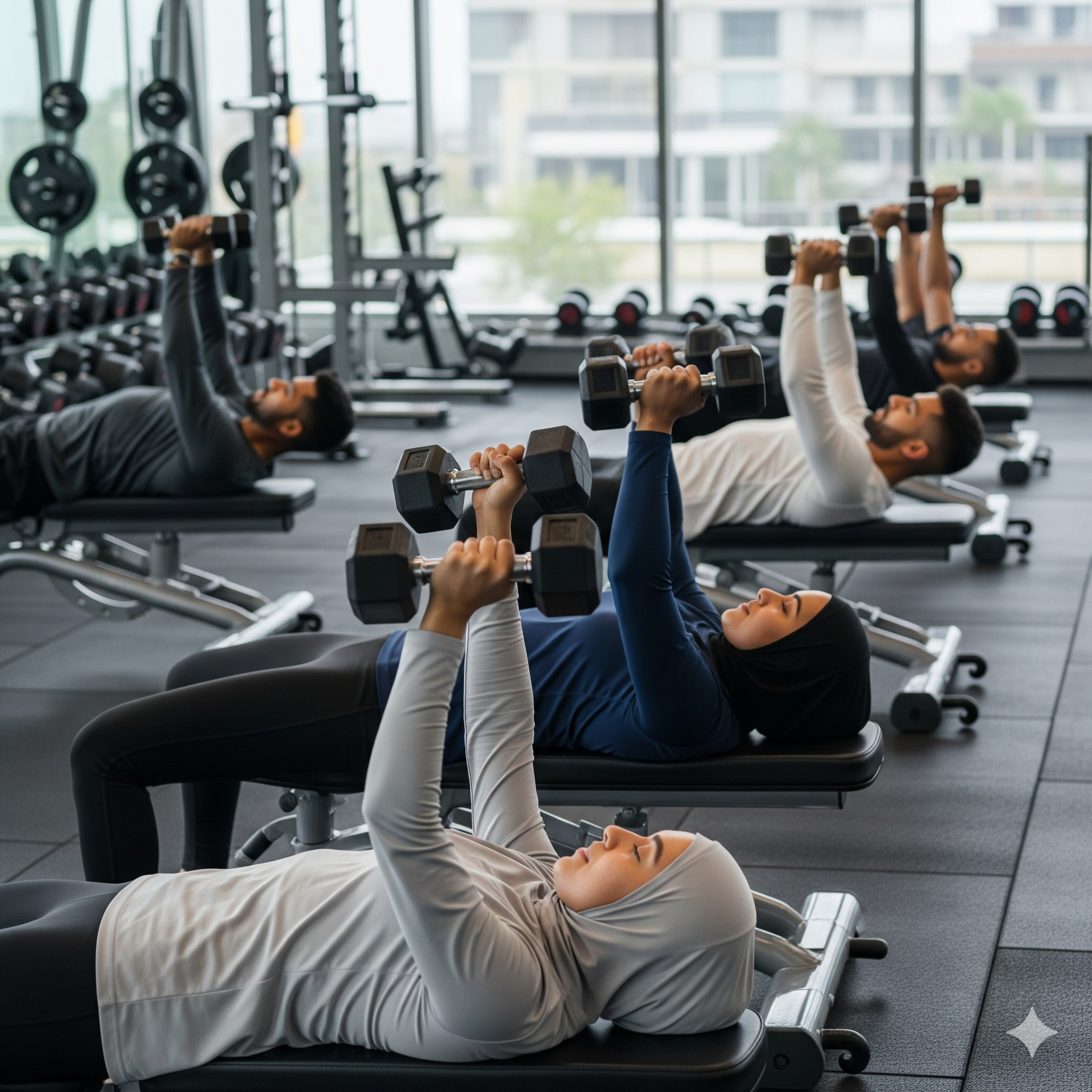

What is a Lying Triceps Extension?
A lying triceps extension, often referred to as a skull crusher or French press, is a strength training exercise designed to isolate the triceps brachii—the muscle on the back of your upper arm. Unlike compound movements such as the bench press or dips, this exercise minimizes assistance from other muscles, allowing you to focus specifically on triceps development.
The movement is performed while lying on a bench, lowering a barbell, EZ-bar, dumbbells, or cables from above the chest or forehead to behind the head, and then pressing it back to full extension. By keeping the upper arms mostly stationary, the elbows become the pivot point, maximizing tension in the triceps.
In essence, this is not just another arm exercise—it’s a direct way to build strength, stability, and definition in one of the most important pushing muscles of the upper body.
Muscles Worked by Lying Triceps Extension
The lying triceps extension primarily targets the triceps brachii, the large muscle on the back of the upper arm. This movement especially emphasizes the long head and medial head, though all three heads are involved. In addition to the triceps, several supporting muscles contribute during the lift, including the pectoralis major (chest), posterior deltoid (rear shoulder), and teres major (a stabilizing muscle near the back of the shoulder).
Main Muscle Worked – Triceps Brachii:
This is the central muscle group activated by the exercise. Because the arms move from an overhead position, the long head of the triceps experiences a greater stretch, while the medial and lateral heads provide strength and stability throughout the motion.
Supporting Muscles Engaged:
-
Pectoralis Major: Plays a minor role in stabilizing and assisting the pressing motion.
-
Posterior Deltoid: Helps steady the upper arm during the lowering and lifting phases.
-
Teres Major: Functions as a synergist, offering additional support at certain ranges of motion.
Why This Exercise Works So Well:
-
Isolation of the Triceps: The movement revolves around elbow extension, which minimizes assistance from other muscles and directs effort straight to the triceps.
-
Extended Range of Motion: The bar or dumbbell travels through a large arc, ensuring the entire muscle is challenged.
-
Long Head Activation: Lowering the weight behind the head lengthens the triceps’ long head, leading to more complete development.
-
Stable Training Position: Lying flat on a bench eliminates balance issues, reduces strain on the lower back, and helps maintain focus on proper arm mechanics.
How to Do a Lying Triceps Extension (Step-by-Step Guide)
-
Set Up
-
Lie flat on a bench with feet planted firmly on the floor.
-
Grip a barbell, EZ-bar, or dumbbells with arms extended over the chest.
-
-
Lowering Phase
-
Keep elbows tucked close to your body, not flaring outward.
-
Slowly bend the elbows, bringing the weight toward the forehead or slightly behind the head.
-
-
Stretch & Positioning
-
Allow a controlled stretch at the bottom of the movement, especially when lowering behind the head for long-head activation.
-
-
Pressing Phase
-
Contract the triceps to extend the elbows back to the starting position.
-
Stop just short of fully locking out to maintain continuous tension.
-
-
Form Tips
-
Movement should come only from the elbows—not the shoulders.
-
Keep wrists firm to avoid strain.
-
Use controlled tempo: slow descent, strong but smooth extension.
-
Benefits of Lying Triceps Extension
1. Muscle Growth (Hypertrophy):
Directly stimulates all three heads of the triceps, leading to size and definition.
2. Strength Transfer to Other Lifts:
Strong triceps improve pressing movements like the bench press, push-ups, and overhead press.
3. Joint Health & Stability:
Strengthening the triceps enhances elbow and shoulder stability, reducing injury risk.
4. Versatility:
Can be adapted with dumbbells, barbells, cables, or resistance bands, making it suitable for both gym and home training.
5. Functional Performance:
Supports athletic activities involving pushing and throwing by improving arm extension power.
Common Mistakes to Avoid
-
Elbows Flaring: Causes shoulder strain and reduces triceps isolation.
-
Too Much Weight: Sacrifices form and increases injury risk.
-
Partial Range of Motion: Prevents full activation of the long head.
-
Using Momentum: Jerking the weight up reduces time under tension.
-
Poor Wrist Position: Leads to discomfort and potential strain.
Avoiding these errors is key to ensuring safety and long-term progress.
Variations of Lying Triceps Extension
The lying triceps extension, often nicknamed the skull crusher, can be performed in multiple ways depending on the equipment, angle, and range of motion. Adjusting these factors not only changes the level of difficulty but also shifts the emphasis across different portions of the triceps.
Equipment-Based Variations
-
EZ-Bar Extension: The curved grip of the EZ-bar reduces wrist strain and is a common choice for this exercise.
-
Dumbbell Extension: Using one dumbbell per hand allows each arm to move independently, helping correct strength imbalances while offering a natural wrist position.
-
Single-Arm Dumbbell Extension: Performed one arm at a time, this version increases time under tension and isolates each triceps muscle more directly.
-
Kettlebell Extension: Holding a kettlebell with both hands can feel smoother on the wrists compared to traditional bars.
-
Resistance Band Extension: A portable option that provides continuous resistance across the movement, making it suitable for home or travel workouts.
Position and Range Variations
-
Skull Crusher (Forehead Lowering): The traditional version where the bar or dumbbells are lowered toward the forehead, activating all three triceps heads.
-
Overhead Extension (Behind the Head): By lowering the weight behind the head, the triceps’ long head is placed under a deeper stretch for greater activation.
-
Incline Bench Extension: Shifting to an incline bench increases the stretch further, enhancing engagement of the long head.
-
Cross-Body Single-Arm Extension: Performed by lowering a dumbbell diagonally across the chest toward the opposite ear, targeting the triceps in a shortened range.
Cable Variations
-
Cable Overhead Extension: Using a low pulley cable keeps tension constant, even at the top of the movement.
-
Cable Pushdowns (Alternative): Although not a lying variation, pushdowns with different handles (rope, straight bar, V-bar) are often rotated into training as a complementary exercise.
Lying Triceps Extension vs. Skull Crushers
It’s important to note that skull crushers are not a separate exercise but rather a variation of the lying triceps extension. The nickname “skull crusher” comes from the risk of bringing the bar too close to the forehead, but both movements share the same foundation: lying on a bench and extending the elbows to target the triceps.
Key Similarities
-
Primary Muscle: Both emphasize the triceps brachii, the main muscle on the back of the arm.
-
Exercise Type: They are isolation lifts, focusing almost entirely on elbow extension.
-
Stability: Because they’re performed lying on a bench, you can handle more weight safely compared to standing extensions.
Key Differences
-
Bar Path & Muscle Emphasis:
-
Skull Crusher (Forehead Path): Lowering the bar toward the forehead directs more effort to the medial and lateral heads of the triceps.
-
Overhead Extension (Behind the Head): Lowering the weight further back increases the stretch, engaging the long head more intensely.
-
-
Mass-Building Potential: Since the long head makes up a large portion of triceps size, the overhead variation is often considered more effective for overall arm mass.
When to Use Each Variation
-
Choose the overhead version when your goal is maximum size and long head development.
-
Opt for the skull crusher path if you want to emphasize the medial and lateral heads.
-
Rotate both into your program to ensure balanced triceps growth and to correct any imbalances.
Tips for Better Results and Safety in Lying Triceps Extensions
To maximize the effectiveness of the lying triceps extension while avoiding injury, form and control should always take priority over the amount of weight lifted. Keep your elbows steady, move through a full yet controlled range, and engage your triceps throughout the entire exercise.
For Better Results
-
Mind-Muscle Focus: Actively contract your triceps during the extension phase to strengthen the mind-muscle connection and improve growth.
-
Avoid Full Lockout: Keep a slight bend at the top of the movement to maintain continuous tension on the triceps.
-
Arm Angle Adjustment: Position your upper arms slightly behind your head instead of straight up. This deepens the stretch on the long head of the triceps and increases resistance at the top.
-
Pause for Stretch: Hold briefly at the bottom of the motion to maximize the stretch and muscle activation.
For Safety
-
Keep Elbows Aligned: Prevent them from flaring outward by keeping them close to your torso, which protects your shoulders and keeps the stress on the triceps.
-
Limit Upper-Body Movement: Only your forearms should move—the shoulders and upper arms stay locked in place.
-
Control Every Rep: Lower the weight slowly and avoid using momentum to push it back up.
-
Stabilize Your Base: Keep your feet planted firmly on the floor and brace your core for balance.
-
Choose Appropriate Weight: Use a load that challenges you without sacrificing proper technique.
-
Don’t Force Full Extension When Fatigued: If your form starts to break down, partial reps with control are safer and still effective.
Who Should Do Lying Triceps Extensions?
Lying triceps extensions are especially useful for lifters aiming to build arm size, triceps strength, and pressing power. This movement isolates the triceps from shoulder to elbow, making it ideal for muscle development, fixing imbalances, and even rehab. It can be performed with barbells, dumbbells, or resistance bands, giving flexibility for different training setups.
Best Suited For
-
Experienced Lifters: Perfect for those who need targeted triceps work to enhance their bench press or other pushing exercises.
-
Bodybuilders: A go-to for sculpting and adding mass to the back of the arms.
-
Anyone Wanting Stronger Arms: By directly stimulating the triceps, it contributes to bigger, stronger overall arm development.
-
Rehab & Imbalance Correction: Helpful for addressing muscular imbalances or as part of recovery programs since it isolates the triceps effectively.
-
People with Wrist Sensitivity: Unlike some other extension movements, this exercise places minimal stress on the wrists.
Key Benefits
-
Full Triceps Activation: Hits all three heads of the triceps brachii for complete upper-arm engagement.
-
Boosts Pressing Strength: Stronger triceps carry over to lifts like the bench press, overhead press, and dips.
-
Wrist-Friendly Option: The lying position minimizes strain on the wrists, making it more joint-friendly.
-
Highly Versatile: Can be performed with different equipment depending on preference and availability.
Why Add Lying Triceps Extensions to Your Workout
The lying triceps extension is more than an arm exercise—it’s a foundational move for strength, stability, and hypertrophy. By directly targeting all three triceps heads, it improves muscle growth, enhances pressing performance, and supports joint health.
Whether you’re a beginner, athlete, or bodybuilder, this exercise deserves a place in your training program. Rotate between variations, avoid common mistakes, and apply proper technique to unlock its full potential.
Key Takeaway Points:
-
Isolates all three heads of the triceps.
-
Boosts strength for pressing movements.
-
Enhances elbow and shoulder stability.
-
Versatile with multiple equipment options.
-
Suitable for beginners and advanced lifters.
Adding lying triceps extensions to your workouts ensures stronger, more defined arms and a solid foundation for all upper-body pushing movements.
Final Thoughts
The lying triceps extension is one of the most effective isolation exercises for building arm size, strength, and pressing power. By keeping the movement centered on the elbows, it ensures maximum triceps activation while minimizing assistance from other muscles. Whether your goal is to improve your bench press, balance out muscle imbalances, or simply build stronger, more defined arms, this exercise is a powerful addition to any workout plan.
With its versatility across dumbbells, barbells, cables, and resistance bands, the lying triceps extension can fit into virtually any training style. Just remember—form and control matter more than the weight you lift. Keep your elbows steady, move through a full range of motion, and rotate between variations for complete development.
In short, if you’re serious about building bigger, stronger arms and unlocking better performance in pressing movements, the lying triceps extension deserves a permanent spot in your training routine.