
Introduction
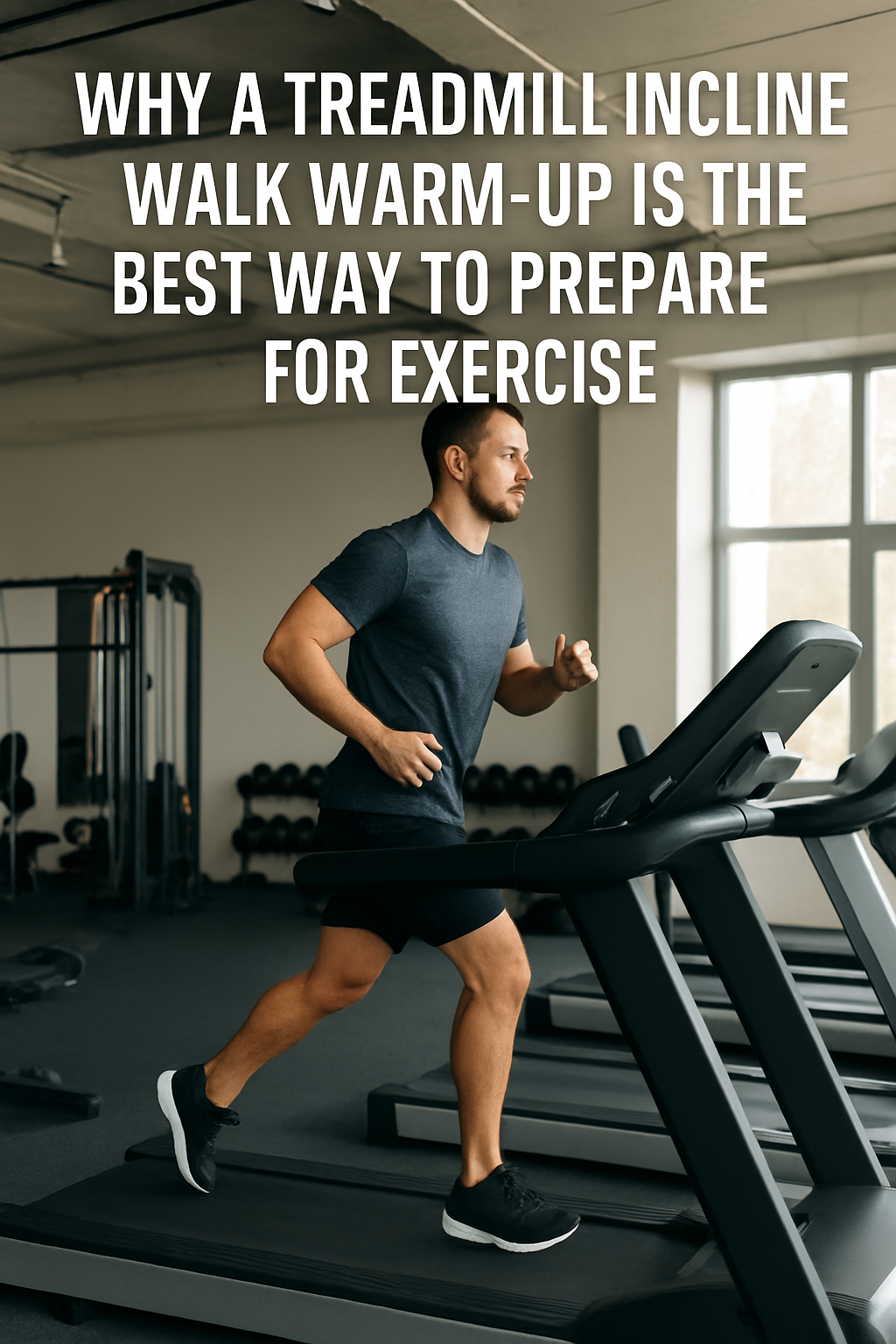
A treadmill incline walk warm-up is a low-impact yet highly effective way to prepare your body for exercise. By simulating the challenge of walking uphill, it increases blood flow, elevates heart rate, and activates the posterior chain muscles—glutes, hamstrings, and calves. Unlike static stretching, it primes both your cardiovascular system and muscular system for upcoming activity.
Key points to remember:
-
Boosts blood circulation for better oxygen delivery.
-
Activates underused muscles from prolonged sitting.
-
Reduces risk of injuries before weight training or cardio.
-
Encourages upright posture and core engagement.
This makes incline walking not just a warm-up but a bridge between rest and peak performance.
Why Treadmill Incline Walk Warm-up Is Better Than Flat Walking
Walking flat may seem adequate, but incline walking provides a superior stimulus. The incline forces your muscles and cardiovascular system to work harder without adding joint strain.
-
Cardiovascular readiness: Your heart rate climbs faster on an incline, priming your lungs and circulation for exercise.
-
Muscle activation: Uphill walking recruits glutes and hamstrings, which flat walking barely engages.
-
Joint-friendly intensity: Even at higher demands, incline walking is still low-impact compared to jogging.
-
Postural alignment: The incline naturally encourages an upright position, helping correct slouched posture.
In short, incline walking provides more benefits in less time.
Top Benefits of Treadmill Incline Walk Warm-up for Fitness
Incline walking before your main workout offers multi-dimensional benefits:
-
Muscular Activation
-
Engages glutes, hamstrings, quads, calves, and hip stabilizers.
-
Improves strength and joint stability for heavy lifts.
-
-
Cardiovascular Efficiency
-
Raises heart rate quicker than flat walking.
-
Increases calorie burn even during warm-up.
-
Builds endurance for long-term performance.
-
-
Injury Prevention
-
Warms up muscles and lubricates joints.
-
Reduces the risk of strains or tears.
-
-
Mental Preparation
-
Mimics real-world movement like stair climbing.
-
Enhances focus and workout mindset.
-
Muscles Worked During a Treadmill Incline Walk Warm-up
Muscles Engaged During a Treadmill Incline Walk Warm-up
Walking on a treadmill with an incline isn’t just about raising your heart rate—it actively engages key muscle groups throughout the lower body, core, and posterior chain, preparing them for more demanding activity.
Key muscles involved:
-
Glutes (buttocks): The gluteus maximus works harder than it would on flat ground, driving your body upward against resistance.
-
Hamstrings (back of thighs): These muscles team up with the glutes to extend the hips and propel you forward, experiencing deeper activation than in level walking.
-
Quadriceps (front of thighs): With every step, your quads contract to extend the knee and lift your body, reinforcing leg strength.
-
Calves (lower legs): The gastrocnemius and soleus respond to the increased ankle movement required on an incline, making them more active and contributing to ankle stability.
-
Tibialis anterior (shins): This muscle works harder to lift the foot at each step, enhancing ankle strength but also demanding gradual progression to avoid shin discomfort.
-
Core (abdominals and lower back): A steady posture on the incline requires constant core engagement, supporting the spine and reducing pressure on the lower back.
-
Shoulders and upper back: Natural arm swings recruit these muscles, aiding balance and improving coordination.
Why this matters:
Incline walking efficiently warms up the body by activating large muscle groups, gently increasing heart rate, and enhancing circulation. Unlike running, it delivers intensity without harsh joint impact. In addition, walking upright and hands-free promotes better alignment and posture, setting you up for safer, more effective performance in your main workout.
Best Incline and Speed Settings for Treadmill Incline Walk Warm-up
Your settings should balance gradual intensity with safety.
-
Phase 1 (2–5 min):
-
Speed: 2–3 mph
-
Incline: 0%
-
Focus: Ease into motion.
-
-
Phase 2 (3–5 min):
-
Speed: 3–4 mph
-
Incline: 1–4%
-
Focus: Elevate heart rate and activate posterior chain.
-
Tips:
-
Keep arms free for natural swinging.
-
Avoid looking down to prevent hunching.
-
Adjust incline/speed to your fitness level.
Optional advanced moves: walking lunges, side steps, or backward walking at low speed for variety.
Step-by-Step Guide to Treadmill Incline Walk Warm-up
-
Start Flat (3–5 minutes):
Walk at 2–3 mph, no incline. Focus on posture. -
Introduce Incline (3–5 minutes):
Increase incline gradually (1–4%). Maintain brisk pace. -
Form Check:
-
Stand tall, core engaged.
-
Swing arms naturally.
-
Avoid leaning on rails.
-
-
Optional Dynamic Stretches:
Step off treadmill for leg swings or walking lunges. -
Cool Down (1–2 minutes):
Walk flat at slow speed before transitioning into main workout.
Common Mistakes to Avoid in Treadmill Incline Walk Warm-up
Many people make simple but costly errors when using a treadmill incline as a warm-up. Rushing into steep settings, gripping the handrails, or walking with poor posture can all reduce effectiveness and even lead to discomfort or injury. A warm-up should be about easing your body into movement—not starting at maximum effort.
Frequent mistakes and better alternatives:
-
Starting with too steep an incline
Jumping straight into a high incline overloads the ankles, knees, and hips, creating unnecessary joint stress and early fatigue.
Fix: Begin on a flat surface with a slow, steady pace. After 5–10 minutes, gradually raise the incline by 1–2% once your muscles are ready. -
Holding the handrails
Relying on handrails shifts the work away from your legs and core, encourages poor posture, and reduces calorie burn.
Fix: Keep your arms swinging naturally to improve balance. If you feel unstable, slow the speed or reduce the incline until you can walk comfortably without support. -
Leaning too far forward or backward
Slouching forward strains the back and neck, while leaning back alters your balance and lowers workout intensity.
Fix: Stay tall with your chest open and head up. Slightly hinge forward from the ankles, not the waist, to match the incline naturally. -
Taking strides that are too long
Overstriding on an incline increases impact on the joints, particularly the knees and hips.
Fix: Use shorter, quicker steps with your feet landing under your hips for better efficiency and safety. -
Looking down too often
Staring at the console or your feet disrupts spinal alignment, leading to tension in the neck and upper back.
Fix: Keep your eyes facing forward, just as you would when walking outdoors, to maintain proper form. -
Skipping the cooldown
Ending abruptly can cause a sudden drop in blood pressure, leaving you lightheaded or dizzy.
Fix: Wind down by gradually lowering speed and incline over 5–10 minutes, followed by light stretches.
Best warm-up tips:
-
Start with a flat, easy-paced walk for 5–10 minutes.
-
Add a light incline of 1–2% in the final few minutes to activate muscles.
-
Focus on upright posture, relaxed shoulders, and natural arm movement.
-
Adjust the pace or incline if you feel overly strained—a warm-up should energize you, not wear you out.
How Long Should a Treadmill Incline Walk Warm-up Last?
Duration matters. Too short, and your body isn’t ready. Too long, and you waste energy.
-
Ideal range: 5–10 minutes.
-
Low intensity days: Closer to 5 minutes.
-
Heavy lifting or HIIT days: 8–10 minutes for thorough prep.
Remember: the goal is readiness, not fatigue.
Treadmill Incline Walk Warm-up vs. Other Warm-up Methods
Incline Walking
-
Great for heart rate elevation.
-
Targets lower-body muscles.
-
Low-impact and simple.
Dynamic Stretching
-
Improves flexibility and mobility.
-
Prepares upper and lower body.
-
Sport-specific movements possible.
Best Strategy: Combine both. Start with incline walking for cardio activation, then add dynamic stretches (leg swings, arm circles) for mobility.
Beginner Tips for Treadmill Incline Walk Warm-up
-
Start slow: Don’t rush into steep inclines.
-
Focus on form: Head up, shoulders back, core engaged.
-
Avoid multitasking: Stay attentive, don’t use your phone.
-
Progress gradually: Add incline/speed as fitness improves.
-
Pair with stretches: Especially if training upper body.
Safety Precautions for Treadmill Incline Walk Warm-up
-
Consult your doctor if you have injuries or chronic conditions.
-
Wear proper shoes with cushioning and grip.
-
Use the safety key to stop the treadmill in emergencies.
-
Hydrate before and after.
-
Stay centered on the treadmill belt to avoid missteps.
Finishing with a short cooldown walk is equally important to return heart rate to normal and prevent stiffness.
Final Thoughts
A treadmill incline walk warm-up is one of the most efficient ways to transition your body from rest to performance. By combining cardiovascular activation with targeted muscle engagement, it prepares you for both strength training and high-intensity cardio without adding unnecessary joint stress. Unlike flat walking or static stretching alone, incline walking primes your heart, lungs, and muscles simultaneously—making your workout safer and more productive.
Whether you’re a beginner or an advanced athlete, starting your session with this warm-up builds better posture, sharper focus, and reduced injury risk. Think of it not as just “walking on a treadmill” but as a strategic tool to unlock more power and endurance in every workout.