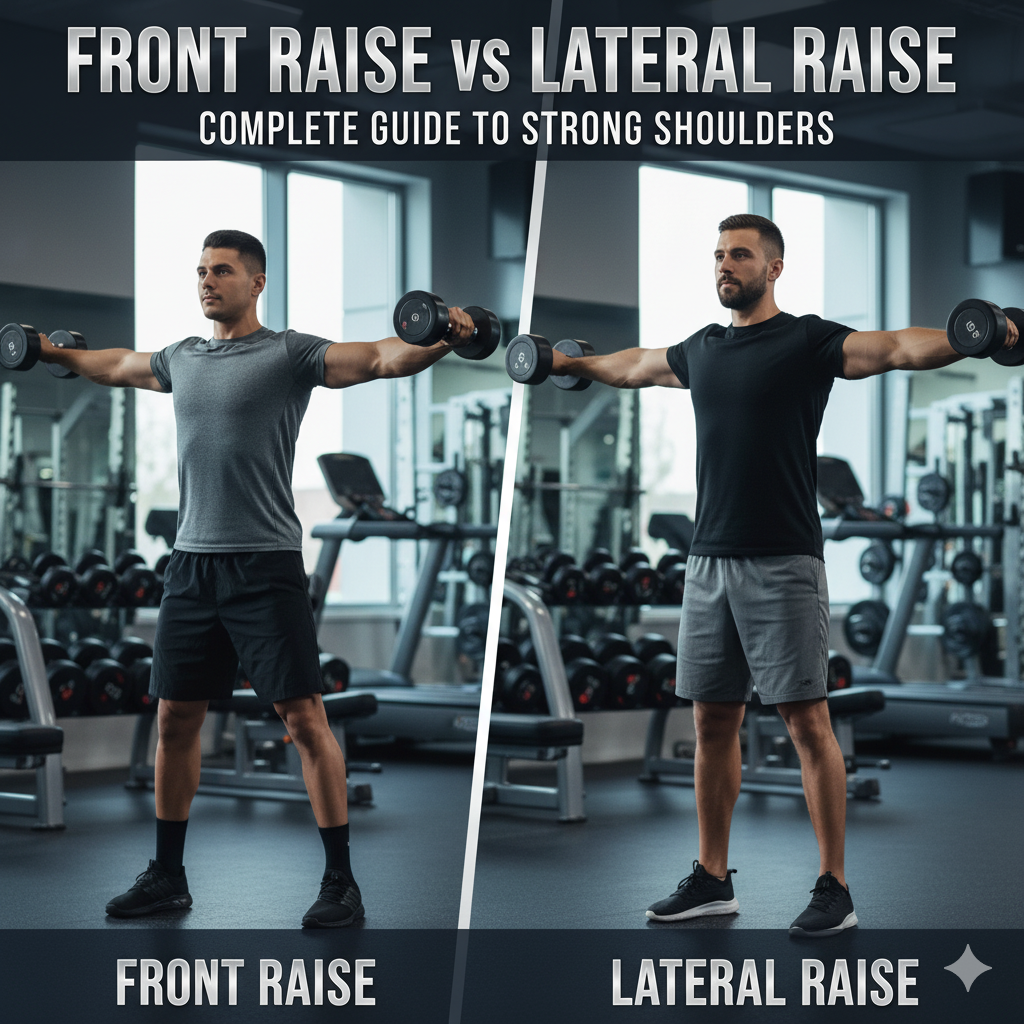

If you’re wondering whether front raises are truly effective, the answer is yes—but it depends on your goals and technique. While lateral raises are commonly praised for building wider delts, many people ask if front raises are better for overall shoulder development. The truth is that both exercises target different parts of your shoulders, so one is not necessarily superior to the other—they simply work different angles. Front raises focus on the anterior delts, helping to strengthen and sculpt the front portion of your shoulders.
while lateral raises emphasize the side delts, giving your shoulders a bigger, more capped appearance. Some beginners confuse a shoulder raise with lateral raises, thinking they are the same, but slight differences in form and angle determine which part of the shoulders is engaged. To get the best results, it’s smart to include both front raises and lateral raises in your routine. This combination ensures balanced growth and makes your shoulders look fuller and stronger. Remember, focusing on form and controlled movement makes each shoulder raise truly effective, ultimately leading to bigger and well-defined shoulders over time.
What Are Front Raise & Lateral Raise?
Before we jump into the “how,” let’s understand the “what.”
-
Front Raise: This exercise targets the front (anterior) deltoids. Imagine lifting a dumbbell straight in front of you—your front shoulder muscles are doing all the work.
-
Lateral Raise: This one works the side (lateral) deltoids, helping give your shoulders that wide, capped look. Picture lifting your arms out to the sides, like wings spreading.
Both moves are isolation exercises, meaning they focus on specific shoulder muscles rather than working multiple muscle groups at once. They’re perfect for building definition and improving shoulder strength without overloading your entire upper body.
Benefits of Front Raise & Lateral Raise
You might be thinking: “Why should I bother with these lifts?” Here’s why:
-
Better shoulder definition: Isolated shoulder training gives your delts a more sculpted, round appearance.
-
Improved posture: Strong shoulders help you stand tall and prevent slouching.
-
Enhanced strength for daily life: Lifting, pushing, and carrying become easier.
-
Balanced muscle development: These exercises target muscles often underused in regular workouts, reducing risk of injury.
Trust me, consistent front and lateral raises can make your shoulders pop and feel more functional at the same time.
How to Do a Front Raise Correctly
Performing front raises might seem simple—just lift the weight in front of you—but form is everything. Poor technique can lead to shoulder strain. Here’s the step-by-step:
-
Start Position: Stand tall with feet shoulder-width apart. Hold a dumbbell in each hand, palms facing your thighs.
-
Lift: Slowly raise the dumbbells in front of you until your arms are parallel to the floor. Keep a slight bend in your elbows.
-
Pause: Hold the top position for 1-2 seconds—feel the squeeze in your front delts.
-
Lower: Slowly lower the weights back to the starting position. Avoid dropping them quickly.
Pro Tips:
-
Start with light weights; too heavy can lead to swinging and poor form.
-
Keep your back straight and core engaged.
-
Avoid lifting above shoulder level—your delts are already working enough!
How to Do a Lateral Raise Correctly
Lateral raises are slightly trickier because it’s easy to use momentum instead of muscle. Here’s the proper technique:
-
Start Position: Stand tall, feet shoulder-width apart. Hold dumbbells at your sides with palms facing your body.
-
Lift: With a slight bend in the elbows, raise your arms out to the sides until they reach shoulder height.
-
Pause: Squeeze the side delts at the top for 1-2 seconds.
-
Lower: Slowly bring the arms back down.
Pro Tips:
-
Don’t shrug your shoulders—focus on using your delts, not traps.
-
Keep a smooth, controlled motion. No swinging!
-
Try light weights and higher reps if you’re new; this really isolates the lateral delts.
Avoid These Shoulder Training Errors
Even experienced lifters sometimes make these errors:
-
Using momentum: Swinging the weights reduces effectiveness and can cause injury.
-
Too heavy weights: Heavier isn’t always better; form is more important.
-
Shrugging or hunching: Keep shoulders down and back.
-
Lifting too high: Stop at shoulder level to prevent impingement.
Correct form not only maximizes results but keeps your shoulders safe.
Front Raise & Lateral Raise Variations
Want to mix it up? There are several variations to challenge your muscles differently:
-
Cable Front/Lateral Raise: Provides constant tension throughout the movement.
-
Single-Arm Raises: Focus on one shoulder at a time for better balance.
-
Incline Lateral Raise: Lying on an incline bench targets the delts from a different angle.
-
Plate or Band Raises: Use resistance bands or plates instead of dumbbells for variety.
Mixing variations can keep your workouts fresh and effective.
How to Include These Exercises in Your Workout
Here’s a sample shoulder segment for a 30–45 minute routine:
-
Warm-up: Arm circles, band pull-aparts – 5 min
-
Front Raise: 3 sets of 12–15 reps
-
Lateral Raise: 3 sets of 12–15 reps
-
Overhead Press (optional compound lift): 3 sets of 8–12 reps
-
Cool-down & Stretching
Tip: Front and lateral raises are best done after compound lifts like overhead presses to avoid pre-fatiguing your shoulders.
Who Should Do These Exercises?
-
Beginners wanting shaped shoulders
-
Bodybuilders and fitness enthusiasts for muscle isolation
-
Athletes needing functional shoulder strength
-
Anyone who wants to improve posture and shoulder stability
Remember, always listen to your body. If you feel sharp pain (not normal muscle burn), stop immediately.
Why Shoulder Training Matters
Strong shoulders aren’t just about looking good—they improve your posture, lifting performance, and daily movement. Neglecting shoulder training can lead to imbalances, reduced upper-body strength, and even injury. That’s why front and lateral raises are so crucial—they target underworked muscles that compound lifts alone might miss.
Shoulder Anatomy 101
Understanding the deltoids helps you appreciate why these exercises are effective:
-
Anterior Delts (Front): Work when you lift objects in front of you. Front raises hit this area perfectly.
-
Lateral Delts (Side): Create width and roundness. Lateral raises sculpt these muscles.
-
Posterior Delts (Rear): Often overlooked, these are worked with reverse flys or face pulls.
When you train all three heads, your shoulders look balanced and strong.
Equipment You Can Use
-
Dumbbells (most common)
-
Resistance bands
-
Cable machines
-
Weighted plates
No fancy gym? No problem! Even water bottles can serve as makeshift dumbbells.
Frequently Asked Questions (FAQ)
Q1: How many reps are ideal?
-
12–15 reps is perfect for isolation, aiming for muscle fatigue, not max strength.
Q2: Should I do front and lateral raises on the same day?
-
Yes! They complement each other—front raises target the anterior delts, lateral raises the side delts.
Q3: Can beginners start with these exercises?
-
Absolutely! Start with light weights or resistance bands to perfect form.
Q4: Can these exercises increase shoulder size?
-
Yes, consistent training with proper nutrition and progressive overload will increase muscle size and shape.
Programming for Results
-
Beginners: 2–3 times per week, 2–3 sets of 12–15 reps.
-
Intermediate: Add variety like incline or cable raises, mix in drop sets.
-
Advanced: Use supersets (front + lateral raise back-to-back), slow negatives, or time under tension for maximum growth.
Conclusion
Front raise and lateral raise are simple yet highly effective exercises that build strong, shapely shoulders. They improve strength, function, and aesthetics, while also helping prevent injury. Proper form, consistent training, and smart programming are your keys to unlocking their full potential.
Remember: It’s not about lifting the heaviest weight—it’s about controlled, intentional movements. Focus on the muscle, not the dumbbell, and your shoulders will thank you.