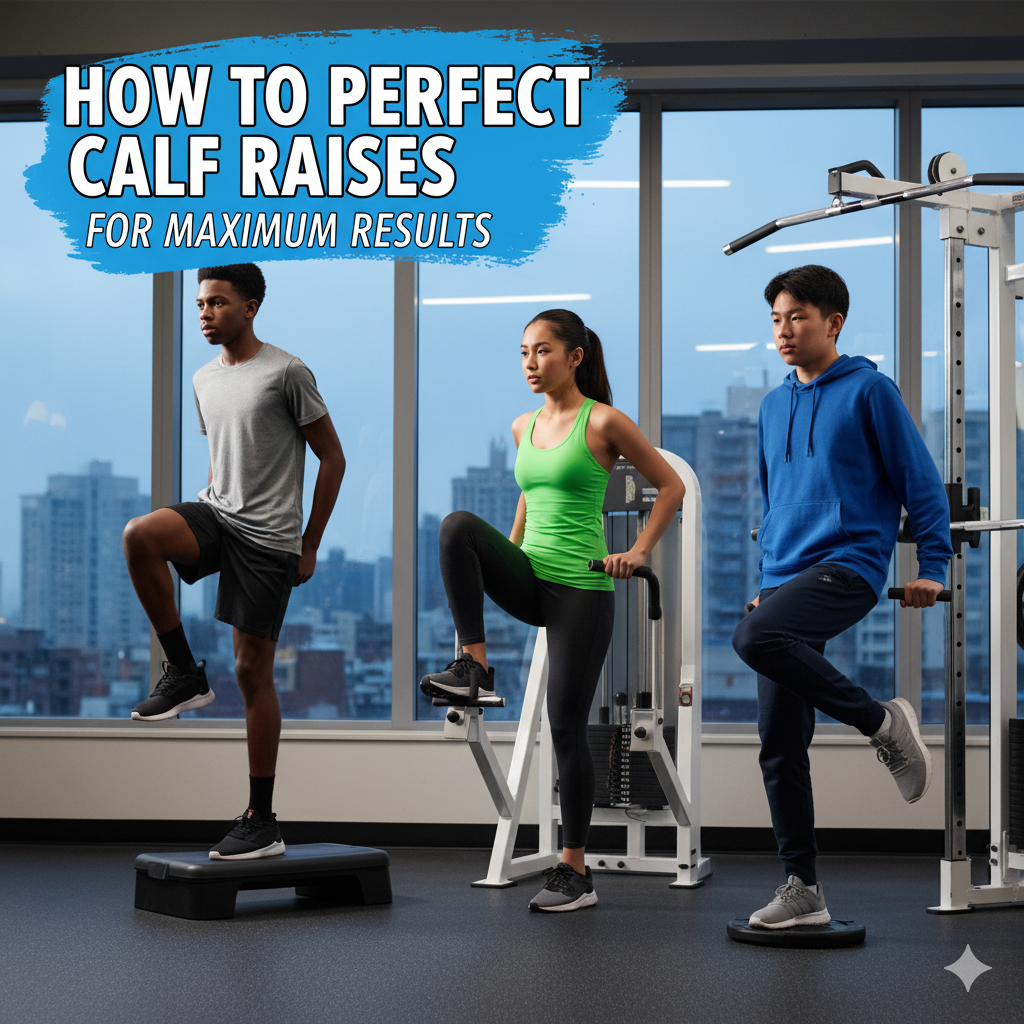

Calf Raises are one of the simplest yet most effective exercises you can do to strengthen your lower legs. Whether you’re an athlete, a fitness enthusiast, or just starting your workout journey, calf raises help improve balance, stability, and overall leg power. When performed correctly, calf raises target both the gastrocnemius and soleus muscles, giving your legs a defined and athletic look. Many people wonder, “What are calf raises good for?” The answer is simple: they enhance everyday movements like walking, running, and climbing stairs, while also supporting stronger ankle joints.
Learning how to do proper calf raises can prevent common mistakes, such as bouncing or using momentum, which reduces effectiveness. Doing 100 calf raises a day might seem extreme, but consistent practice can increase endurance and muscle tone over time. For best results, mix variations such as standing, seated, or single-leg calf raises to fully engage all calf muscles. Remember, slow and controlled movements are key—rushing reps won’t give the same benefits. If you want strong, sculpted calves that improve both function and appearance, incorporating calf raises into your regular routine is essential.
What Are Calf Raises?
Calf raises are a simple yet powerful exercise that targets the muscles of your lower legs, mainly the gastrocnemius and soleus. These are the muscles that give your calves that signature round shape.
When you stand on your toes and lift your heels off the ground, you engage these muscles. While it sounds basic, don’t underestimate the burn— are a small exercise with big results.
Benefits of Calf Raises
You might think, “Why bother with calves? They’re tiny!” But here’s the truth: strong calves are essential not only for aesthetics but also for overall strength and mobility. Here’s why:
-
Improved Balance and Stability – Your calves play a crucial role in keeping you steady while walking, running, or standing.
-
Enhanced Athletic Performance – Whether you sprint, jump, or climb stairs, powerful calves contribute to explosive movements.
-
Better Lower Leg Strength – They help support your ankles and knees, reducing injury risk.
-
Aesthetic Appeal – Let’s be honest: well-defined calves look amazing in shorts or swimwear!
-
Support for Daily Movements – From walking to standing on tiptoes, your calves make everyday life easier.
Anatomy of the Calf: Know Your Muscles
Before diving into exercises, it’s helpful to understand what you’re working. Your calf actually consists of two main muscles:
-
Gastrocnemius
-
The larger, more visible muscle.
-
Gives the calf its “bump.”
-
Works best when your knees are straight.
-
-
Soleus
-
Lies underneath the gastrocnemius.
-
Important for endurance.
-
Activated when your knees are bent.
-
Knowing this distinction can help you vary your exercises to target both muscles effectively.
Variations of Calf Raise
To keep your workouts exciting and effective, mix in different types of it:
1. Standing Calf Raises
-
Traditional version using bodyweight or added dumbbells/barbells.
-
Targets the gastrocnemius primarily.
2. Seated Calf Raises
-
Sit on a bench with weights on your knees.
-
Focuses on the soleus muscle.
3. Single-Leg Calf Raises
-
Perform the exercise one leg at a time for better balance and strength symmetry.
4. Donkey Calf Raises
-
Lean forward with a partner or weight on your lower back.
-
Increases intensity and stretch in the calves.
5. Calf Raise on an Elevated Surface
-
Use a step or block to allow a deeper stretch at the bottom.
-
Helps achieve a fuller range of motion.
Mistakes People Often Make
Even the best exercise can lose effectiveness if done incorrectly. Watch out for these pitfalls:
-
Bouncing – Using momentum instead of muscle control.
-
Too Heavy Too Soon – Overloading can strain your Achilles tendon.
-
Neglecting the Stretch – Not lowering your heels fully limits muscle engagement.
-
Ignoring Both Muscles – Focusing only on standing calf raises misses the soleus.
-
Poor Foot Alignment – Keep toes pointing forward to prevent knee or ankle strain.
How Often Should You Do Calf Raises?
Calves respond well to frequent training, but they need recovery too. Here’s a general guide:
-
Beginners: 2–3 times per week, 2–3 sets of 12–15 reps.
-
Intermediate: 3–4 times per week, 3–4 sets of 15–20 reps.
-
Advanced: 4–5 times per week with varied intensity and weights.
Tip: Mix standing and seated variations to fully target both the gastrocnemius and soleus.
Calf Raise and Weight Loss
While calf raises alone won’t burn significant belly fat, they contribute to overall calorie burning when included in a full leg workout. They also help tone your legs, giving a leaner, more defined appearance.
Integrating Calf Raise into Your Workout
Here’s an example of a lower-body workout incorporating calf raise:
-
Squats – 3 sets of 12 reps
-
Lunges – 3 sets of 12 reps per leg
-
Deadlifts – 3 sets of 10 reps
-
Standing Calf Raises – 3 sets of 15 reps
-
Seated Calf Raises – 3 sets of 20 reps
Pro Tip: Superset standing and seated to maximize growth and endurance.
Tips for Maximum Growth
-
Mind-Muscle Connection: Focus on contracting your calves rather than rushing reps.
-
Progressive Overload: Gradually increase weight or reps to keep muscles challenged.
-
Stretch and Recover: Stretch your calves regularly to prevent tightness and improve range of motion.
-
Consistency: Calves are stubborn—patience and consistency are key.
Interesting Facts About Calves
-
Calf muscles are often considered “stubborn” because they contain a high number of slow-twitch fibers, making them endurance-focused.
-
Strong calves can improve your running speed and jump height.
-
Even animals like kangaroos rely heavily on their calves for explosive movements!
Takeaway
It may seem simple, but they are incredibly effective when done correctly. They strengthen and sculpt your lower legs, enhance athletic performance, improve balance, and add aesthetic value. By incorporating variations, maintaining proper form, and being consistent, you’ll notice noticeable improvements in both strength and appearance.