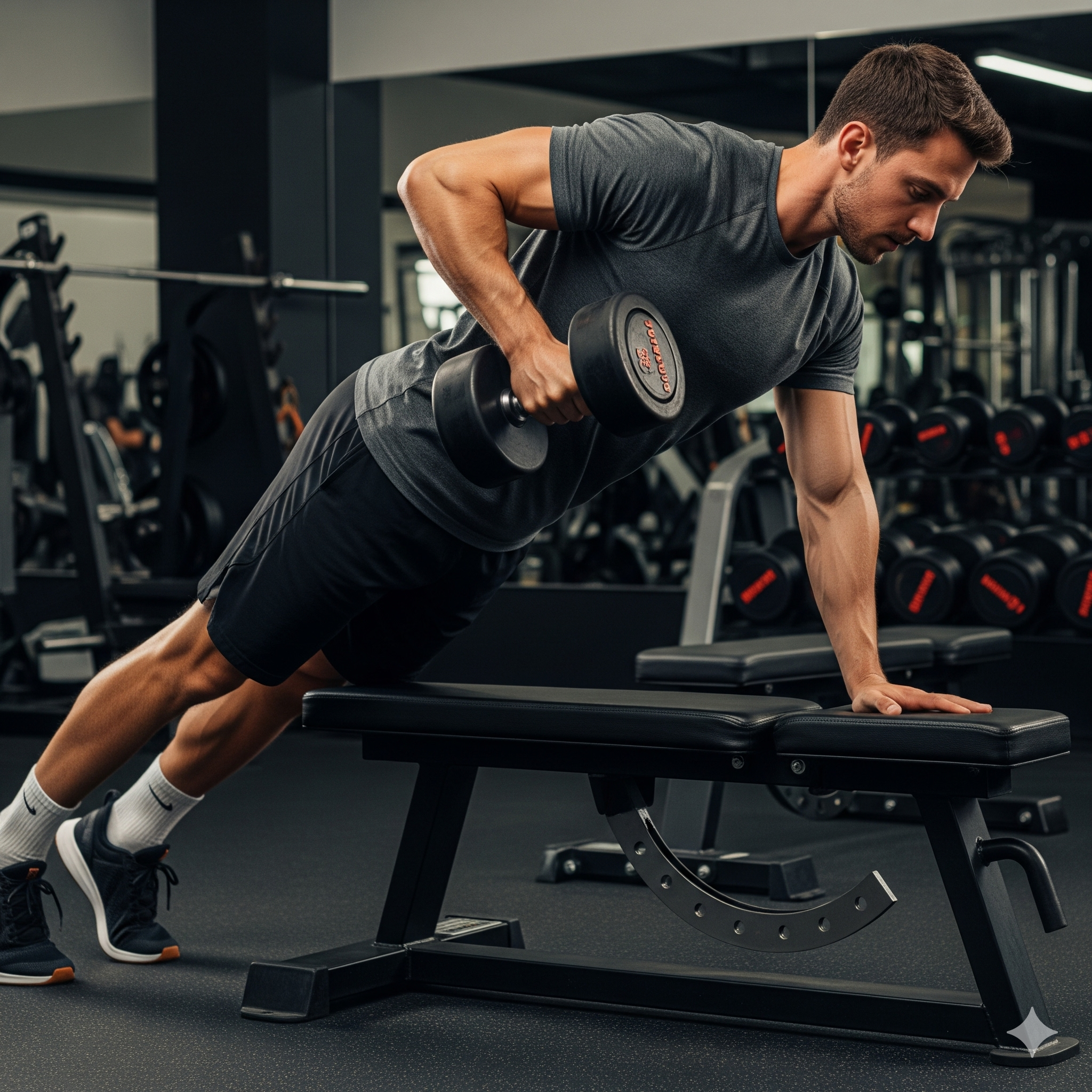

Introduction: Why Dumbbell Rows Matter
When it comes to building strength, balance, and posture, dumbbell rows often stand out as one of the most versatile exercises. Unlike machines that limit your range of motion, this free-weight movement allows your body to engage stabilizing muscles, improve coordination, and target your back in a functional way.
In today’s fitness world, where home workouts and minimal equipment routines are becoming more popular, dumbbell rows continue to rise in importance. Whether you’re a beginner or an advanced lifter, this exercise can be adapted to meet your fitness goals.
What Are Dumbbell Rows?
Dumbbell rows are a compound strength-training movement that primarily targets the latissimus dorsi (lats), rhomboids, trapezius, and biceps. The exercise involves pulling a dumbbell toward your torso while maintaining a stable, controlled posture. This pulling action mimics real-life movements, making it highly practical for daily strength and mobility.
The Muscles Worked in Dumbbell Rows
One of the reasons dumbbell rows are so effective is their ability to target multiple muscle groups at once:
-
Lats (Latissimus Dorsi): The broad back muscles responsible for width and pulling strength.
-
Rhomboids: Located between the shoulder blades, essential for posture.
-
Trapezius: Upper and mid traps stabilize the shoulders and spine.
-
Biceps: Assist in pulling the weight upward.
-
Core Muscles: Engage for stability and balance during the movement.
This makes dumbbell rows not just a back exercise, but a full upper-body and core engagement drill.
Key Benefits of Dumbbell Rows
Adding dumbbell rows to your workout routine offers several benefits:
-
Improved Posture – Strengthening the back muscles reduces slouching and spinal imbalances.
-
Enhanced Strength – Builds pulling strength useful for pull-ups, deadlifts, and daily lifting tasks.
-
Better Muscle Balance – Corrects imbalances between the front and back of the body.
-
Scalability – Easy to adjust by increasing or decreasing dumbbell weight.
-
Accessibility – Requires only one dumbbell and minimal space, perfect for home training.
How to Perform Dumbbell Rows Correctly
Proper form is crucial to maximize results and prevent injuries. Here’s a step-by-step guide:
-
Set Up: Place your left knee and left hand on a bench for support, keeping your right foot firmly on the ground.
-
Grip: Hold a dumbbell in your right hand with a neutral grip (palm facing inward).
-
Position: Keep your back straight, core tight, and head neutral.
-
Row Movement: Pull the dumbbell toward your torso by driving your elbow up and back.
-
Squeeze: At the top, squeeze your back muscles before slowly lowering the weight.
-
Repetition: Perform 8–12 reps before switching sides.
Pro Tip: Avoid twisting your torso or using momentum—keep the movement slow and controlled.
Variations of Dumbbell Rows
To keep your training effective and avoid plateaus, consider these variations:
-
One-Arm Dumbbell Row: Standard version, great for unilateral strength.
-
Two-Arm Dumbbell Row: Performed in a bent-over position without a bench.
-
Incline Dumbbell Row: Done while lying chest-down on an incline bench for strict form.
-
Renegade Row: A plank-based variation targeting the core and back simultaneously.
-
Kroc Row: A heavier, high-rep version that builds both strength and endurance.
Common Mistakes to Avoid
Many beginners and even experienced lifters make errors during dumbbell rows. Watch out for:
-
Using Too Much Weight: Leads to poor form and strain on the lower back.
-
Rounded Back: Increases injury risk. Always keep your spine neutral.
-
Shrugging Shoulders: Over-activates traps instead of lats.
-
Fast Reps: Momentum reduces muscle engagement—focus on control.
Dumbbell Rows vs. Barbell Rows
Both exercises target similar muscles, but each has unique advantages:
-
Dumbbell Rows: Allow greater range of motion, correct imbalances, and reduce spinal stress.
-
Barbell Rows: Enable lifting heavier weights but require more overall stability.
If you train at home with limited equipment, dumbbell rows are the more practical choice.
Integrating Dumbbell Rows Into Your Workout
Depending on your training goals, dumbbell rows can be programmed in various ways:
-
Strength Training: 4–6 sets of 4–6 reps with heavy weight.
-
Hypertrophy (Muscle Growth): 3–4 sets of 8–12 reps with moderate weight.
-
Endurance and Conditioning: 2–3 sets of 12–20 reps with lighter weight.
Combine them with complementary exercises like push-ups, overhead presses, and squats for a balanced routine.
Key Takeaways
-
Dumbbell rows are a compound exercise targeting lats, rhomboids, traps, biceps, and core.
-
They improve posture, strength, and muscular balance.
-
Proper form is crucial: keep the back straight, core tight, and avoid momentum.
-
Variations like renegade rows and incline rows add challenge and variety.
-
Suitable for beginners and advanced athletes alike.
FAQs About Dumbbell Rows
Q1: Are dumbbell rows good for beginners?
Yes, with light weights and proper form, they are safe and highly effective for newcomers.
Q2: Should I do dumbbell rows every workout?
Not necessarily. Two to three times a week is enough, allowing muscles to recover.
Q3: Can dumbbell rows replace pull-ups?
While both are pulling exercises, they complement each other. Rows improve horizontal pulling strength, while pull-ups focus on vertical pulling.
Q4: Do dumbbell rows build biceps?
They activate biceps as secondary muscles, but the main focus remains on the back.
Conclusion
The answer is a resounding yes. Dumbbell rows are one of the most effective and accessible back exercises you can perform, whether at home or in the gym. They build strength, correct imbalances, and improve posture—all with just a single dumbbell.
By mastering variations and maintaining proper form, you can unlock the full potential of this classic movement. If your goal is a stronger back, better performance, and a healthier posture, make dumbbell rows a staple in your workout program.