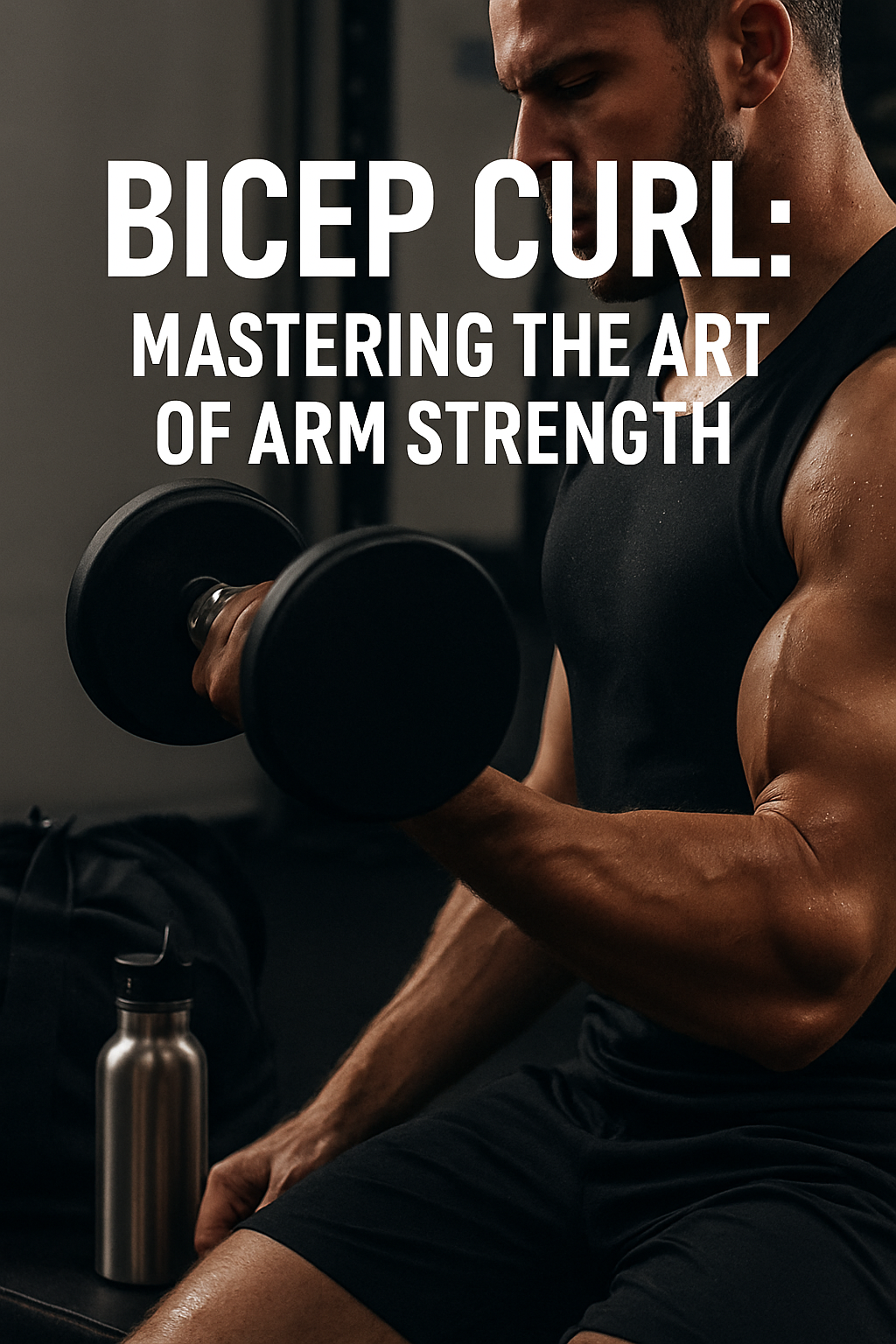

A bicep curl is one of the most fundamental strength-training exercises, designed to isolate and strengthen the biceps, brachialis, and brachioradialis muscles of the upper arm. While seemingly simple, performing the movement incorrectly can reduce effectiveness and increase injury risk. Understanding the mechanics, benefits, variations, and proper form is essential for maximizing results.
How to Perform a Bicep Curl
Performing a dumbbell bicep curl effectively involves more than just lifting a weight toward your shoulder. Correct form ensures maximal engagement of the target muscles and prevents strain.
Step-by-Step Guide:
-
Grip:
Hold a dumbbell in each hand with palms facing upward (supinated grip). This grip maximizes engagement of the biceps brachii. -
Starting Position:
Let your arms hang naturally at your sides with elbows tucked close to your torso. Keep your shoulders relaxed. -
The Curl:
With elbows stationary, lift the dumbbells toward your shoulders by bending at the elbow. Avoid swinging your torso. -
Peak Contraction:
Pause at the top of the movement and squeeze the biceps to reinforce mind-muscle connection. -
Lowering:
Slowly return the dumbbells to the starting position. Control the descent to activate the eccentric portion of the lift, which is crucial for growth.
Key Tips for Effectiveness:
-
Keep your torso upright to prevent momentum from reducing muscle activation.
-
Control the negative phase (lowering) to stimulate muscle fibers.
-
Maintain straight wrists and fixed elbows to protect joints.
-
Focus on the contraction, feeling your biceps work throughout the movement.
Benefits of Bicep Curls
Bicep curls are a key exercise for developing stronger, more defined biceps and forearms, which in turn enhances grip strength and overall upper-body power, making both everyday tasks and other workouts easier to perform. This movement also supports better elbow stability and mobility, improves posture, and strengthens muscles critical for pulling motions, contributing to improved athletic performance.
Muscular Benefits
-
Bicep Growth and Strength: Bicep curls specifically target the biceps, promoting hypertrophy and increasing arm strength.
-
Forearm Development: The movement activates the brachialis and brachioradialis in the lower arm, enhancing overall arm robustness.
-
Grip Enhancement: Holding and controlling the weights engages forearm muscles, improving your ability to maintain a secure grip.
-
Muscle Endurance: Regular curling increases your arms’ capacity to perform repetitive motions or sustain effort over longer periods.
Functional and Performance Benefits
-
Practical Strength: Stronger biceps make daily tasks like lifting, carrying, or pushing objects noticeably easier.
-
Improved Exercise Performance: Enhanced bicep and forearm strength supports other workouts, particularly pulling exercises such as rows or pull-ups.
-
Joint Support and Mobility: Curls help stabilize the elbow and shoulder joints while improving their range of motion, reducing the likelihood of injury.
Aesthetic and Health Benefits
-
Toned Arms: Developing biceps adds definition and a sculpted appearance to the upper arms.
-
Posture Improvement: Balanced upper-body strength from stronger biceps supports an upright, stable posture.
-
Bone and Joint Health: Resistance training like curls stimulates bone density while protecting joint integrity.
-
Increased Metabolism: More muscle mass from bicep training can enhance calorie burn even at rest, supporting overall fitness and fat management.
Muscles Worked During Bicep Curls
While the biceps brachii is the primary mover, bicep curls engage multiple supporting muscles.
Primary Movers
-
Biceps Brachii: Flexes the elbow and supinates the forearm; the main target of all curls.
-
Brachialis: Lies under the biceps, flexing the elbow and contributing to arm thickness.
-
Brachioradialis: Located in the forearm, assists elbow flexion, especially with a neutral grip.
Secondary Muscles
-
Anterior Deltoid: Provides shoulder stability during curling motion.
-
Forearm Muscles: Maintain grip and wrist alignment for controlled lifts.
-
Triceps (Antagonist): Slowly lengthen during the eccentric phase to balance movement.
Grip Influence
-
Supinated Grip (Palms Up): Maximizes biceps brachii engagement.
-
Neutral Grip (Palms In): Targets brachialis and brachioradialis.
-
Pronated Grip (Palms Down): Focuses primarily on the brachioradialis.
Types of Bicep Curls and Variations
Bicep curl variations are designed to target different regions of the biceps while providing distinct advantages for muscle growth, strength, and overall arm development. Each variation shifts the emphasis slightly, allowing you to develop both the size and functionality of the biceps, brachialis, and forearm muscles. By incorporating multiple types of curls into your routine, you can achieve a more balanced and aesthetically pleasing arm while enhancing strength for daily activities and athletic performance.
Common Bicep Curl Variations
Dumbbell Bicep Curls:
This versatile and widely practiced curl allows you to alternate arms or lift both simultaneously. The supinated grip (palms facing up) encourages a greater range of motion and isolates the biceps effectively. Alternating dumbbell curls also allow for minor adjustments in wrist and arm positioning, which can reduce strain and enhance the mind-muscle connection.
Barbell Bicep Curls:
A staple for building mass, barbell curls are ideal for lifting heavier weights. The fixed position of the barbell requires stabilization from the elbows and shoulders, engaging additional muscles while promoting overall arm strength. This variation is particularly effective for increasing the size of the biceps through progressive overload.
Hammer Curls:
Hammer curls involve holding the dumbbells with a neutral grip (palms facing each other), which shifts focus to the brachialis (a bicep-supporting muscle) and brachioradialis (forearm muscle). This not only thickens the arms but also strengthens the forearms and improves grip, making it a functional movement for lifting, carrying, and pulling tasks.
Concentration Curls:
Performed while seated with the working arm resting against the thigh, concentration curls isolate each bicep individually. This strict form minimizes the use of momentum and strengthens the mind-muscle connection, which can help correct imbalances between the left and right arms. It is particularly effective for peak contraction at the top of the movement, enhancing definition.
Preacher Curls:
Using a preacher bench or arm curl machine, preacher curls provide upper-arm support to prevent swinging, keeping tension on the biceps throughout the lift. This variation is excellent for isolating the bicep during both the lifting and lowering phases, promoting hypertrophy and strict form.
Other Effective Bicep Curl Variations
Incline Dumbbell Curls:
Performed on an incline bench, this curl begins with the arms extended behind the torso, placing a deep stretch on the biceps. The angle emphasizes the long head of the bicep, promoting a fuller, more rounded appearance and improving flexibility in the shoulder joint.
Reverse Curls:
With an overhand grip (palms facing downward), reverse curls primarily target the brachioradialis in the forearm while still engaging the biceps. This variation strengthens the forearm muscles significantly and adds a unique dimension to arm development, supporting functional strength for pulling and gripping.
Cable Curls:
Using a cable machine provides constant tension on the biceps throughout the entire range of motion, unlike free weights where tension can fluctuate. Cable curls allow for multiple grip attachments and angles, enabling you to target the biceps from different directions and maximize hypertrophy.
Zottman Curls:
This advanced dumbbell variation combines a supinated curl on the way up with a pronated (overhand) rotation on the descent. By incorporating the forearms into the lowering phase, Zottman curls improve grip strength, forearm definition, and overall arm coordination while still isolating the biceps during the lift.
Common Mistakes in Bicep Curls
Even small errors can reduce effectiveness or cause injury.
-
Using Momentum (Swinging): Shifts tension from the biceps to other muscles.
-
Excessive Elbow Movement: Moves tension from biceps to shoulders.
-
Incomplete Range of Motion: Fails to fully activate the bicep.
-
Bending Wrists: Stresses wrists and forearms rather than biceps.
-
Using Excessive Weight: Forces reliance on other muscles, increasing injury risk.
Corrective Tips:
-
Pin elbows to your sides.
-
Move slowly and control each rep.
-
Maintain a stable torso and straight wrists.
-
Select weights that allow perfect form.
Beginner-Friendly Bicep Curl Variations
For novices, learning proper form with lighter weights is crucial.
Dumbbell Bicep Curls
-
Alternating Dumbbell Curl: One arm rests while the other works; promotes focus and heavier lifts.
-
Hammer Curl: Engages brachialis and brachioradialis without compromising form.
-
Seated Dumbbell Curl: Reduces torso movement, helping maintain stability.
Barbell Bicep Curls
-
Standard Barbell Curl: Builds mass while training form control.
-
EZ-Bar Curl: Angled grips reduce wrist strain, allowing safer lifting.
Beginner Tips:
-
Start light to perfect form.
-
Focus on controlled movement.
-
Avoid swinging or cheating.
Advanced Bicep Curl Techniques
Advanced bicep curl techniques are designed to challenge the muscles in new ways, increase tension, and improve isolation, often using specific angles, equipment, or subtle adjustments to enhance the mind-muscle connection. These methods go beyond standard curls to maximize bicep growth and refine muscle control.
Advanced Bicep Curl Exercises
These exercises manipulate body position or use supportive equipment to isolate the biceps, reduce momentum, and increase overall effectiveness.
Incline Dumbbell Curls:
Performed on an incline bench angled between 45–60 degrees, this variation has the arms hanging behind the torso at the start. Curling the dumbbells while keeping elbows locked and upper arms stationary emphasizes a deep stretch in the long head of the biceps, improving both range of motion and peak contraction.
Spider Curls:
In this exercise, you lie face down on an incline bench with your triceps resting on the pad. Only the forearms move as you curl the weights toward your chest. This position eliminates swinging and isolates the biceps intensely, particularly in the mid-range of the movement.
Preacher Curls:
Using a preacher bench or specialized machine, the triceps are supported on the pad, preventing the upper arms from moving. This keeps constant tension on the biceps throughout the curl, especially at the stretched position, and minimizes cheating or momentum.
Concentration Curls:
Seated with the upper arm braced against the thigh, this classic isolation movement ensures minimal body movement, allowing the biceps to perform the majority of the work. It promotes a strong mind-muscle connection and helps correct imbalances between the arms.
Advanced Wrist and Technique Modifications
In addition to positional variations, small adjustments in wrist and hand mechanics can significantly enhance bicep activation and growth.
Limp Wrist Technique:
During the upward phase of a curl, relaxing the wrist slightly allows the bicep to do more of the lifting. The wrist is then actively engaged at the top of the curl to maximize peak contraction.
Controlled Supination:
Rotating the hand at the peak of the movement so the palm turns outward (supinates) further engages the bicep fibers, particularly the long head, for a fuller contraction.
Maintaining Constant Tension:
Rather than locking out the elbows at the bottom, keeping a slight bend maintains continuous tension on the biceps, promoting growth throughout the range of motion.
Mind-Muscle Connection:
Consciously focusing on the biceps rather than merely moving the weight ensures each repetition stimulates the target muscles effectively. Squeezing at the top and controlling the lowering phase strengthens the connection between intention and muscle activation.
Bicep Curl Workout Plans
A structured plan balances exercise selection, volume, and recovery to maximize arm growth.
Basic Workout Plan
-
Warm-up: 5–10 minutes of light cardio and stretching.
-
Standing Dumbbell Curls: 3 sets of 8–12 reps.
-
Barbell Curls: 3 sets of 8–12 reps.
-
Hammer Curls: 3 sets of 8–12 reps.
-
Cool-down: Stretching for 5–10 minutes.
Advanced Workout Plan
-
Warm-up: Light cardio and stretching.
-
Incline Dumbbell Curls: 3 sets of 10–12 reps.
-
EZ-Bar Preacher Curls: 3 sets of 10–12 reps.
-
Concentration Curls: 3 sets of 8–12 reps.
-
Cable Rope Hammer Curls: 3 sets of 10–12 reps.
-
Cool-down: Stretching to prevent soreness.
Key Tips for Success:
-
Avoid momentum; prioritize controlled movement.
-
Keep elbows close to torso.
-
Squeeze biceps at the top for maximal contraction.
-
Gradually increase weight or reps (progressive overload).
-
Vary exercises to target all parts of the bicep.
Conclusion
Bicep curls are more than a simple arm exercise—they are a gateway to functional strength, muscular endurance, and overall upper-body stability. From beginner to advanced levels, mastering proper form, selecting the right variations, and avoiding common mistakes ensures maximum benefits. By integrating these techniques and structured workouts, anyone can build stronger, more defined arms, improve daily function, and enhance athletic performance.