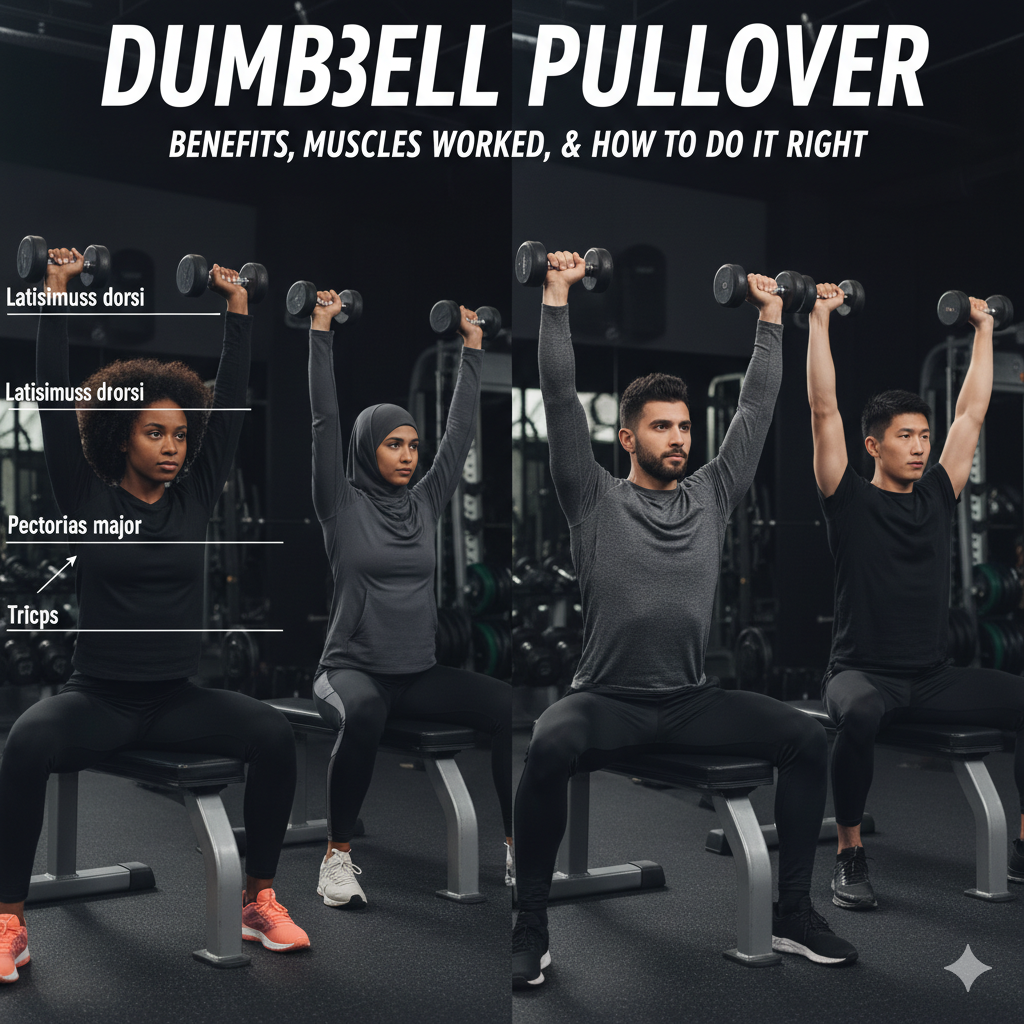

When it comes to building an impressive upper body, the dumbbell pullover is one exercise that deserves more attention. This classic move engages multiple muscles at once, making it a smart choice for anyone who wants efficient results. Many lifters debate whether the pullover is mainly for the chest or the back, but the truth is, it works both if performed correctly.
By adjusting your arm position and range of motion, you can shift the emphasis between pushing and pulling patterns, giving you the best of both worlds. The deep stretch you feel during the movement is not just satisfying; it’s also believed to help the rib cage expand, creating the illusion of a bigger and stronger torso.
Some people ask if the exercise is really worth adding to their routine, and the answer is yes—especially if you’re looking for variety beyond the standard presses and rows. With proper form, the dumbbell pullover can help you build a fuller chest, wider back, and better shoulder flexibility. So, whether your goal is strength, aesthetics, or mobility, this timeless move is absolutely worth keeping in your workout plan.
What Is a Dumbbell Pullover?
A dumbbell pullover is a strength training exercise where you lie on a bench, hold a dumbbell with both hands, and move it in an arc above your chest and behind your head. Think of it as a bridge between a chest exercise and a back exercise.
This move became famous back in the “Golden Era” of bodybuilding, with legends like Arnold Schwarzenegger swearing by it. Today, it’s still considered a hidden gem because it works multiple muscle groups at once.
Benefits of Dumbbell Pullovers
So why should you even bother adding dumbbell pullovers to your workouts? Here are some key benefits:
-
Chest and Back Growth: Works your chest (pectorals) and lats (latissimus dorsi) in one move.
-
Core Stability: Your abs and obliques engage to stabilize your body.
-
Shoulder Flexibility: The stretch improves shoulder mobility, which is helpful for pressing movements.
-
Upper Body Expansion: Many bodybuilders believe it helps expand the rib cage, giving a bigger chest appearance.
-
Functional Strength: Builds strength in pushing and pulling movements you use in daily life.
Muscles Worked in a Dumbbell Pullover
One of the most interesting things about this exercise is that it’s “dual-purpose.” Depending on how you perform it, it can target your chest more or your back more.
Primary Muscles
-
Pectoralis Major (Chest)
-
Latissimus Dorsi (Back)
Secondary Muscles
-
Triceps (back of arms)
-
Deltoids (shoulders)
-
Serratus Anterior (muscles under your armpits)
-
Core muscles (stabilizers)
How to Do a Dumbbell Pullover (Step-by-Step)
Now let’s go through the correct form. Grab a medium-weight dumbbell and follow along.
1: Set Up
-
Lie flat on a bench with your feet firmly on the floor.
-
Hold one dumbbell with both hands, palms pressing against the inside of the top plate.
-
Extend your arms straight above your chest.
2: Lower the Dumbbell
-
Slowly move the dumbbell in an arc over your head.
-
Lower it until you feel a deep stretch in your chest and lats.
-
Keep your elbows slightly bent (not locked).
3: Bring It Back Up
-
Pull the dumbbell back up over your chest in the same controlled arc.
-
Squeeze your chest and back as you return to the starting position.
Pro Tip: Don’t let your lower back arch too much. Keep your core tight to protect your spine.
Common Mistakes to Avoid
Even though dumbbell pullovers look simple, many people mess them up. Here’s what to watch out for:
-
Using Too Much Weight – Start lighter than you think. Form matters more than ego.
-
Bending Elbows Too Much – This turns the move into more of a triceps extension.
-
Arching the Back Excessively – Protect your spine by keeping your abs engaged.
-
Going Too Fast – The magic happens when you move slow and controlled.
-
Not Breathing Properly – Exhale as you bring the dumbbell back, inhale as you lower it.
Dumbbell Pullover Variations
Like most exercises, you can tweak the dumbbell pullover to fit your goals. Here are some variations to try:
1. Classic Flat Bench Dumbbell Pullover
The standard version we just covered. Great for overall chest and back development.
2. Incline Dumbbell Pullover
Lying on an incline bench shifts more focus onto the chest.
3. Decline Dumbbell Pullover
On a decline bench, the lats get more stretch and activation.
4. Single-Arm Dumbbell Pullover
Performing one arm at a time improves balance and isolates each side.
5. Barbell Pullover
Using a barbell instead of a dumbbell can let you load more weight, though it’s a bit harder on the shoulders.
Dumbbell Pullover for Chest vs. Back
Here’s the interesting part — the same exercise can target different muscles depending on how you do it.
-
Chest Focus: Keep elbows closer in, lower the dumbbell only until chest-level stretch.
-
Back Focus: Allow a deeper stretch, flare elbows slightly wider, and engage the lats as you pull back.
So if you’re after a fuller chest, do the chest-focused style. If you want a wide, V-shaped back, go for the lat-focused version.
How to Add Dumbbell Pullovers to Your Workout
Wondering where this move fits into your routine? Here’s how:
For Beginners
-
2–3 sets of 10–12 reps
-
Place it near the end of your chest or back workout
For Intermediate/Advanced Lifters
-
3–4 sets of 8–10 reps with heavier weights
-
Superset with chest presses or pull-ups for maximum pump
Example Chest Day
-
Bench Press – 4 sets
-
Incline Dumbbell Press – 3 sets
-
Dumbbell Fly – 3 sets
-
Dumbbell Pullover – 3 sets
-
Push-Ups – 2 sets to failure
Safety Tips for Dumbbell Pullovers
Before you rush to the gym and start swinging a dumbbell over your head, keep these safety tips in mind:
-
Warm up your shoulders first with light stretches.
-
Use a spotter if you’re lifting heavy.
-
Choose a dumbbell with a secure grip (slippery handles are risky).
-
Stop immediately if you feel shoulder pain.
-
Progress gradually — don’t jump into heavy weights too soon.
Are Dumbbell Pullovers Effective?
Yes! But like any exercise, their effectiveness depends on how you use them. If your main goal is strength and size, dumbbell pullovers are a great accessory move. They won’t replace big lifts like bench presses or pull-ups, but they will enhance them.
If your goal is mobility and flexibility, pullovers are gold because they open up the chest and shoulders.
And if your goal is simply to spice up your routine, this old-school classic is worth bringing back.
FAQs About Dumbbell Pullovers
Q1: Are dumbbell pullovers good for beginners?
Yes, just start with light weights and focus on form.
Q2: Do dumbbell pullovers expand the rib cage?
It’s debated. While there’s no solid scientific proof, many bodybuilders feel it improves chest expansion and posture.
Q3: Should I do them on chest day or back day?
Either! If you’re chest-focused, keep elbows in. If back-focused, flare them out.
Q4: Can I replace pullovers with another exercise?
Alternatives include cable pullovers, straight-arm pulldowns, or machine pullovers.
Conclusion
The dumbbell pullover is more than just an old-school bodybuilding exercise — it’s a powerful move that can help you build strength, improve flexibility, and add variety to your workouts. Whether you want a bigger chest, a wider back, or better shoulder mobility, pullovers deserve a spot in your routine.
So next time you hit the gym, grab a dumbbell, lie down on the bench, and give this classic exercise a try. Your chest, back, and shoulders will thank you.