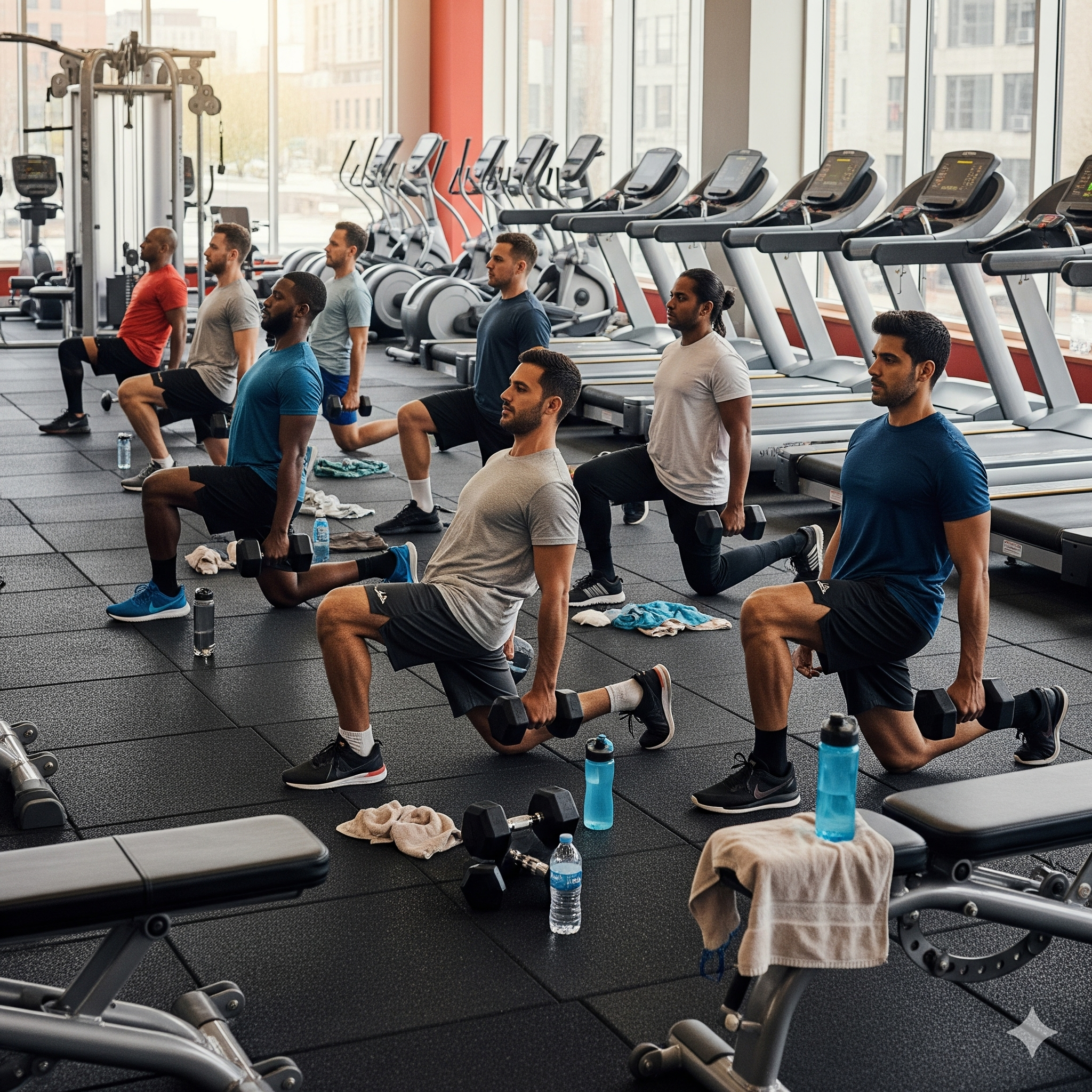

Introduction to the Reverse Lunge
The reverse lunge is a lower-body strength exercise where you step backward instead of forward. This seemingly small change transforms the movement into one that is more joint-friendly, stable, and posterior-chain dominant. Unlike the forward lunge, which often overloads the knees, the reverse lunge keeps the shin more vertical and reduces stress on the joint.
From a biomechanical standpoint, this exercise is a closed-chain movement for the front leg. That means the foot remains in contact with the ground, allowing greater stability and muscle recruitment. Because of this, the reverse lunge has earned popularity among strength coaches, physical therapists, and athletes seeking controlled, safe, and effective leg training.
What Do Reverse Lunges Work?
Reverse lunges are a highly effective lower-body exercise that activates multiple muscle groups. They primarily strengthen the glutes, hamstrings, and quadriceps, while also engaging the calves and core for balance and stability. Unlike forward lunges, the backward step of this movement shifts greater emphasis onto the glutes and hamstrings, making it easier on the knees and more accessible for beginners or anyone dealing with joint concerns.
Muscles Involved
-
Glutes: Drive hip extension, stabilize the pelvis, and power the return to standing.
-
Hamstrings: Support hip extension, control the backward leg motion, and help stabilize the knee joint.
-
Quadriceps: Control the lowering phase of the lunge and assist in pressing through the front heel to rise back up.
-
Calves: Contribute to pushing off the ground during the transition back to the starting position.
-
Core: Keeps the torso upright and maintains hip alignment throughout the movement.
Key Benefits
-
Correction of Imbalances: Training one leg at a time highlights and improves left-to-right strength differences.
-
Better Stability and Coordination: The reverse stepping action challenges and refines balance.
-
Joint-Friendly: Reduces stress on the knees compared to forward lunges, making it suitable for people with knee sensitivity.
-
Improved Hip Mobility: Helps loosen tight hip flexors, especially beneficial for those who sit often.
-
Glute Growth: Strongly recruits the glutes, making it a valuable exercise for building shape and strength in the lower body.
Why the Reverse Lunge Outshines the Forward Lunge
The reverse lunge is often considered more joint-friendly than the traditional forward lunge. By keeping the front foot firmly grounded, it reduces knee strain, improves stability, and allows smoother control, which is especially valuable for individuals with knee concerns or balance limitations. This variation also activates the glutes and hamstrings more effectively, while offering functional benefits for athletic movements such as sprinting.
Main Benefits of Reverse Lunges
-
Less Pressure on Knees
Stepping backward allows the front leg to remain stable, minimizing joint stress and making this exercise a safer option for people with sensitive knees or those recovering from injury. -
Greater Stability and Control
Since the front foot stays rooted, the reverse lunge provides a more secure base of support, making it easier to master proper form and ideal for beginners building balance and coordination. -
Enhanced Glute and Hamstring Activation
The backward step places a stronger load on the posterior chain, especially the glutes and hamstrings, compared to the forward lunge. -
Core Engagement
While both lunge variations require core strength, the controlled backward drive of the reverse lunge creates an added challenge for maintaining balance and posture. -
Carryover to Sports Performance
The reverse lunge’s emphasis on hip extension and posterior chain strength translates well to athletic tasks like sprinting, where powerful backward force is essential. -
Easier to Progress with Weights
Because the body’s center of gravity remains more controlled, loading dumbbells or a barbell with reverse lunges is often safer and allows greater strength progression.
When Forward Lunges May Be a Better Choice
-
Higher Core and Quad Demand
The forward lunge shifts your body’s weight forward, placing more stress on the quads and requiring greater core control. -
More Dynamic Challenge
Since the forward variation moves the center of mass ahead, it creates a less stable but more dynamic environment—ideal for those looking to push core strength, coordination, and quadriceps development.
Reverse Lunge Variations for All Fitness Levels
Reverse lunges can be adapted for every fitness level by adjusting support, range of motion, or load. Beginners can start with balance-assisted variations, progress to bodyweight moves with added coordination challenges, and eventually incorporate advanced versions that increase resistance or complexity for greater strength and stability gains.
Beginner-Friendly Variations
-
Assisted Reverse Lunge: Use a wall, railing, or sturdy chair to steady yourself as you step back. This reduces wobbling and helps build confidence in your form.
-
Hands-Free Reverse Lunge: Instead of using support, place your hands on your hips or hold them in front of your chest. This encourages balance and teaches control through the movement.
Intermediate Progressions
-
Reverse Lunge to Knee Drive: Step backward into the lunge, then drive the rear knee up toward your chest as you return to standing. This adds power and dynamic balance to the exercise.
-
Rotational Reverse Lunge: After lunging back, rotate your torso toward the front leg. This variation increases core engagement and develops rotational strength.
-
Suspension Trainer (TRX) Lunge: Using straps for support introduces instability, forcing your core and stabilizers to work harder while keeping the exercise bodyweight-based.
Advanced Challenges
-
Front Foot-Elevated Reverse Lunge: Elevate your lead foot on a low step or platform to increase the depth of the lunge, boosting glute and quad activation.
-
Bulgarian Split Squat: Place your rear foot on a bench or elevated surface and perform the lunge. This creates a much more intense load on the front leg.
-
Weighted Reverse Lunge: Add resistance by holding dumbbells, kettlebells, or wearing a weight vest to build more strength and muscle.
-
Reverse Lunge with Overhead Press: Combine lower and upper body work by pressing weights overhead as you rise from the lunge, turning it into a full-body movement.
Reverse Lunge for Male and Female
1. A Universal Exercise
-
Works the same major muscles—quads, glutes, hamstrings, and core—for both men and women.
-
Technique and movement pattern remain identical regardless of gender.
2. Benefits for Men
-
Builds strength and power in the lower body.
-
Enhances athletic performance for sports requiring speed and explosiveness.
-
Effective for adding muscle mass in the glutes and hamstrings.
3. Benefits for Women
-
Shapes and strengthens the legs and glutes.
-
Improves balance, stability, and coordination.
-
Supports functional strength for daily activities and posture.
4. Shared Technique for Both
-
Stand tall with feet hip-width apart.
-
Step back into a lunge, lowering both knees to 90 degrees.
-
Keep chest upright, core tight, and front knee aligned over the ankle.
-
Push through the front heel to return to standing.
5. Training Focus Differences
-
Men: Often increase resistance with dumbbells, kettlebells, or barbells to maximize strength and size.
-
Women: May focus on bodyweight, higher reps, or glute-focused variations for toning and endurance.

Reverse Lunge vs. Other Lower Body Exercises
-
Vs. Squats: Squats are bilateral and emphasize balanced loading, while reverse lunges highlight single-leg control and balance.
-
Vs. Deadlifts: Deadlifts are hip-hinge movements; reverse lunges add knee flexion, targeting a wider range of muscles.
-
Vs. Step-Ups: Step-ups train vertical pushing power, while reverse lunges emphasize controlled backward stepping.
-
Vs. Bulgarian Split Squats: Both are unilateral, but split squats increase range of motion and quad load due to foot elevation.
In short, reverse lunges are a hybrid—providing stability like squats, posterior emphasis like deadlifts, and unilateral challenge like split squats.
Do Reverse Lunges Grow Glutes?
Yes—reverse lunges are an excellent glute-building exercise. The backward step increases hip flexion, stretching the glutes before contraction. By driving through the front heel, the glute is maximally engaged during hip extension.
Tips for maximizing glute activation:
-
Step farther back to increase hip range.
-
Keep the front shin vertical.
-
Lean the torso slightly forward for deeper glute stretch.
-
Add a deficit (front foot elevated).
-
Focus on pushing through the heel.
When performed with progressive overload, reverse lunges can rival hip thrusts and squats in glute hypertrophy.
Is a Reverse Lunge the Same as a Bulgarian Split Squat?
No, the reverse lunge and the Bulgarian split squat are not the same exercise. The primary distinction lies in leg positioning. In a reverse lunge, you actively step one leg backward into the lunge stance. In contrast, the Bulgarian split squat requires you to place your rear foot on an elevated surface, keeping it fixed throughout the movement. Reverse lunges are considered more dynamic because of the stepping motion, while Bulgarian split squats are static, emphasizing strength and stability in a set position with a deeper range of motion.
Key Distinctions
-
Foot Setup:
-
Reverse Lunge: The back leg steps backward to enter the lunge.
-
Bulgarian Split Squat: The back foot stays elevated on a bench or platform.
-
-
Type of Movement:
-
Reverse Lunge: Involves continuous stepping, making it a dynamic exercise.
-
Bulgarian Split Squat: Both feet remain in place, creating a stationary, strength-focused exercise.
-
-
Balance and Stability:
-
Reverse Lunge: Requires coordination and body control during each step.
-
Bulgarian Split Squat: More demanding for balance and strength due to the elevated rear foot.
-
-
Muscle Focus:
-
Reverse Lunge: Places stronger emphasis on glutes and hamstrings because of the hip extension involved.
-
Bulgarian Split Squat: Heavily recruits the quadriceps while still engaging glutes and hamstrings, but with a slightly different emphasis.
-
Reverse Lunges for Athletes and Functional Performance
For athletes, reverse lunges are more than a bodybuilding tool. They improve functional performance by strengthening single-leg power, eccentric control, and stability.
-
Sprint carryover: Builds the same posterior chain muscles used in explosive acceleration.
-
Change of direction: Enhances hip and knee control in deceleration.
-
Injury resilience: Strengthens stabilizers, lowering ACL and hamstring injury risk.
-
Everyday function: Improves movement mechanics for tasks like stair climbing, lifting, and bending.
This makes the reverse lunge a go-to movement in both sports training and rehabilitation.
Programming Reverse Lunges: Reps, Sets, and Progressions
How you program reverse lunges depends on your goals:
-
For Beginners: 2 sets of 12–15 reps per leg, bodyweight only.
-
For Muscle Growth: 3–4 sets of 8–12 reps per leg, moderate to heavy dumbbells.
-
For Strength: 3–5 sets of 5–8 reps, using barbells or Smith machine.
-
For Endurance/Conditioning: Higher reps (15–20) with lighter loads.
Progression strategies:
-
Increase weight.
-
Slow down the eccentric phase.
-
Elevate the front foot for deficit lunges.
-
Add rotation or instability to challenge the core.
Single-Leg Reverse Lunge on Smith Machine
The Smith machine offers a stable path for reverse lunges, allowing lifters to load more weight without worrying about balance.
Advantages:
-
Provides enhanced stability for beginners or rehab settings.
-
Allows safe glute overload due to controlled bar path.
-
Reduces knee strain compared to free-weight lunges.
-
Enables muscle isolation with less energy spent on balance.
How to perform:
-
Set barbell at shoulder height.
-
Position bar across traps, step forward with working leg.
-
Step back with rear leg and descend until knees are 90°.
-
Drive through front heel to stand tall.
-
Switch legs after completing reps.
This variation is particularly effective for lifters focused on hypertrophy without balance limitations interfering.
Final Thoughts
The reverse lunge stands out as one of the most effective lower-body exercises, combining strength, balance, and functionality in a single movement. Unlike the forward lunge, it minimizes knee stress while maximizing glute and hamstring engagement, making it a smart choice for beginners, athletes, and seasoned lifters alike.
Whether your goal is building muscle, improving athletic performance, or enhancing everyday mobility, the reverse lunge adapts seamlessly to different training levels and goals. By incorporating its variations—from beginner-friendly assisted versions to advanced weighted progressions—you can continually challenge your muscles, correct imbalances, and strengthen your body in a safe, joint-friendly way.
Simply put, the reverse lunge isn’t just another exercise—it’s a cornerstone movement that deserves a permanent place in any well-rounded strength program.