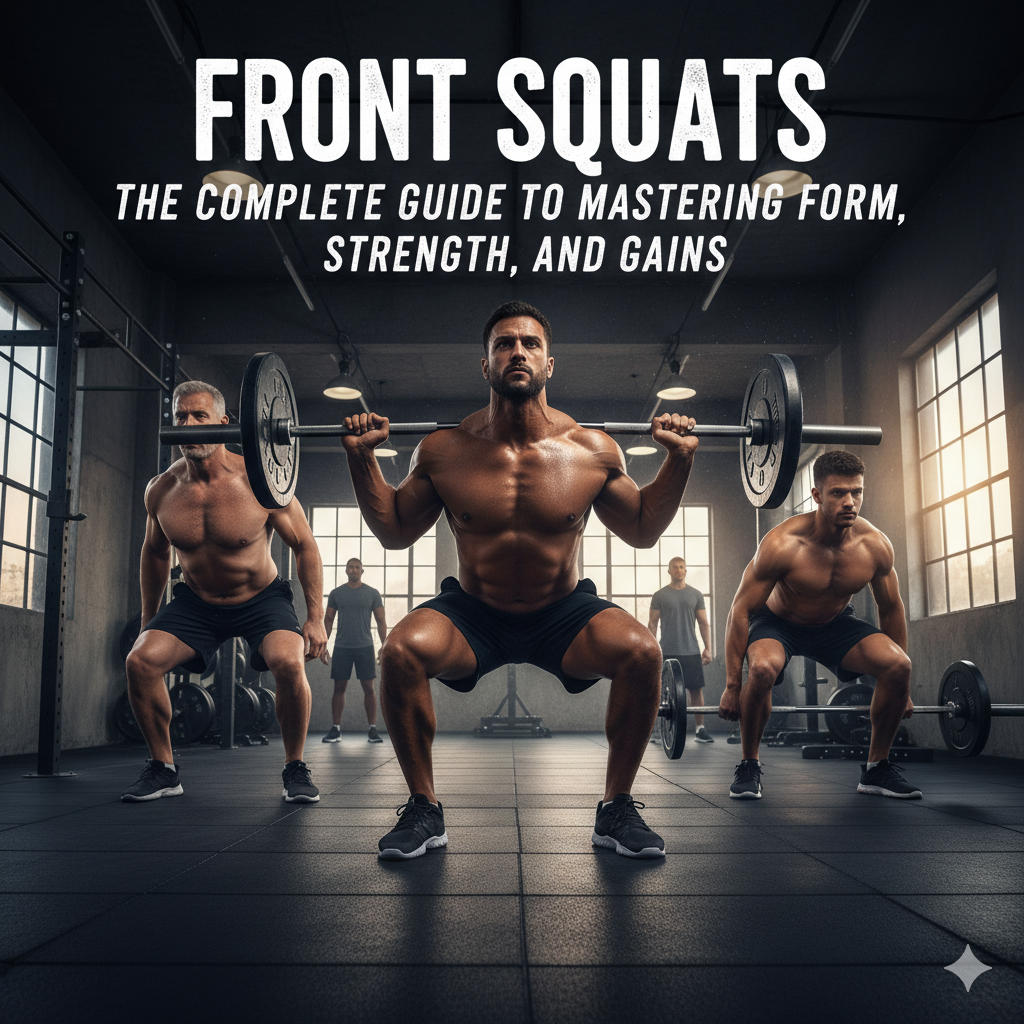

Definition of Front Squat
At its core, a front squat is a variation of the traditional squat. The difference is simple but game-changing:
-
In a back squat, the barbell rests on your upper back.
-
In a front squat, the barbell sits across the front of your shoulders, just above your chest.
This shift changes everything — your posture, which muscles work hardest, and even how your body feels after the workout.
Because the bar is in front, your torso naturally stays more upright. This means:
-
Less stress on your lower back.
-
More emphasis on your quads (hello, leg day burn).
-
Greater demand on your core to keep you stable.
In other words, the front squat isn’t just “another way to squat.” It’s a movement that develops balance, strength, and mobility all at once.
Benefits of Front Squats
So why should you add front squats to your training routine? Let’s break down the major benefits.
1. Builds Quad Strength Like Nothing Else
Front squats put your quads front and center (pun intended). If your goal is powerful thighs, this move is your best friend.
2. Improves Core Stability
Holding a barbell in front requires serious core engagement. Think of your abs and lower back as the “pillar” that keeps the bar from tipping. Over time, this translates to a rock-solid core.
3. Safer on the Lower Back
Because your torso stays more upright, there’s less forward lean compared to back squats. That means less compression on your spine — a big win if you’ve had lower back issues.
4. Enhances Mobility
Front squats demand good ankle, hip, and shoulder mobility. Practicing them regularly naturally improves your flexibility.
5. Carryover to Other Sports and Lifts
From Olympic lifts (like cleans) to athletic movements (jumping, sprinting), front squats make you better. They teach your body to stay strong, balanced, and explosive.
Muscles Worked During Front Squats
Front squats may look like a “leg exercise,” but they’re really a full-body movement. Here’s a quick breakdown:
-
Quadriceps (quads): The stars of the show.
-
Glutes: Helping you drive up from the bottom.
-
Hamstrings: Assisting with stability.
-
Core (abs + lower back): Working overtime to keep your torso upright.
-
Upper back and shoulders: Supporting the bar and keeping your chest tall.
Think of it as a chain reaction — every muscle from your feet to your shoulders has a role. That’s why front squats are considered one of the most efficient strength exercises out there.
Proper Guidelines of Doing Front Squat
Alright, let’s get practical. Here’s a step-by-step guide to performing a textbook front squat.
Step 1: Set Up the Bar
-
Place the barbell on a squat rack at about chest height.
-
Step up close to the bar, positioning it across the front of your shoulders.
Step 2: Choose Your Grip
There are two common grips:
-
Clean Grip (Olympic grip):
-
Place your fingertips under the bar.
-
Elbows point forward, upper arms parallel to the ground.
-
This grip requires good wrist and shoulder mobility.
-
-
Cross-Arm Grip:
-
Cross your arms in front of you.
-
Rest your hands on top of the bar to keep it stable.
-
Easier on the wrists but less secure for heavy loads.
-
Step 3: Unrack the Bar
-
Stand tall and lift the bar off the rack.
-
Step back with control.
Step 4: Squat Down
-
Take a deep breath, brace your core.
-
Push your hips back slightly, then bend your knees.
-
Keep your chest tall and elbows high.
-
Lower until your thighs are at least parallel to the floor.
Don’t make these Mistakes
Even experienced lifters make mistakes with front squats. Here are the big ones to watch for:
-
Dropping the elbows: If your elbows point down, the bar will roll forward. Keep them high.
-
Leaning too far forward: Remember, chest tall, core tight.
-
Heels lifting off the ground: This usually means tight ankles. Work on mobility.
-
Loading too heavy too soon: Form first, weight later. Always.
-
Wrist pain from the clean grip: Warm up your wrists and shoulders, or use straps/cross grip.
Variations of the Front Squat
Not everyone needs to do the exact same version. Depending on your goals, mobility, or available equipment, you can try:
-
Dumbbell Front Squat: Hold dumbbells at your shoulders instead of a barbell.
-
Goblet Squat: Great for beginners — just one dumbbell or kettlebell at chest level.
-
Zercher Squat: Barbell rests in the crook of your elbows (looks weird, but it works).
-
Front Squat with Pause: Pause at the bottom for 2–3 seconds before driving up. Builds strength and confidence.
Comparison Between 2 Exercises
People always ask: “Which is better, front squats or back squats?” The truth is, it depends.
-
Front Squat:
-
More quad-focused
-
Safer for lower back
-
Builds core strength
-
-
Back Squat:
-
Allows heavier loads
-
Hits glutes and hamstrings more
-
Classic powerlifting move
-
The smart answer? Do both. They complement each other perfectly.
How to Add Front Squats to Your Routine
So how often should you do front squats? That depends on your training goals:
-
For strength: 3–5 sets of 3–6 reps, heavier weight.
-
For muscle growth (hypertrophy): 3–4 sets of 8–12 reps, moderate weight.
-
For endurance: 2–3 sets of 12–15+ reps, lighter weight.
Pro tip: Start your leg day with front squats. They require the most energy and focus, so it’s best to tackle them first.
Tips for Better Front Squats
Front squats expose mobility issues quickly. If you struggle with form, try these drills:
-
Ankle stretches: To keep your heels down.
-
Hip openers: Like lunges or pigeon pose.
-
Wrist and shoulder stretches: To make the clean grip comfortable.
-
Thoracic spine extensions: Using a foam roller to open up your upper back.
Remember, mobility is like oil for your joints — the smoother they move, the stronger your squats will be.
For Beginners
If you’re brand new, here’s the game plan:
-
Start with bodyweight squats to nail your movement pattern.
-
Progress to goblet squats with a dumbbell or kettlebell.
-
Once confident, move on to barbell front squats with an empty bar.
-
Add weight gradually — don’t rush it.
Think of it like leveling up in a video game. You can’t skip straight to the boss fight without learning the basics first.
FAQs About Front Squats
Q: Are front squats better than leg press machines?
A: Yes, because they work more muscles at once and train your body in a natural, athletic way.
Q: Do front squats hurt the wrists?
A: They can, especially if your mobility is limited. Try stretching, or switch to a cross-arm grip.
Q: Can front squats replace back squats?
A: Not exactly. They’re different tools for different purposes. Ideally, include both.
Q: Are front squats good for beginners?
A: Absolutely, as long as you start light and focus on technique.
Takeaway
Front squats may look intimidating at first, but they’re one of the most effective exercises you can add to your routine. They’ll strengthen your legs, build a solid core, improve mobility, and even help you perform better in sports or daily life.
Are they tougher to learn than back squats? Sure. But isn’t that the case with most things worth doing? The payoff is worth the effort.
So next time you walk into the gym, don’t just head straight for the back squat rack. Give front squats a chance — your legs (and your spine) will thank you.