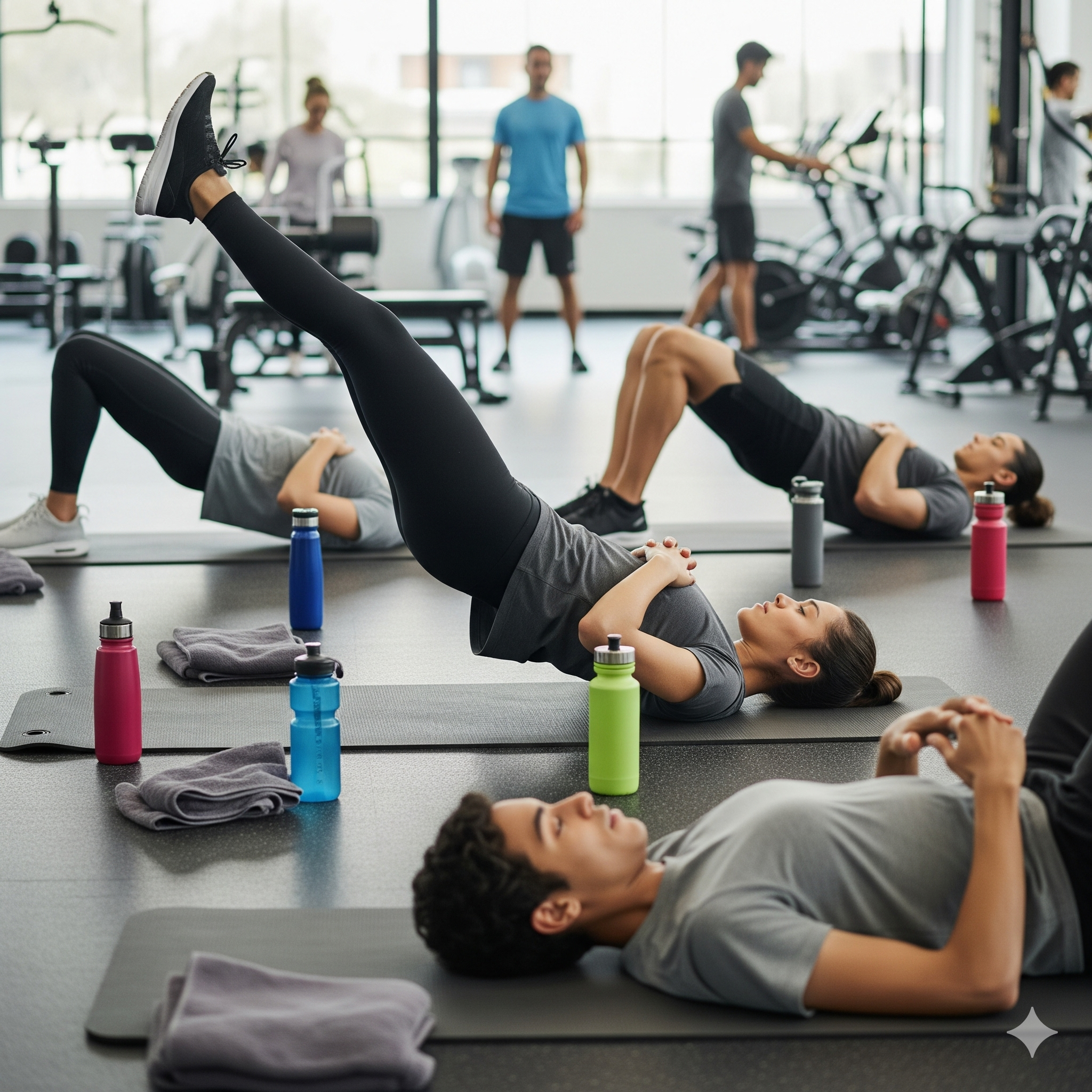

Why the Glute Bridge Matters
The glutes aren’t just about looking good in jeans. They’re some of the most powerful muscles in your body, responsible for stabilizing your hips, protecting your back, and powering your legs. Weak glutes can create a chain reaction of problems:
-
Poor posture → slouching shoulders and tight hip flexors.
-
Back pain → your spine picks up the work your glutes should handle.
-
Weak lifts → squats, deadlifts, and even bench presses all suffer.
A strong backside equals a stronger, more resilient body. That’s why the glute bridge isn’t just a “nice-to-have” move—it’s essential.
How to Do the Basic Glute Bridge
The beauty of the glute bridge is its simplicity. You don’t need equipment, and you can do it almost anywhere.
Step-by-Step Guide
-
Set up: Lie on your back with knees bent, feet flat on the floor, hip-width apart. Place your arms by your sides.
-
Engage: Brace your core and squeeze your glutes before lifting.
-
Lift: Drive through your heels and raise your hips until your body forms a straight line from shoulders to knees.
-
Squeeze: Hold the top position for 2–3 seconds, keeping your glutes tight.
-
Lower: Slowly bring your hips back down without relaxing completely.
Tip: If you feel your hamstrings more than your glutes, move your heels closer to your body.
Don’t Try
Even though it’s simple, people often get the glute bridge wrong. Watch out for these errors:
-
Arching the lower back → keep your core engaged to avoid overextension.
-
Pushing through toes → drive through your heels for maximum glute activation.
-
Rushing the reps → quality matters more than speed.
-
Not squeezing at the top → that extra second makes all the difference.
Take Your Glute Bridge to the Next Level
Once you’ve mastered the bodyweight glute bridge, it’s time to make things more challenging.
1. Single-Leg Glute Bridge
-
Same setup, but extend one leg straight out.
-
Lift using just the grounded foot.
-
Great for stability and unilateral strength.
2. Banded Glute Bridge
-
Place a resistance band just above your knees.
-
Push your knees outward as you lift to fire up the gluteus medius.
3. Weighted Glute Bridge (Barbell or Dumbbell)
-
Place a weight across your hips (use padding for comfort).
-
Perform the bridge while maintaining control.
-
Ideal for building strength and hypertrophy.
Glute Bridge vs. Hip Thrust
These two moves are often confused, but here’s the difference:
-
Glute Bridge → done on the floor, shorter range of motion, great for activation and beginners.
-
Hip Thrust → upper back elevated on a bench, larger range of motion, better for heavy strength training.
Both are fantastic, but if you’re just starting out, the glute bridge is your go-to.
Benefits of the Glute Bridge doing on Regularly
1. Strengthens the Glutes and Lower Body
The glute bridge is one of the most effective exercises for targeting the gluteus maximus, hamstrings, and supporting hip muscles. Strong glutes improve stability, balance, and power in nearly every physical activity.
2. Improves Core Stability
By engaging the core and lower back muscles, glute bridges help protect the spine, promote proper posture, and reduce the risk of injury. A strong core also enhances performance in other lifts like squats and deadlifts.
3. Reduces Lower Back Pain
Weak or inactive glutes often force the lower back to take on extra stress. Regular glute bridges relieve pressure on the spine by activating the right muscles, making them especially useful for people with desk jobs or sedentary lifestyles.
4. Enhances Athletic Performance
Whether you’re running, jumping, or lifting, powerful glutes are essential. Glute bridges improve hip drive and explosiveness, translating to better sprint speed, higher jumps, and stronger lifts.
5. Supports Better Posture
This exercise counteracts the effects of sitting for long hours, helping to open tight hip flexors and align the pelvis. Over time, it promotes upright posture and reduces slouching.
6. Shapes the Waistline and Lower Body
While glute bridges don’t directly burn fat, they tighten the midsection and create muscle tone, giving the appearance of a slimmer waist and a more defined lower body.
7. Easy to Modify and Progress
From simple bodyweight versions to advanced weighted variations, glute bridges are adaptable for beginners and athletes alike. This makes them a versatile exercise that grows with your fitness level.
Muscles Worked in the Glute Bridge
While the star of the show is the gluteus maximus, the glute bridge also recruits:
-
Gluteus medius & minimus → side and stabilizing muscles
-
Hamstrings → assist in hip extension
-
Core muscles → keep the spine stable
-
Hip flexors (indirectly stretched)
This makes the glute bridge a true full-core and lower-body move.
Sample Glute Bridge Workout Routine
Here’s how you can fit it into your training:
Warm-Up
-
2 sets of 12 slow, controlled reps
-
Focus on squeezing at the top
Strength Exercise
-
3–4 sets of 10–15 reps with added weight
-
Rest 60–90 seconds between sets
Finisher
-
2 sets of 20+ reps (bodyweight or banded)
-
Minimal rest for a serious glute burn
How Often Should You Do Glute Bridges?
The frequency depends on your goal and how you’re using the exercise. The glute bridge can serve as a warm-up drill, a stability exercise, or a strength builder.
For Activation and Mobility
If you sit for long hours, your glutes can become underactive. Doing 2–3 sets of 10–15 reps daily—without weights—is a great way to keep them engaged. Many lifters and athletes use glute bridges before squats, deadlifts, or running to wake up the muscles and improve hip mobility.
Think of this as routine maintenance that keeps your body moving well.
For Strength and Muscle Growth
When the goal is strength or hypertrophy, treat the glute bridge like any other resistance exercise. Perform it 2–3 times per week, allowing 24–48 hours of rest between heavy sessions. Increase the challenge over time by adding bands, dumbbells, or a barbell.
-
Beginners: 2–3 sets of 12–15 reps, bodyweight or light weight
-
Intermediate: 3–4 sets of 8–12 reps, moderate weight
-
Advanced: 4–5 sets of 6–10 reps, heavy weight
For Rehab or Back Pain Relief
If you are using glute bridges to relieve back pain or correct posture, consistency matters more than load. Performing a few sets most days of the week helps reinforce proper movement patterns while reducing stress on the lower back. Keep the tempo slow and controlled.
For Athletes and Performance
Athletes often include glute bridges in several ways:
-
As part of the warm-up before explosive training
-
As accessory work after big lifts like squats and deadlifts
-
As light, high-rep recovery work on off days
Final Takeaway
The glute bridge may look simple, but don’t underestimate it. This humble floor exercise strengthens your backside, protects your back, and makes you better at just about every other lift and movement. Whether you’re chasing stronger lifts, better posture, or relief from nagging back pain, this move deserves a permanent spot in your routine.
So the next time you catch yourself slouching at your desk, remember: a few glute bridges a day can keep the aches (and weak lifts) away.