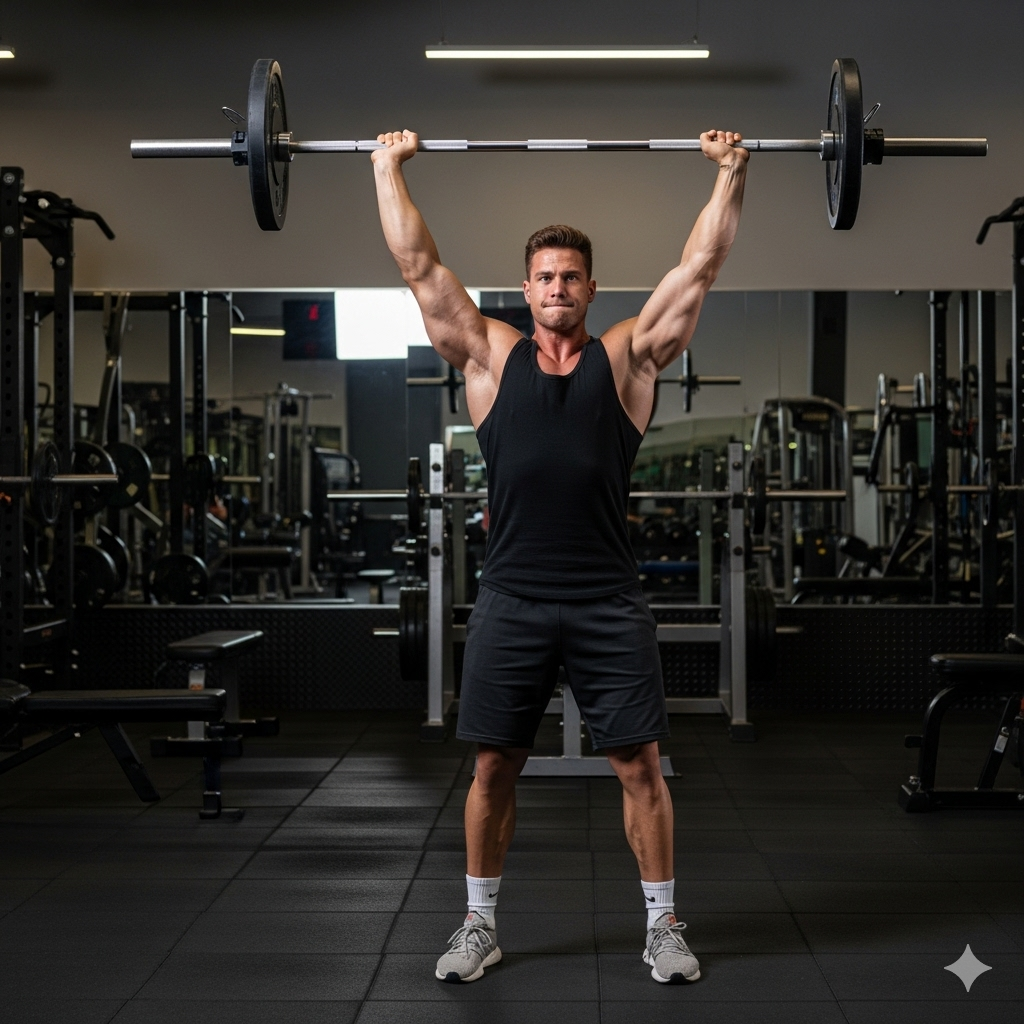

When it comes to building a powerful upper body, the overhead press stands out as one of the best exercises you can do. This movement works multiple muscles at once, including the deltoids, triceps, traps, and even your core, making it far more than just a shoulder lift. However, to get the full benefits, mastering proper form is essential. Without correct technique, you risk putting unnecessary stress on your joints and missing out on the true potential of the lift. By keeping your body upright, engaging your core, and pressing in a straight line, you’ll maximize efficiency and safety.
The overhead press is often thought of purely as a shoulder exercise, and while the shoulders are indeed the prime movers, the exercise also teaches your entire body to work as one unit. That’s what makes it so functional—you’re not just training a muscle, you’re training a movement. Over time, consistently practicing the press leads to serious improvements in strength, both in pressing power and overall stability. Whether your goal is athletic performance, muscle growth, or simply everyday functional ability, the overhead press delivers a blend of size, strength, and posture benefits that few other exercises can match.
The Basics of overhead press
The overhead press is a weight training exercise where you push a barbell, dumbbells, kettlebells, or another weighted object from shoulder level directly overhead until your arms are fully extended.
There are two main styles:
-
Standing Overhead Press – The classic version, requiring balance, core tension, and full-body strength.
-
Seated Overhead Press – Often done with dumbbells, this version isolates the shoulders a bit more by reducing the need for core and leg involvement.
No matter which version you choose, the overhead press primarily targets the deltoid muscles (the rounded muscles on your shoulders), but it also engages your triceps, traps, chest, and core.
A Quick Look Back
The overhead press isn’t just another gym exercise—it’s a historic lift.
-
In Olympic weightlifting – The overhead press used to be part of the clean and press (lift the barbell to the shoulders, then press overhead). It was eventually removed in 1972 because judging proper form became too tricky.
-
In Strongman competitions – Athletes regularly perform overhead presses with everything from barbells to logs, axles, and even kegs.
-
In Bodybuilding – The overhead press has always been a go-to for building broad, powerful shoulders.
Even today, strength athletes across powerlifting, CrossFit, and functional training rely on the press as a true measure of upper-body power.
Muscles properly Worked During the Overhead Press
You might think the overhead press is all shoulders, but the truth is, it’s a full-body lift. Here’s a breakdown:
-
Deltoids (front, middle, and rear) – The stars of the show.
-
Triceps – Help lock out the weight overhead.
-
Upper chest – Assists during the pressing motion.
-
Trapezius (traps) – Stabilize the shoulders and help with upward movement.
-
Core and abs – Keep your torso upright and prevent your lower back from arching.
-
Glutes and legs – Yes, even your lower body works to stabilize you during standing presses.
So, when you press overhead, you’re not just training your arms—you’re engaging your entire body.
Advantage of the Overhead Press
Why should you add the overhead press to your workouts? Here are some powerful reasons:
1. Builds Serious Shoulder Strength
The press directly targets your delts, giving you bigger and stronger shoulders.
2. Improves Upper-Body Power
Strong pressing muscles carry over into other lifts like the bench press, push-ups, and dips.
3. Enhances Core Stability
When you press overhead, your abs and lower back work overtime to keep you balanced. It’s almost like doing a plank—while lifting weight overhead.
4. Boosts Athletic Performance
From throwing a ball to punching in boxing, overhead strength translates into explosive sports power.
5. Functional Strength for Real Life
Think about it—how often do you reach or lift something overhead? Training this movement makes everyday tasks easier.
6. Posture and Shoulder Health
Done correctly, overhead pressing strengthens stabilizing muscles, helping you stand taller and fight off that rounded “desk posture.”
Step by Step Perform the Overhead Press
Let’s walk through the barbell overhead press since it’s the most common variation.
= 1: Set Up
-
Grab the barbell at about shoulder-width.
-
Rest it on your upper chest and shoulders with your elbows slightly forward.
-
Stand with your feet about shoulder-width apart.
-
Engage your core and squeeze your glutes—this prevents your lower back from arching.
2: The Press
-
Take a deep breath and brace your core.
-
Push the bar straight up, moving your head slightly back to let the bar pass your face.
-
As the bar clears your head, move your head forward so the bar is directly over your shoulders.
3: Lockout
-
Fully extend your elbows overhead.
-
Keep the bar stacked over your shoulders, hips, and feet for balance.
4: Lowering the Bar
-
Slowly lower the bar back to your chest while keeping control.
-
Don’t let it just drop—this is where people get sloppy.
Variations of the Overhead Press
The beauty of the overhead press is that it isn’t limited to just one style. You can use barbells, dumbbells, kettlebells, or even odd objects like sandbags and logs. Each variation puts a slightly different spin on the movement, allowing you to target muscles in new ways, improve weaknesses, or keep training fun.
Here are the most popular (and effective) variations:
1. Barbell Overhead Press (Strict Press)
The “classic” version—pressing a barbell from your shoulders to overhead without using your legs.
-
Best for: Building raw pressing strength and stability.
-
Why try it: The barbell allows you to lift heavier loads than dumbbells, making it ideal for strength progress.
2. Dumbbell Overhead Press
Instead of one bar, you press two dumbbells overhead simultaneously.
-
Best for: Balanced strength and joint health.
-
Why try it: Dumbbells allow a more natural range of motion, reducing stress on the shoulders. They also prevent one side from dominating, which helps fix strength imbalances.
3. Seated Overhead Press
Can be done with barbells or dumbbells while sitting on a bench with back support.
-
Best for: Isolating the shoulders.
-
Why try it: Sitting takes the legs and core out of the equation, forcing the shoulders and triceps to do all the work.
4. Push Press
A small dip and drive from the legs help propel the bar overhead.
-
Best for: Moving heavier weights and building power.
-
Why try it: The push press trains explosive strength, bridging the gap between strict pressing and Olympic lifts.
5. Arnold Press
Invented (and popularized) by Arnold Schwarzenegger, this dumbbell press starts with palms facing you, then rotates outward as you press up.
-
Best for: Hitting all three heads of the deltoids.
-
Why try it: The rotation adds a longer range of motion and maximizes shoulder development.
6. Z Press
Performed seated on the floor with legs extended straight out in front of you.
-
Best for: Core strength and shoulder stability.
-
Why try it: Without back or leg support, you must rely entirely on your core to stabilize the weight. Brutal, but effective.
7. Single-Arm (Unilateral) Press
Pressing one dumbbell or kettlebell at a time.
-
Best for: Core stability and fixing imbalances.
-
Why try it: Lifting with one arm challenges your obliques and deep core muscles to prevent you from tipping over.
8. Behind-the-Neck Press (Advanced)
Barbell is pressed from behind the head instead of in front.
-
Best for: Advanced lifters with excellent shoulder mobility.
-
Why try it: Increases range of motion for the shoulders, but should only be done if your mobility allows—otherwise it can be risky.
9. Kettlebell Press
Pressing kettlebells overhead instead of dumbbells.
-
Best for: Shoulder stability and grip strength.
-
Why try it: The uneven weight distribution of kettlebells forces your stabilizing muscles to work overtime.
10. Log or Axle Press (Strongman Style)
Using a thick bar (axle) or a log implement to press overhead.
-
Best for: Strongman training and brute strength.
-
Why try it: The larger diameter makes gripping harder and recruits more total-body strength.
Overhead Press in Different Training Styles
The overhead press is one of the most versatile upper-body movements, and it can be adapted to suit multiple training styles depending on your goals. From strength athletes to bodybuilders to functional fitness enthusiasts, this lift plays a unique role in shaping performance and aesthetics.
1. Strength Training
In strength-focused programs, the overhead press is treated as a core compound lift, often alongside squats, deadlifts, and bench press. Here, the priority is heavy loads with low to moderate reps (3–6), emphasizing raw shoulder and triceps strength. Progression is usually tracked through gradual weight increases, and strict form—standing with no leg drive—is used to maximize upper-body power.
2. Bodybuilding and Hypertrophy
For muscle growth, the overhead press is often combined with variations like the seated dumbbell press or Arnold press. Reps typically range from 8–12, with controlled tempo to maximize hypertrophy in the shoulders, traps, and triceps. Bodybuilders often use higher volume, drop sets, or supersets with lateral raises to fully target the delts.
3. CrossFit and Functional Training
In CrossFit and functional training, the overhead press is frequently paired with push presses and push jerks, incorporating leg drive for explosiveness. This makes it a key move for developing full-body coordination, speed, and endurance under fatigue. Reps can vary widely, from heavy singles to high-rep circuits.
4. Athletic Conditioning
Athletes use overhead pressing to build upper-body stability, power, and shoulder resilience. Movements like the landmine press or single-arm dumbbell press are often included to train balance and unilateral strength, improving performance in sports that demand pushing, throwing, or overhead movements.
Safety Tips for the Overhead Press
The overhead press is incredibly effective, but it also demands respect. Lifting weight overhead puts your shoulders, elbows, wrists, and spine under stress, so safety is critical. Follow these tips to protect your body and maximize results.
1. Warm Up Properly
-
Spend 5–10 minutes warming up your shoulders, traps, and arms.
-
Include dynamic stretches like arm circles, band pull-aparts, or light dumbbell presses.
-
Warming up increases blood flow and reduces the risk of shoulder injuries.
2. Maintain Proper Form
-
Keep your core tight and glutes engaged to prevent lower back arching.
-
Press in a straight line; avoid leaning too far back.
-
Don’t let your elbows flare excessively—keep them slightly forward to protect the shoulder joint.
3. Use the Right Weight
-
Start with a weight you can control for all reps.
-
Gradually increase the load as your strength improves.
-
Avoid ego lifting—it’s better to lift lighter with perfect form than heavy with poor technique.
4. Keep Wrists Neutral
-
Wrists should stay straight and strong, not bent backward.
-
A neutral wrist reduces strain and helps maintain a solid grip on the bar or dumbbells.
5. Engage Your Core
-
Treat the overhead press like a full-body exercise.
-
Brace your abs and lower back to create a solid foundation, preventing injuries and helping with stability.
6. Use a Spotter for Heavy Lifts
-
If you’re lifting heavy dumbbells or a loaded barbell, a spotter can help guide the weight safely.
-
Even experienced lifters benefit from occasional spotting during max effort sets.
7. Progress Gradually
-
Don’t increase weight every session. Focus on consistent form, mobility, and shoulder stability.
-
Gradual progression ensures long-term gains without overloading joints or connective tissue.
8. Listen to Your Body
-
Shoulder discomfort, pain, or tightness is a warning sign.
-
Pause, reduce weight, or adjust technique if you feel strain.
-
Consistent pain may indicate mobility or flexibility issues—consider consulting a professional.
9. Include Mobility and Stretching
-
Incorporate shoulder, chest, and thoracic spine stretches into your routine.
-
Good mobility helps with bar path, reduces stress on joints, and allows a smoother press.
Why the Overhead Press Deserves a Spot in Your Training
The overhead press is more than just a shoulder exercise—it’s a benchmark of strength and stability. Whether you’re an athlete, a bodybuilder, or just someone who wants strong, functional shoulders, this lift delivers.
It teaches you proper posture, strengthens your core, and builds a rock-solid upper body. Yes, it can be challenging at first, and yes, your shoulders will probably burn after a few sets. But that’s part of the journey.
So, the next time you step into the gym, give the overhead press the respect it deserves. Master the technique, start with manageable weight, and over time, you’ll notice not just bigger shoulders but a stronger, more capable body overall.