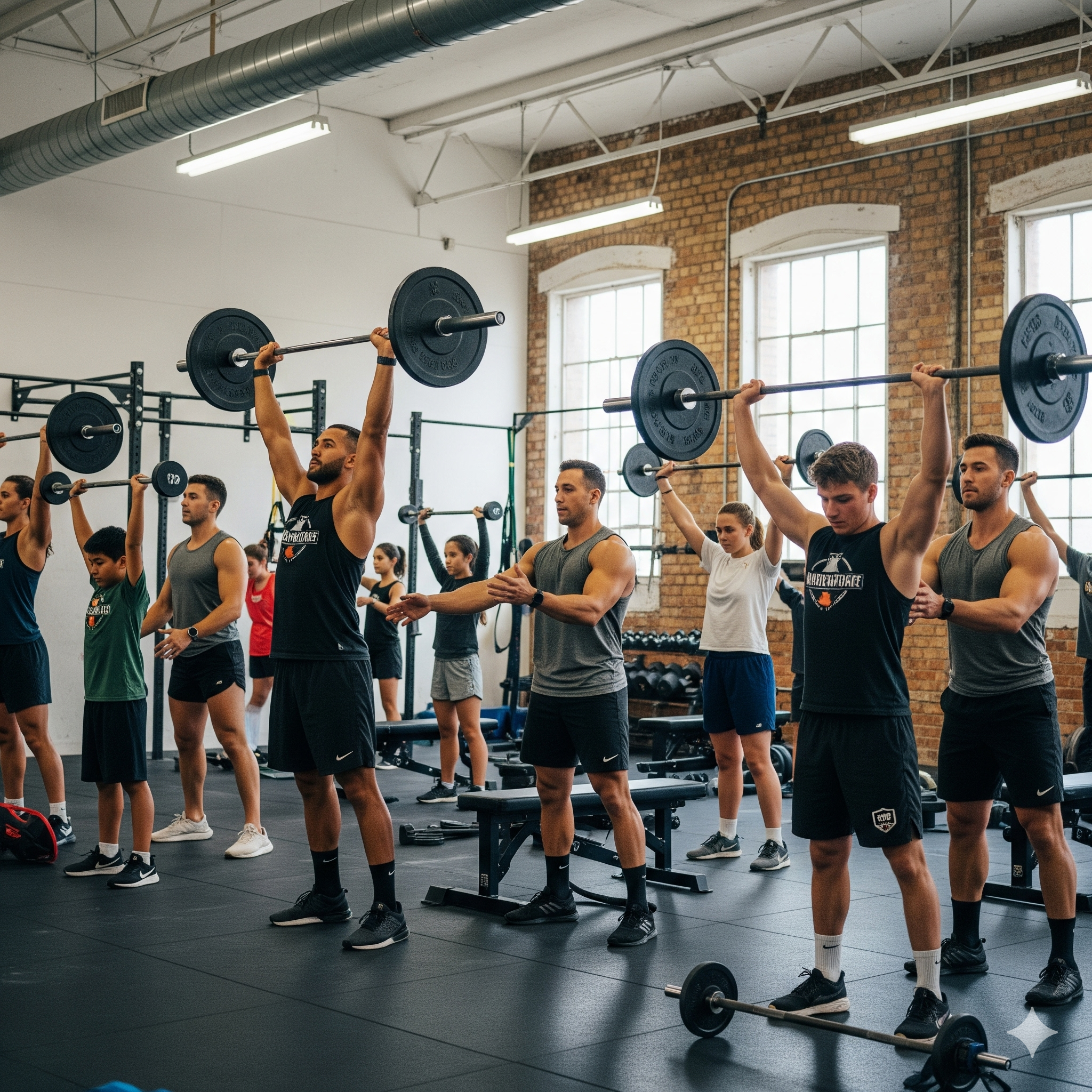

What Is the Overhead Press?
The overhead press is one of the most fundamental strength training exercises, often referred to as the “king of upper-body pressing.” It involves pressing a weight—typically a barbell or dumbbells—vertically overhead from the shoulders until the arms are fully extended. Unlike isolation exercises that target a single muscle, the overhead press recruits multiple muscle groups, making it a true compound movement.
What sets this lift apart is its functional value. Think about everyday tasks: placing luggage in an overhead compartment, lifting a heavy box onto a shelf, or performing athletic movements like blocking in basketball. These all require the ability to push weight upward while maintaining balance and stability. That’s why the overhead press is not just a gym exercise—it’s a movement with real-world application.
From a biomechanical perspective, the exercise demands strong coordination between the shoulders, triceps, traps, and core. The lifter must keep a neutral spine, resist excessive arching, and press in a straight vertical path. Done correctly, it becomes both a strength builder and a posture enhancer.
Benefits of the Overhead Press
The overhead press is celebrated for its efficiency—few exercises provide as many benefits in one movement.
-
Upper Body Strength and Muscle Growth
The press directly targets the shoulders and triceps, leading to impressive size and strength gains. Unlike machines, it recruits stabilizer muscles, resulting in balanced development. -
Core and Postural Stability
The standing version demands constant engagement of the abs, obliques, and lower back. This improves posture, making it easier to sit and stand tall in everyday life. -
Functional Strength
Unlike isolation lifts, the overhead press mimics real-world pushing movements. This makes it one of the most practical exercises for athletes and workers alike. -
Athletic Performance
By developing explosive strength in the shoulders and arms, athletes in sports such as boxing, volleyball, and swimming can improve their power output. -
Mobility and Joint Health
When performed with correct technique, the exercise promotes shoulder mobility and strengthens connective tissues, reducing the risk of injury.
Muscles Worked During the Overhead Press
The overhead press is often mistaken as a “shoulder-only” exercise. In reality, it recruits multiple major and supporting muscle groups.
-
Primary Movers:
-
Deltoids (Front, Side): Responsible for pushing the bar overhead.
-
Triceps: Crucial for locking out the arms at the top.
-
Trapezius: Helps stabilize the shoulder blades.
-
-
Secondary Muscles:
-
Pectorals (Upper chest): Assist in the initial push.
-
Core (Abs and obliques): Prevent torso sway and support the spine.
-
Glutes and Legs: In standing presses, they stabilize the lower body and prevent excessive arching.
-
In short, the overhead press is more of a “total-body” lift than most people realize.
Different Variations of the Overhead Press
The beauty of the overhead press lies in its versatility. Variations allow lifters to target specific weaknesses or adapt to mobility constraints.
-
Barbell Variations:
-
Military Press: Feet together for maximum core demand.
-
Push Press: Uses leg drive for heavier loads and explosive strength.
-
Z Press: Seated on the floor, forcing strict upper-body control.
-
-
Dumbbell Variations:
-
Seated Dumbbell Press: Focuses purely on shoulder strength.
-
Arnold Press: Adds rotation to hit all deltoid heads.
-
Single-Arm Press: Improves unilateral strength and core balance.
-
-
Kettlebell Variations:
-
Bottoms-Up Press: Builds grip and shoulder stability.
-
Half-Kneeling Press: Improves core bracing and shoulder control.
-
-
Machine Variations:
-
Landmine Press: Shoulder-friendly, great for beginners.
-
Viking Press: A favorite in strongman competitions.
-
Each variation serves a unique purpose—hypertrophy, power, mobility, or injury prevention.
Proper Form and Technique for the Overhead Press
Performing the lift with precision is non-negotiable. Small deviations in form can shift the load onto the spine or cause shoulder strain.
Step-by-step technique:
-
Setup: Stand with feet hip-width apart, grip the bar slightly wider than shoulder-width. Rest it across the front shoulders.
-
Brace: Tighten the core, squeeze the glutes, and tuck the pelvis slightly.
-
Press: Push the bar straight overhead while keeping your torso upright. Move the head slightly back, then forward under the bar once it passes.
-
Lockout: Fully extend the elbows with biceps near your ears.
-
Descent: Lower the bar slowly and under control to the shoulders.
Key principle: The bar must move in a straight line. Arcing the bar forward creates instability and reduces efficiency.
Common Mistakes to Avoid in the Overhead Press
Even experienced lifters often make errors in this lift.
-
Leaning Back Excessively: Turns it into a standing incline press and strains the lower back.
-
Using Leg Drive (Unintentionally): That makes it a push press, not a strict press.
-
Flared Elbows: Increases shoulder joint stress.
-
Poor Grip Position: Wrists bent backward can cause strain over time.
-
Not Bracing Properly: A weak core allows the spine to overextend.
Correcting these errors not only prevents injury but also ensures steady strength progression.
Overhead Press vs. Other Shoulder Exercises
How does the overhead press compare to other popular shoulder exercises?
-
Overhead Press vs. Lateral Raises:
Lateral raises isolate the side delts, while the press builds overall pressing power. -
Overhead Press vs. Bench Press:
Bench press emphasizes chest and triceps, but doesn’t develop shoulder stability as effectively. -
Overhead Press vs. Machine Press:
Machines reduce stabilizer involvement, making them good for hypertrophy but inferior for functional strength.
In essence, the overhead press is unmatched for building pressing strength and real-world transferability.
How to Progress and Increase Strength in the Overhead Press
Progression in this lift can be notoriously slow compared to squats or deadlifts. But with patience and structured planning, breakthroughs are possible.
-
Progressive Overload: Add small weight increments (e.g., 2.5 lbs).
-
Strengthen Supporting Muscles: Train triceps, traps, and core with accessory lifts like dips, pull-ups, and face pulls.
-
Vary Rep Ranges: Alternate between low-rep heavy sets and higher-rep hypertrophy work.
-
Increase Frequency: Practice the lift multiple times a week for faster neuromuscular adaptation.
-
Nutrition: Eating enough calories and protein supports muscle growth and recovery.
Warm-Up Exercises Before Overhead Press
Warming up properly before an overhead press is essential to prepare your muscles, joints, and nervous system for the movement. A good routine combines light cardio, mobility drills, dynamic stretches, and muscle activation work to boost circulation, loosen the shoulders, and switch on the stabilizers that support pressing strength.
1. Light Cardio
Purpose: Raise your heart rate and core temperature.
How to do it: Spend 5–10 minutes on low-intensity activity such as brisk walking, cycling, rowing, or jogging to get the body warm.
2. Mobility and Dynamic Stretching
Purpose: Increase joint range of motion and prime the shoulders.
Examples:
-
Shoulder Dislocations: Using a band or PVC pipe, sweep your arms overhead and back to open the shoulders and chest.
-
Lat Stretch: Extend one arm overhead and lean sideways until you feel the stretch along your lat.
-
Thoracic Rotations: Rotate through the upper back to improve posture and pressing mechanics.
3. Activation Drills
Purpose: Engage the muscles that stabilize and drive the press.
Examples:
-
Band Pull-Aparts: Stretch a resistance band by pulling your arms outward, squeezing your upper back.
-
Face Pulls: Pull a band or cable towards your face to fire up the rotator cuff and traps.
-
Bottom-Up Kettlebell Press: Press a kettlebell held upside down to challenge grip and shoulder stability.
4. Barbell-Specific Warm-Up
Purpose: Get accustomed to the bar path and pressing motion.
How to do it: Begin with the empty bar for several reps. Progressively add light weight in small steps, working through sets of 10, 8, and 6–5 reps while keeping technique strict.
Key Tips:
-
Pay attention to tight or weaker areas and give them extra focus.
-
Prioritize clean, controlled form at every stage.
-
Adjust the routine to your own mobility and strength needs.
Overhead Press for Beginners: Tips to Start Safely
For newcomers, safety and technique should always come before loading weight.
-
Warm-Up: Use dynamic stretches, mobility drills, and light sets.
-
Start with Dumbbells: They’re easier on the joints and teach proper pressing mechanics.
-
Focus on Core Engagement: Think of pressing from a solid foundation, not just your shoulders.
-
Use Lighter Loads: Perfect form first, then gradually increase resistance.
-
Track Progress: Record weights, reps, and form notes to ensure consistent improvement.
Patience is key—building strength overhead is a marathon, not a sprint.
Advanced Overhead Press Training Strategies
Experienced lifters often hit plateaus. Advanced methods can help break through these sticking points.
-
Address Weak Points:
-
Pin Presses: Strengthen the mid-range of the lift.
-
Paused Presses: Remove momentum, increase control.
-
Tempo Presses: Build time under tension.
-
-
Accommodating Resistance:
-
Bands or Chains: Add progressive resistance as leverage improves.
-
-
Advanced Loading Methods:
-
Cluster Sets: Heavy reps with short rests.
-
Wave Loading: Cycle heavy, moderate, and lighter sets within one session.
-
-
Periodization:
Undulating periodization (changing volume/intensity weekly) prevents stagnation and maximizes gains. -
Accessory Work:
Strengthen triceps, rotator cuffs, and scapular stabilizers to support heavier presses.
Final Thoughts
The overhead press stands out as one of the most effective lifts for building real-world strength and upper-body power. It challenges not only your shoulders and arms but also your core, posture, and overall stability. Beginners can use it to lay down a foundation of strength, while advanced lifters can fine-tune their performance with variations and progressive strategies. With proper technique, patience, and consistency, the overhead press can unlock long-term gains in strength, athleticism, and confidence—making it an exercise worth mastering for anyone serious about training.