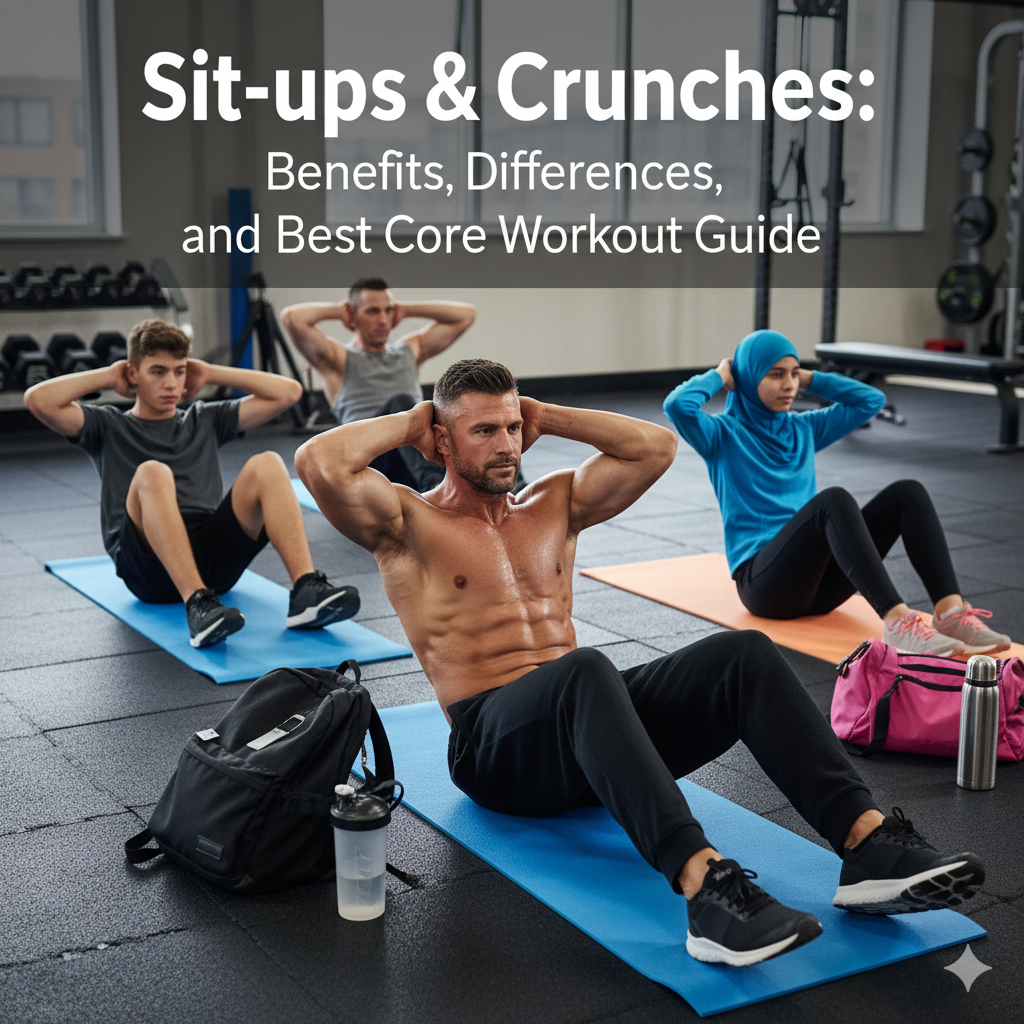

When it comes to core training, many people wonder about the effectiveness of classic moves like crunches and sit-ups. These exercises can definitely strengthen your abdominal muscles, but the real challenge most people face is losing belly fat. No matter how many reps you push through each day, you won’t see toned abs unless you combine them with a balanced diet, cardio, and full-body strength workouts. This is because you cannot target fat loss in one spot, no matter how hard you try. The difference between visible abs and hidden ones usually comes down to lifestyle choices more than just the number of exercises performed. That said, crunches and sit-ups still play an important role in building endurance, improving posture, and giving your core the stability it needs for everyday activities. If you’re consistent with your training and make sure your nutrition supports your goals, then over time, you’ll see noticeable results. So, instead of stressing over thousands of reps daily, focus on form, variety, and intensity, while keeping in mind the critical difference between fat loss and muscle building. A strong core is always worth the effort, even if it takes patience to reveal it beneath stubborn belly fat.
Why Core Strength Matters More Than Just “Abs”
Before we jump into sit-ups and crunches, let’s zoom out for a second. When most people say they want “abs,” they’re usually talking about the visible six-pack. But your core muscles do way more than just look good.
Your core:
-
Keeps your spine stable and protects it from injury
-
Helps with balance and posture
-
Transfers strength between your upper and lower body
-
Supports everyday movements like bending, twisting, or carrying groceries
So, when you’re working on sit-ups and crunches, you’re not just chasing aesthetics—you’re building a foundation for overall strength and mobility.
The Key Difference of (Sit-ups & Crunches)
Many people use the terms interchangeably, but sit-ups and crunches are not twins—they’re more like cousins.
What Are Sit-ups?
A sit-up is a full-range exercise where you start flat on your back and bring your upper body all the way up to your knees. Your hip flexors, lower back, and core muscles all join the party.
Muscles worked in sit-ups:
-
Rectus abdominis (the “six-pack” muscle)
-
Obliques (side abs)
-
Hip flexors
-
Lower back muscles
What Are Crunches?
A crunch is more targeted. You only lift your shoulders off the ground, focusing mainly on your abs. There’s less movement, but that makes it more isolated.
Muscles worked in crunches:
-
Primarily rectus abdominis
-
Some obliques (if you twist during crunches)
Pros and Cons of Sit-ups
Benefits of Sit-ups
-
Works multiple muscle groups, not just abs
-
Improves core endurance and stability
-
Burns slightly more calories than crunches due to bigger movement
Downsides of Sit-ups
-
Can strain your neck and lower back if done wrong
-
Heavy reliance on hip flexors may reduce direct ab activation
-
Harder for beginners with weak cores
Pros and Cons of Crunches
Benefits of Crunches
-
Very effective at isolating your abs
-
Lower injury risk compared to sit-ups
-
Easy to modify with variations (reverse crunch, bicycle crunch, etc.)
Downsides of Crunches
-
Works fewer muscles overall
-
Can feel repetitive after a while
-
Doesn’t burn many calories
Which One Should You Do?
It depends on your goal:
-
If you want stronger abs: Crunches are better because they target the ab muscles directly.
-
If you want overall core strength and endurance: Sit-ups might be more beneficial since they bring in supporting muscles.
-
If you want variety and balance: Do both—but with proper form.
Think of it like this: crunches are your precision tool, sit-ups are your all-around workout.
Popular Mistakes to Avoid
For Sit-ups:
-
Jerking your neck or pulling on it with your hands
-
Using momentum instead of muscle control
-
Not keeping your feet anchored (unless you’re advanced)
For Crunches:
-
Coming up too high (turning it into a sit-up)
-
Rushing through reps without engaging your abs
-
Not breathing properly (exhale as you crunch up)
Variations of Sit-ups & Crunches
If regular sit-ups and crunches feel boring, here are some fun twists:
Sit-up Variations
-
Weighted Sit-ups – Hold a dumbbell or plate against your chest.
-
Butterfly Sit-ups – Feet together, knees out, arms overhead.
-
Medicine Ball Sit-ups – Add a ball slam at the top.
Crunch Variations
-
Reverse Crunch – Bring your knees toward your chest.
-
Bicycle Crunch – Pedal your legs while twisting your torso.
-
Oblique Crunch – Crunch at an angle to target side abs.
Sit-ups & Crunches Enough for Flat Abs?
Here’s the hard truth: you can’t spot-reduce fat. That means doing a thousand sit-ups won’t magically burn belly fat. Your abs will get stronger, but they’ll stay hidden under fat if your diet and overall fitness aren’t in check.
For visible abs, you need:
-
A calorie-balanced diet (lean protein, veggies, whole carbs, healthy fats)
-
Cardio and full-body strength training
-
Consistency and patience (no overnight six-pack)
Perform safely Sit-ups & Crunches
Instead of doing endless reps, focus on quality and consistency.
-
Beginners:
-
2–3 sets of 10–15 reps, 2–3 times per week
-
-
Intermediate:
-
3–4 sets of 15–20 reps, mix in variations
-
-
Advanced:
-
Add weights, do timed sets, or pair with planks
-
Pro tip: Combine sit-ups and crunches with planks, leg raises, and rotational exercises for a balanced core workout.
Fun Facts about Sit-ups & Crunches
For years, sit-ups were the go-to test for military fitness exams. But many branches have since replaced them with planks, because of the lower risk of injury and better core engagement. This shows how important proper exercise choice really is!
Sit-ups & Crunches FAQs
1. Which burns more calories, sit-ups or crunches?
Sit-ups, since they use more muscles—but neither is a huge calorie burner.
2. Can I do sit-ups or crunches every day?
Yes, but keep the volume reasonable. Overdoing them can cause strain.
3. Will sit-ups give me a six-pack?
Not alone. Diet and full-body workouts play a bigger role.
4. Are crunches safer than sit-ups?
Generally yes, but only if done with good form.
The Smart Way to Use Sit-ups & Crunches
At the end of the day, sit-ups and crunches are like two different tools in your fitness toolbox. Crunches are the scalpel—precise and focused on your abs. Sit-ups are the multi-tool—engaging more muscles but also carrying more risk if your form slips.
The smartest approach? Mix them up, focus on proper technique, and pair them with other core moves and a healthy lifestyle. Remember, abs aren’t made just in the gym—they’re revealed through consistency, diet, and patience.
So, whether you’re crunching away on your living room floor or powering through weighted sit-ups at the gym, know that every rep is helping you build a stronger, more resilient core. And that’s something way more valuable than just a six-pack.