
What is a Lunge?
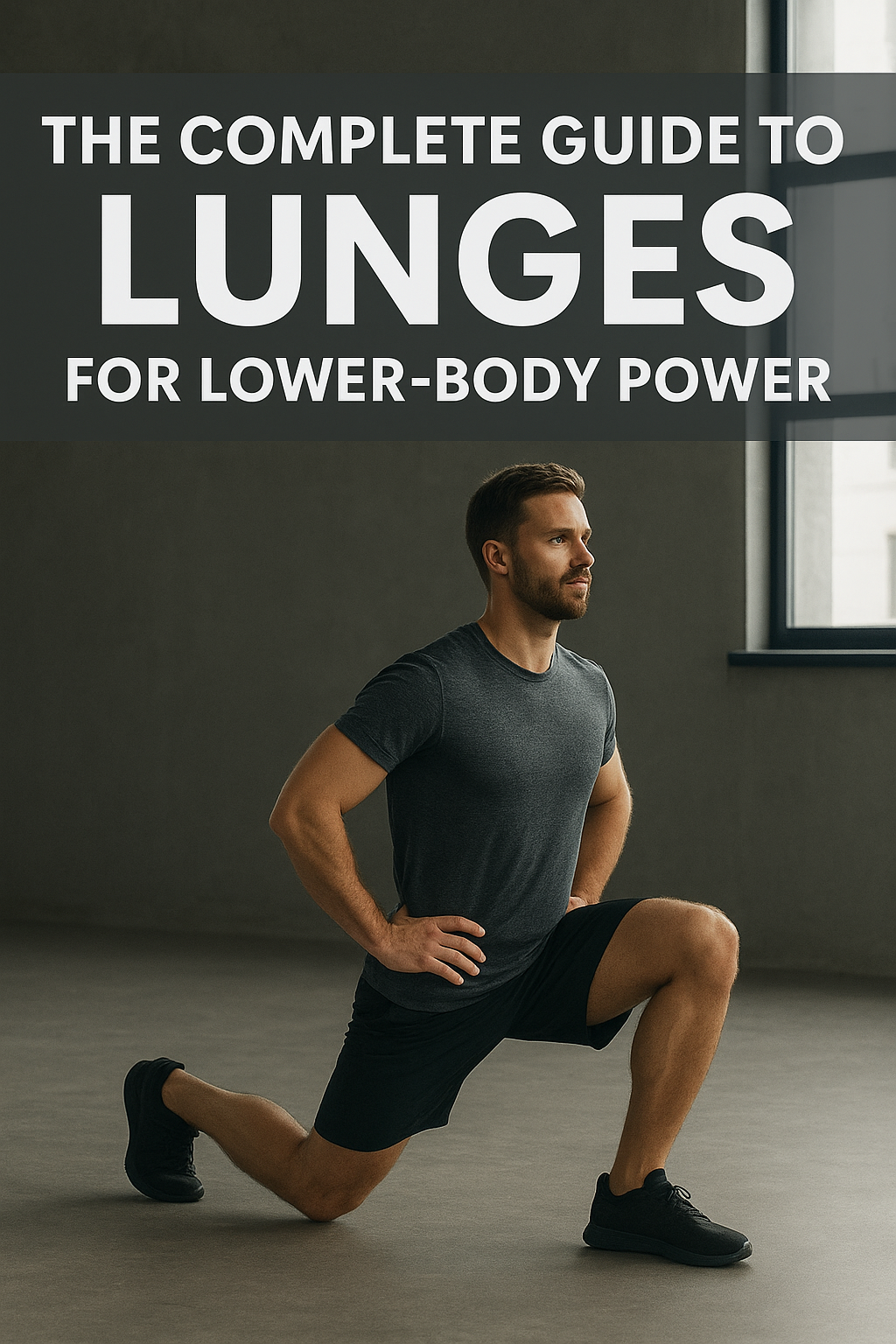
A lunge is a bodyweight exercise where you step forward, backward, or sideways into a split stance and lower your body until both knees are bent at about 90 degrees. The movement is unilateral, meaning one leg works independently from the other, which helps correct muscular imbalances and strengthens stabilizing muscles.
Lunges primarily target the quadriceps, hamstrings, and glutes, but they also activate the calves, core, and hip stabilizers, making them a complete functional exercise.
How to Perform a Forward Lunge
Follow these steps for proper form:
-
Start standing: Feet hip-width apart, hands on your hips or by your sides.
-
Step forward: With one foot, placing it firmly on the ground.
-
Lower your body: Bend both knees until they reach about 90 degrees. The front thigh should be parallel to the ground.
-
Maintain form: Keep your back straight, core engaged, and front knee stacked above your ankle.
-
Push off: Drive through the heel of your front foot to return to standing.
-
Alternate legs: Perform equal reps on both sides.
Muscles Activated During Lunges
Lunges are a powerhouse lower-body exercise that primarily target the glutes, quadriceps, and hamstrings—the largest muscle groups in the hips and thighs. Alongside these, the calves, adductors (inner thighs), hip stabilizers, and core muscles also contribute to balance and control. The way you perform lunges—such as step length or variation—can shift emphasis to different areas. For example, side lunges place more demand on the outer thighs, while a longer stride increases glute activation.
Primary Muscles Involved
-
Quadriceps (Front of Thighs): These muscles do most of the work when bending and straightening the knee. They are active during both the lowering and upward phases of the movement.
-
Hamstrings (Back of Thighs): Working alongside the glutes, the hamstrings extend the hip and help stabilize the knee throughout the lunge.
-
Gluteal Muscles (Buttocks): The gluteus maximus, in particular, powers you back to standing by driving hip extension during the push-off phase.
Supporting & Stabilizing Muscles
-
Adductors (Inner Thighs): These muscles assist in controlling descent, hip mobility, and extension.
-
Hip Abductors (Outer Hips): Muscles like the gluteus medius keep your torso upright and prevent side-to-side wobbling.
-
Calves (Gastrocnemius & Soleus): Provide ankle stability and support foot placement during the lunge.
-
Core Muscles: Abdominals and deep stabilizers engage to maintain posture and balance during the single-leg nature of the movement.
What Affects Muscle Engagement?
-
Lunge Style: Forward, reverse, and walking lunges emphasize glutes and quads, while lateral lunges place more stress on the abductors (outer thighs).
-
Step Length: A longer stride increases glute involvement, while shorter steps highlight quadriceps engagement.
Benefits of Doing Lunges
1. Strength and Muscle Development
Lunges are highly effective for building strength in the lower body. They primarily target the quadriceps, hamstrings, and glutes, while also activating the calves and inner thigh muscles. This combination makes lunges an excellent choice for developing strong, well-balanced legs.
Since the movement pattern mimics natural activities like walking or climbing stairs, lunges improve functional strength, helping you perform daily tasks with greater ease. Additionally, because they engage multiple large muscle groups at once, lunges can boost calorie burn and support lean muscle growth, which contributes to a faster metabolism.
2. Balance and Stability
Unlike squats, lunges train one leg at a time, making them a unilateral exercise. This forces your body’s stabilizing muscles in the hips, ankles, and core to work harder, improving overall balance and coordination.
Another major advantage is their ability to correct muscle imbalances. Many people unknowingly rely on their stronger side during bilateral movements, but lunges require equal effort from both legs, reducing strength differences between the left and right sides. Over time, this balance helps prevent injuries.
Your core muscles—including the abdominals, obliques, and lower back—are also engaged throughout the movement to keep your torso upright, which further improves stability and posture.
3. Flexibility and Joint Health
Lunges are not only a strength-building move but also improve mobility and flexibility. Each repetition stretches the hip flexors, which are often tight from long periods of sitting, while encouraging a healthy range of motion in the hips and knees.
When performed with proper form, lunges also strengthen the muscles surrounding your joints. This extra support reduces stress on the knees and hips, promoting joint stability and lowering the risk of pain or injury.
4. Variations for Targeted Benefits
One of the best aspects of lunges is their versatility. By slightly changing the direction or style, you can shift the emphasis to different muscles or add new challenges:
-
Side (Lateral) Lunges: Target the inner and outer thighs.
-
Reverse Lunges: Place greater focus on glutes and hamstrings while being easier on the knees.
-
Curtsy Lunges: Strengthen glutes and hips with a diagonal movement pattern.
-
Walking Lunges: Add a dynamic element that boosts endurance and balance.
-
Jumping Lunges: A plyometric version that builds lower-body power and cardiovascular fitness.
5. Functional Fitness and Everyday Performance
Lunges closely replicate real-world movement patterns, making them one of the most functional exercises you can perform. Whether you’re bending down, stepping up, or moving quickly in sports, lunges prepare your muscles and joints to handle these activities efficiently. This makes them not just a strength move but also a powerful tool for athletic performance and daily mobility.
What Happens If You Do Lunges Every Day?
Daily lunges can lead to:
-
Increased muscular strength and endurance: Especially in the quads, glutes, and hamstrings.
-
Improved stability and coordination: Unilateral training challenges balance.
-
Better posture: Stronger core and hip stabilizers reduce spinal stress.
-
Enhanced sports performance: Lunges mimic athletic movements like sprinting, cutting, or jumping.
However, overtraining can cause fatigue or strain, so alternating lunge variations and allowing recovery days is ideal.
Variations of Lunges
Different lunge variations target muscles in unique ways:
-
Forward Lunge: Best for quadriceps strength.
-
Reverse Lunge: Focuses more on glutes and hamstrings.
-
Side (Lateral) Lunge: Targets inner and outer thighs.
-
Walking Lunge: Builds coordination and endurance.
-
Jumping Lunge: Improves explosive power.
-
Curtsy Lunge: Strengthens glutes and hip stabilizers.
-
Front-Foot Elevated Lunge: Increases range of motion.
-
Overhead Lunge: Challenges core and shoulder stability.
Step-by-Step Guide: Performing a Proper Lunge
-
Assume starting position: Stand tall, feet hip-width apart.
-
Step forward or back: Keep torso upright.
-
Lower body: Both knees at 90 degrees, back heel lifted.
-
Return to start: Push through the front heel.
-
Repeat: Switch legs after each rep.
Common Mistakes to Avoid
-
Placing one foot directly in front of the other (tightrope stance).
-
Allowing the front knee to cave inward.
-
Leaning excessively forward.
-
Keeping the back heel flat.
-
Moving too fast and losing control.
Beginner-Friendly Modifications
-
Supported lunges: Hold onto a chair or wall.
-
Partial lunges: Lower only halfway down.
-
Static lunges: Keep feet in place and move only vertically.
-
Reverse lunges: Easier on the knees than forward lunges.
Lunges vs. Squats: Which is Better?
When comparing lunges and squats, neither exercise is universally “better.” Each has unique benefits, and the best choice depends on your individual fitness goals. Squats are unmatched for developing raw strength, muscle size, and power since they allow you to handle heavier loads. On the other hand, lunges shine when it comes to balance, coordination, agility, and stability because of their single-leg, dynamic movement pattern. For a well-rounded lower-body program, combining both is the smartest strategy.
When to Choose Squats
Squats are a classic strength exercise that can help you build a solid foundation. They are especially beneficial if your goal is to maximize strength and size in your lower body.
-
Build Strength and Muscle: The ability to load squats with heavy weight makes them more effective for growing overall leg and glute size.
-
Boost Power: Squats develop explosive force, making them ideal for athletes in sports that demand strength and speed.
-
Establish a Base: Beginners can use squats to build baseline lower-body strength before advancing to more complex moves.
-
Hormonal Benefits: Squats with heavy loads stimulate the release of growth-promoting hormones like testosterone and HGH, which further supports muscle development.
When to Choose Lunges
Lunges provide benefits beyond strength, targeting balance, agility, and symmetry between the legs. They mimic everyday movements, making them highly functional.
-
Enhance Balance and Coordination: Training one leg at a time forces your stabilizers and core to work harder.
-
Boost Athletic Performance: Lunges reflect natural motion patterns like stepping, running, and changing direction, improving sports performance.
-
Correct Strength Imbalances: Since each leg works independently, lunges help even out left-to-right differences.
-
Target Glutes and Stabilizers: Variations like side or curtsy lunges engage smaller hip and glute muscles that squats may not emphasize as much.
-
Increase Calorie Burn: Because they’re more dynamic and can incorporate upper-body twists or jumps, lunges can raise your heart rate and burn more calories.
The Best Approach: Use Both
For the strongest results, don’t choose one over the other—combine squats and lunges in your program.
-
For Beginners: Start with squats to establish strength and confidence, then progress to lunges for stability and unilateral strength.
-
For a Complete Routine: Mix squat variations (back squats, goblet squats, front squats) with lunge variations (forward, reverse, walking, side, or jumping) to challenge your body in different ways.
By blending the two, you’ll not only gain size and strength but also improve balance, mobility, and functional fitness.
How to Incorporate Lunges into Your Workout
-
Choose a variation: Forward, reverse, or walking lunges.
-
Sets and reps: Beginners – 1–2 sets of 10–16 reps per leg. Intermediate/advanced – 2–3 sets.
-
Frequency: 2–3 times per week.
-
Progression: Add weights, increase depth, or try plyometric lunges.
-
Balance with squats, deadlifts, and core exercises for full lower-body development.
Master Lunge Safety Tips and Precautions
Proper Technique for Safe Lunges
When practicing lunges, keep your torso tall, your spine neutral, and your pelvis steady. Your front knee should align directly above your ankle without extending past your toes. Engage your core throughout the movement to maintain stability, avoid letting the knee cave inward, and place your feet at a comfortable distance for balance. Always warm up beforehand, and if you struggle with knee discomfort, start with reverse lunges. Stop immediately if you feel sharp or unusual pain.
1. Warm Up Before You Begin
Perform light mobility work—such as brisk walking, dynamic stretches, or jumping jacks—before lunges to activate muscles and reduce injury risk.
2. Focus on Proper Form
-
Upright Posture: Keep your chest lifted and avoid leaning forward to prevent lower back strain.
-
Neutral Spine: Maintain a straight back so the correct muscles are activated.
-
Pelvic Alignment: Don’t tilt your hips forward or backward, which can create lower back tension.
3. Knee & Ankle Positioning
-
Knee Over Ankle: The front knee should remain stacked above your ankle, never sliding beyond the toes.
-
No Inward Collapse: Keep the knee aligned with the toes to protect your joints and glutes.
4. Foot Placement & Stance
-
Balanced Weight: Distribute pressure evenly across both feet.
-
Controlled Stride: Take a step that feels natural; avoid stepping too far forward, which may cause instability or strain.
5. Engage the Core: Keep your abdominal muscles tight to support balance and maintain control throughout the lunge.
6. Listen to Your Body
-
Stop with Pain: If sharp or unusual pain occurs, discontinue the movement.
-
Modify When Needed: For sensitive knees, use reverse lunges or walking lunges as safer alternatives.
7. Progress Gradually
-
Master Basics First: Begin with static lunges to learn form before moving to dynamic variations.
-
Add Resistance Slowly: Only increase weight or reps once you can maintain perfect technique consistently.
Conclusion
Lunges are one of the most effective exercises for building lower-body strength, improving mobility, and enhancing balance. They activate multiple muscles, correct imbalances, and can be tailored for beginners or advanced athletes through countless variations.
Whether you want to build muscle, increase endurance, improve athletic performance, or prevent injuries, lunges are a must-have in your training program.
Incorporate them consistently, focus on proper form, and gradually progress to advanced variations—and you’ll unlock the full potential of this powerful exercise.